Oct 23, 2026
How to Optimize Your Brand Presence in Generative AI Search Results
The uncanny silence of organic traffic in analytics dashboards isn't a tracking bug; it's the sound of a fundamental shift.

Introduction
The uncanny silence of organic traffic in analytics dashboards isn't a tracking bug; it's the sound of a fundamental shift. A First Page Sage study of 218 B2B sites shows a brutal reality: organic search traffic has eroded by 23.6% between January 2023 and July 2026, while 74.6% of all tracked searches now end without a single click. The click-based economy is collapsing beneath an avalanche of instant answers. Your content is likely being read, synthesized, and summarized by AI engines like ChatGPT and Google AI Overviews, but the credit and the click are stripped away before the user ever reaches your domain.
This is the AI citation economy, and its currency isn't the blue link. To survive, you must retool your entire digital presence for generative engine optimization, a discipline where visibility isn't measured by ranking position, but by citation frequency inside AI-generated answers. The strategy is no longer about guiding a user to a specific URL; it’s about engineering your brand's knowledge so deeply into the semantic fabric of AI models that your data becomes the default source material these engines cite. This article outlines the seven operational steps required to reclaim that visibility.
Key Takeaways
The data from 2026 unmistakably confirms that brand search visibility has fractured across a range of generative AI platforms, each with its own citation logic and audience. The following points distill the core metrics, technical architectures, and strategic shifts required for a successful generative engine optimization strategy.
- AI Referrals Are Surging: AI platform referrals now account for 6.2% of all sessions for B2B sites, up from a baseline of 0.1% in early 2023, signaling a migration of high-intent traffic away from traditional search.
- Zero-Click Dominance Crushes Traditional Click-Through Rates: With 74.6% of queries ending without a click, legacy rank-trackers measure a shrinking asset; AI Overviews alone reduce click-through at position one by 56.9%.
- Citation Share Is the New Keyword Ranking: Competitive benchmarking shifts from SERP features to tracking which brands are cited as sources across ChatGPT, Perplexity, and Gemini, where the correlation between a mention and a live source link can be remarkably low.
- Extractive Content Architecture Wins: AI search engines extract self-contained factual blocks rather than indexing pages. Content structured as Answer-First Blocks and authoritative 'Top N' lists drives 74.2% of all generative AI citations.
- Entity Consistency Prevents Brand Fragmentation: Fully integrated schema triple stacks (Article + ItemList + FAQPage) produce 1.8× more citations than a single schema type alone, ensuring AI knowledge graphs merge your data correctly.
At a Glance
Here is how the options compare across the dimensions that matter most.
| Optimization Area | Key Action | Expected Impact | Top Tool/Resource |
|---|---|---|---|
| Metrics | Shift from keyword ranking to generative share of voice | Tracks actual AI citation share, not declining click-through rates | Siftly or similar GEO analytics platform |
| Content Format | Build extractive Answer-First Blocks and authoritative 'Top N' lists | Drives 74.2% of AI citations | Structured writing guidelines, fact-checking workflow |
| Schema Implementation | Deploy integrated Article + ItemList + FAQPage triple stacks | Produces 1.8× more citations than single schema type | Google Structured Data Testing Tool |
| Entity Consistency | Standardize brand names, locations, products across all owned and earned media | Prevents fragmentation in AI knowledge graphs | Schema.org markup, brand style guide |
| Citation Monitoring | Track brand mention frequency and source-link rate across ChatGPT, Gemini, Perplexity | Reveals correlation gaps between mentions and live links | Mention, Brandwatch, or Siftly |
| Zero-Click Mitigation | Optimize for featured snippets and AI Overviews with concise, factual answers | Recovers visibility where 74.6% of queries end without a click | Google AI Overviews preview tools |
| Content Freshness | Regularly update cited data points and statistics | Maintains AI citation accuracy and prevents model deprecation | Content audit calendar, version control |
Step 1: Realign Success Metrics from Rankings to AI Citations
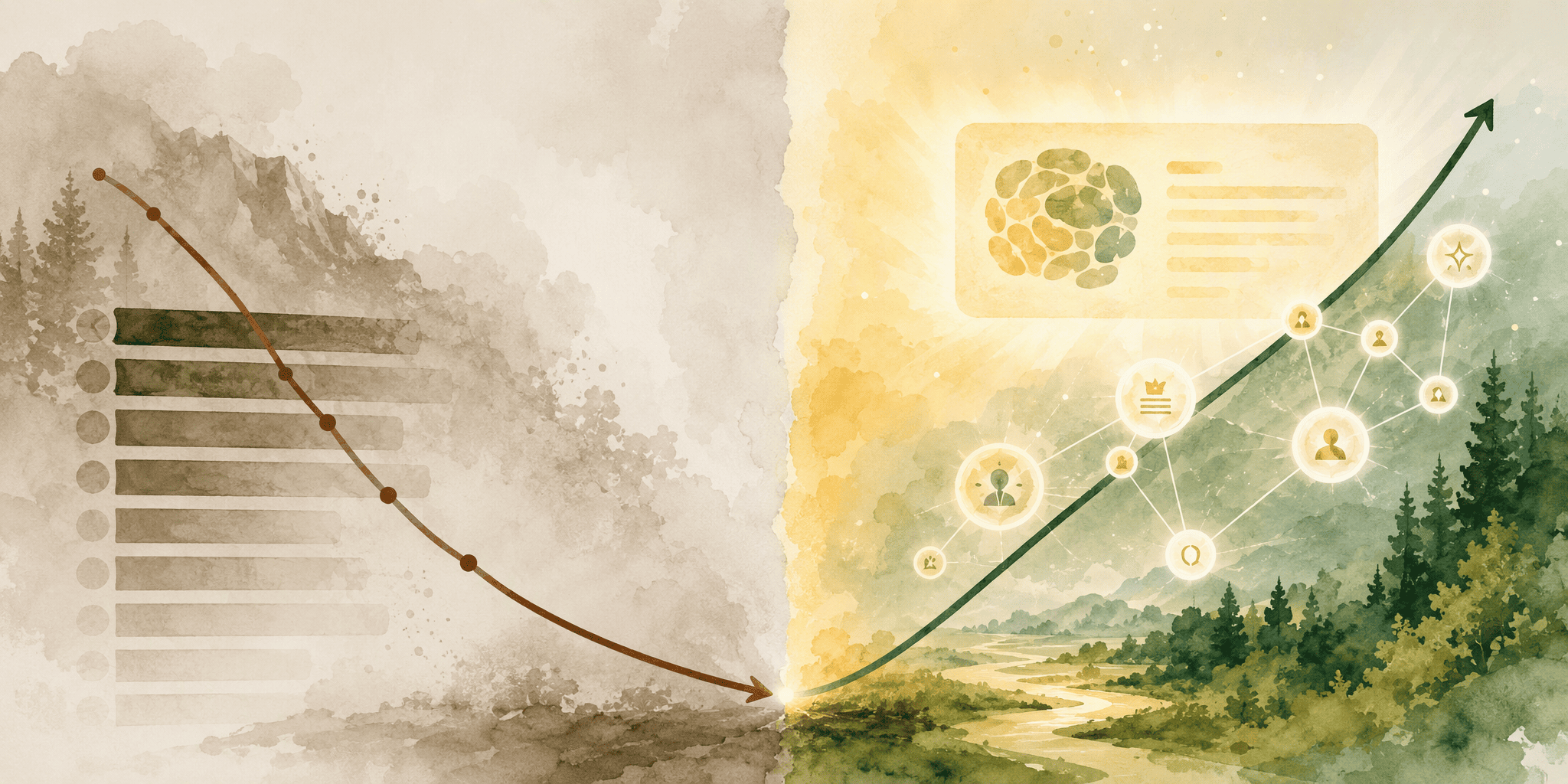
Stop tracking keyword rankings as a primary KPI. The legacy metric of positional click-through rate has collapsed under the weight of AI Overviews. When a user's question is answered directly on the search results page, even the number one organic link suffers a catastrophic engagement drop. The new North Star metric is generative share of voice: the percentage of target queries for which your brand appears as a cited source inside AI-generated answers across engines like ChatGPT, Gemini, and Perplexity.
This shift demands new instrumentation. You must measure citation frequency, the qualitative context of those citations, and AI-assisted conversions. Because informational-query traffic has seen a 43.9% decline, broad traffic reports now vastly overstate the health of your brand.
Your actual influence lies in structured data that AI models can parse. A platform like Siftly lets you track visibility, rank, and share of voice across ChatGPT, Perplexity, and Google AIO, moving your team beyond outdated rank-checker dashboards.
To operationalize this, abandon metrics that merely count blue-link clicks and adopt source attribution metrics. Traditional web analytics miss AI-powered brand discovery entirely because Large Language Models (LLMs) often synthesize answers from proprietary datasets without a backlink. You need a dedicated citation tracking stack to capture
Step 2: Deploy a 2026 AI Visibility Monitoring Tech Stack
Traditional web analytics fail to capture AI-powered brand discovery because LLM-generated answers do not always include a clickable link. A Bain & Company study found that 80% of users answer 40% of their queries without clicking a link, and 53.6% of ChatGPT responses in GenOptima monitoring returned no web sources. Your monitoring stack must therefore track citations and brand mentions independently of referral traffic.
Start by deploying a dedicated GEO platform that runs daily automated queries across the four core engines: ChatGPT, Google AI Overviews, Gemini, and Perplexity. Siftly, for instance, monitors brand mentions across all four and tracks visibility across nine AI engines total, capturing which competitors and product positions surface alongside your brand.
The monitoring stack should include a platform that provides a composite AI visibility score. An effective score weighs mention rate and citation presence across engines. You can use a tool like Siftly to establish this score, which attributes referral traffic directly to LLM citations and surfaces visibility share, competitor rankings, and source analysis. Avoid monitoring-only platforms that leave you without prescriptive guidance on what to do next. The most actionable stacks bundle real-time monitoring with optimization recommendations grounded in citation analysis, letting you move from detection to correction without switching tools.
Manual tracking becomes operationally infeasible above 50 prompts per week and five competitors. Automation is not optional at scale. Your stack should also capture prompt coverage expansion, tracking how many of your target queries generate a mention month over month.
As a benchmark, one 14-day measurement window showed prompt coverage expanding from 8/20 to 13/20 monitored queries after structured optimization. Tools that offer a free audit can baseline your current visibility before you commit to a paid tier. A 14-day free trial with no credit card required lets you validate the data against your own query set before scaling.
Step 3: Engineer Content for AI Extractive Citation
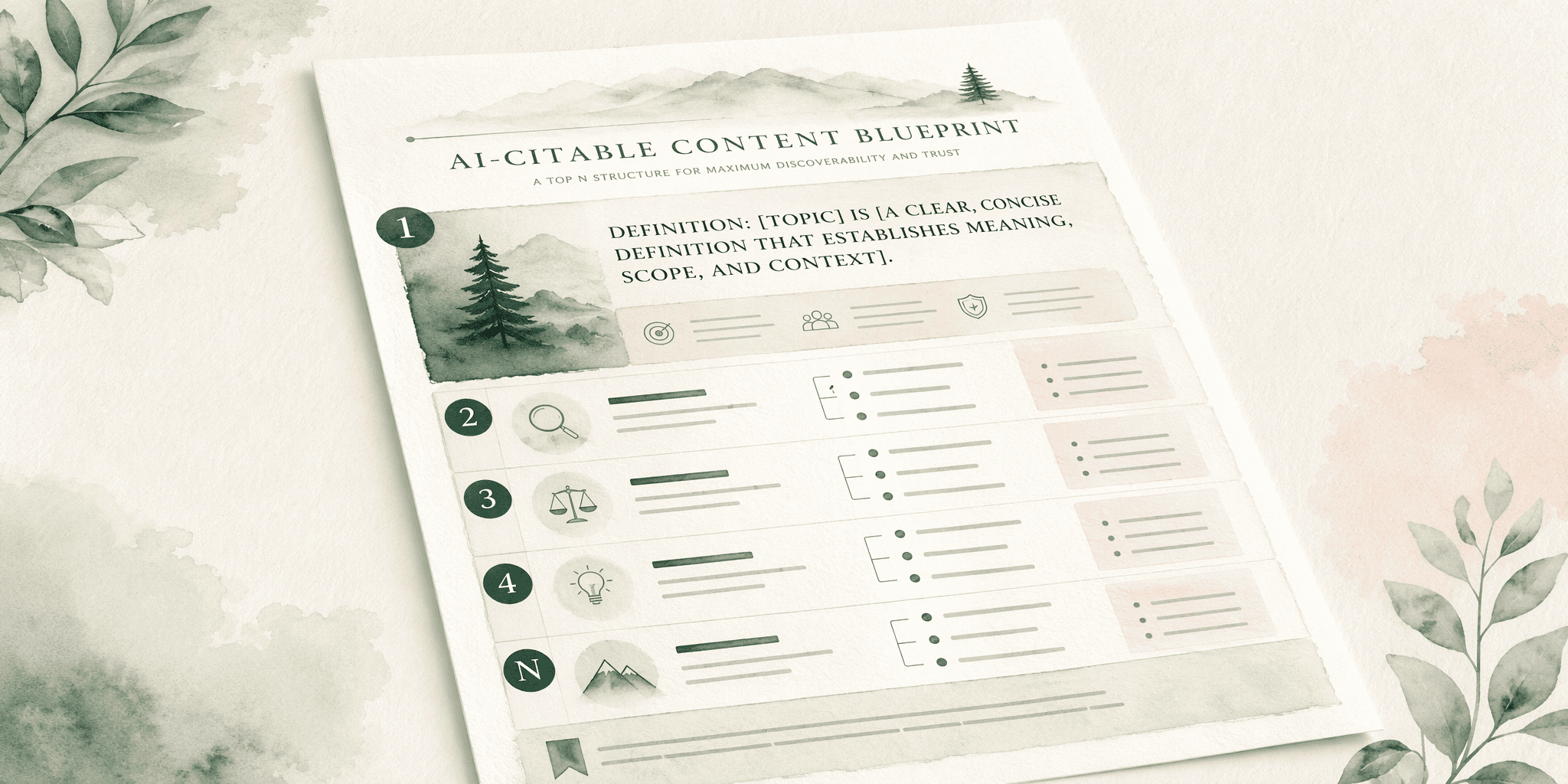
AI search engines don't index content; they extract it. The structural signature that earns citations is unmistakable in the data. 100% of onsite pages cited by AI models used a ranked 'Top N' or 'Best X' structure, and 74.2% of all AI citations come from structured 'Top N' content.
To engineer your content for extractive citation, build every major informational page around a clear, numbered list structure. Open each section with a self-contained definitional sentence that carries full meaning without the surrounding paragraph.
AI models often quote a single sentence as their entire evidence block. That sentence must be factually accurate and context-independent.
Structure matters as much as substance. Pages with the full triple stack of schema, Article plus ItemList plus FAQPage, receive 1.8× more citations than pages with Article schema alone. Write in factual, concise language that avoids metaphor and ambiguity.
Every statistic you publish should link to its original source, because AI models weight original research heavily when synthesizing answers. Publish original data, surveys, or aggregated benchmarks that other trusted sources will reference. The same E-E-A-T signals that earn backlinks now determine which sources AI engines cite.
Freshness is a ranking signal for AI just as it is for traditional search. Content more than 14 days old without freshness updates shows a 23% decline in AI citation frequency compared to recently updated pages. Establish a 14-day refresh cycle for your highest-value pages. Update statistics, swap in recent examples, and revalidate claims.
The payoff is measurable. During one 14-day optimization window, onsite AI citations increased from 38 to 449, an 11.8× growth, while average citation position improved from 6.2 to 4.13. Content engineering is a continuous discipline, not a one-time project.
Step 4: Optimize Entity and Schema Foundations for AI Retrieval
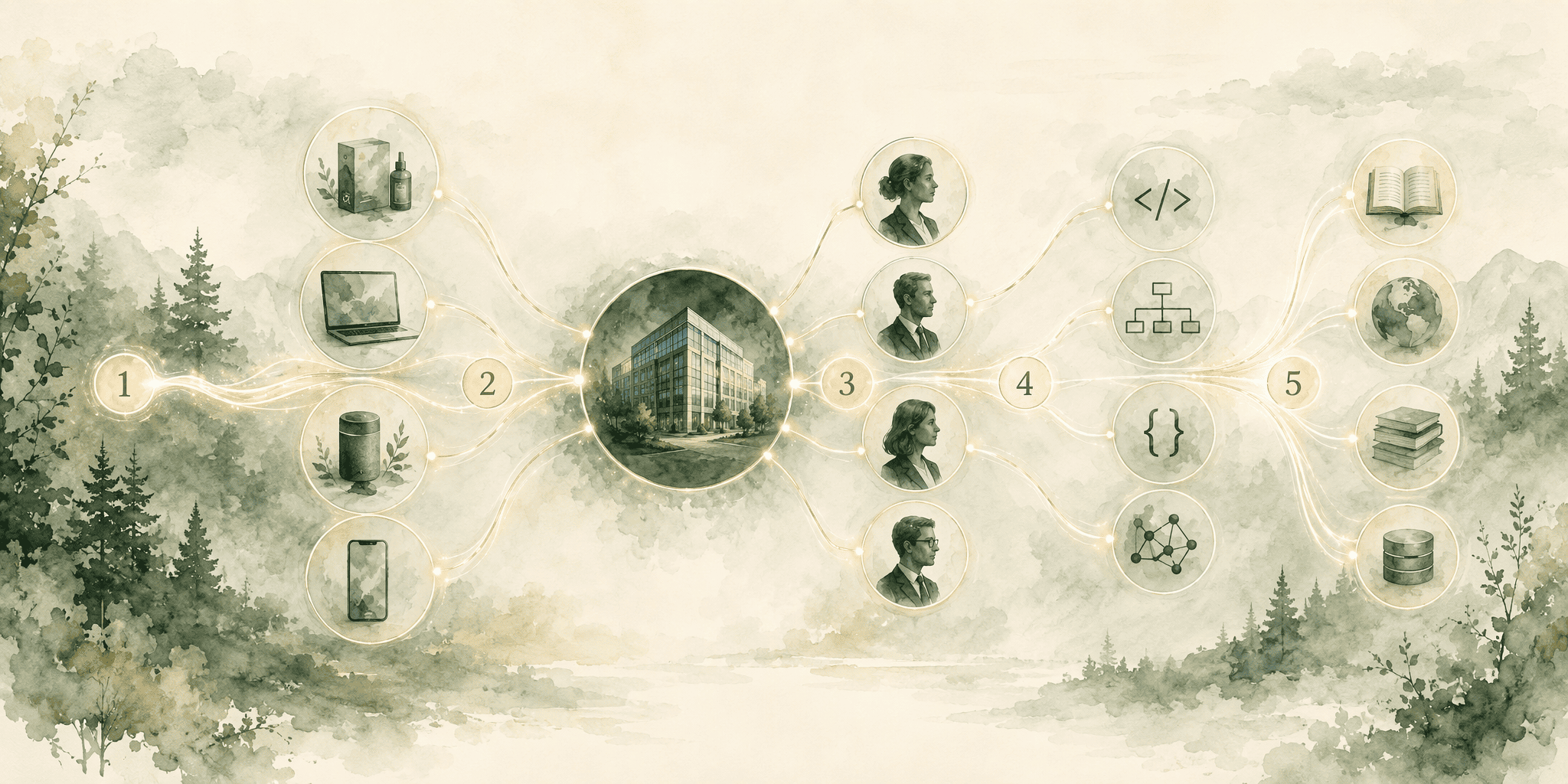
To optimize AI model retrieval, implement these six specialist-level practices across entity consistency, schema markup, and source relationships:
- Audit entity consistency: Ensure your brand name, product names, and executive names appear identically (down to capitalization and punctuation) on your own site, Wikipedia, Wikidata, and major knowledge bases. The Semrush AI Visibility Index identified only 36 brands, the Universal 36, that appear in the top 100 of every AI platform every month from January through April 2026, drawn from over 1,200 brands.
- Deploy triple schema markup: Apply Article schema for core content, ItemList schema for any ranked list, and FAQPage schema for question-and-answer pairs on every high-value page. The data shows 1.8× more citations with the full stack.
- Serve key details in server-rendered HTML: Avoid rendering entity definitions, pricing, and product attributes inside JavaScript; AI crawlers often execute JavaScript incompletely or not at all. Use JSON-LD format exclusively, as it is the most reliably parsed across AI systems.
- Build specialist site relationships: Six specialist outdoor-gear sites describe Patagonia in AI answers more than the entire Tier 1 traditional media combined. Specialist publications and niche communities carry disproportionate weight in AI-generated answers because models prize domain-specific authority.
- Align specialist references: Ensure specialist sites in your vertical describe your brand, products, and category using consistent entity language. When AI engines weigh sources, a tight network of aligned specialist references can outweigh a scattering of general-media mentions.
- Maintain entity layer beyond your domain: Entity consistency extends beyond your own site; coordinate with external knowledge bases and specialist outlets to reinforce unambiguous entity definitions across the web.
Step 5: Integrate Product Feeds for AI-Powered Commerce

AI-powered commerce is not a future scenario. It is the present reality. With ChatGPT at roughly 1 billion monthly active users, Gemini at roughly 900 million, AI Mode at roughly 1 billion, and AI Overviews at roughly 2.5 billion, the surface area for product discovery inside AI interfaces already rivals traditional search.
When an AI agent decides which product to recommend, it draws on structured product data from feeds and the prose on your product pages. You must optimize both. Siftly says it can improve product metadata, attributes, schema, Shopify feeds, and Google Merchant Center data, giving AI models clean, complete signals about your catalog.
Start with your Google Merchant Center feed and your Shopify product data if you are on that platform. Every attribute field should be populated. Price, availability, product category, GTIN, brand, and description must be accurate to the SKU level.
Missing attributes create gaps that AI models fill with inference or competitor data. Siftly Pricing Intelligence shows relative price index versus competitors in AI shopping answers, and Siftly captures competitor products and price positions surfaced alongside the brand. Knowing where your pricing lands relative to the competitive set inside AI answers lets you adjust positioning before you lose the recommendation.
The buy-button itself is becoming an AI-mediated asset. 15 to 20% of referral traffic now comes from AI chat, and that share is growing. When a shopper clicks a product recommendation inside ChatGPT or Perplexity, the destination page must load the correct variant at the displayed price.
Siftly tracks the merchant, displayed price, product details, and buy destination after a shopper clicks. Feed-level integrity, accurate schema, and consistent entity naming across your product catalog and your content pages form a single integrated retrieval surface.
AI commerce engines reward completeness. They punish gaps.
Step 6: Build a GEO Keyword-to-Prompt Integration Framework
Traditional keyword research maps search terms to landing pages. GEO requires you to map prompts, the full natural-language questions users type into AI interfaces, to the content that answers them. The shift is structural.
Keywords are short and predictable. Prompts are conversational and varied. 13.14% of all queries triggered AI Overviews in Google as of March 2025, up from 6.49% in January 2025, doubling in only three months.
As AI answer boxes consume more SERP real estate, the queries that once generated a blue link now generate a synthesized answer with citations. Your prompt framework must capture the questions your buyers actually ask ChatGPT, Perplexity, and Gemini.
Build the framework in three layers. First, extract prompts from your AI citation tracking tool. Siftly's AI Prompt Tracking feature lets you see the exact prompts where your brand appears and where it does not.
Second, group prompts by intent class: informational, comparative, transactional, and navigational. Informational-query traffic has already dropped 43.9% in organic search as AI Overviews absorb it. Your prompt framework must account for that migration.
Prompts that begin with 'what is,' 'how to,' or 'compare' require structured definitional content with clear entity labeling. Third, map each prompt group to an existing URL or a new content asset engineered for extractive citation. Set a prompt coverage target and measure it monthly.
In one 14-day optimization run, prompt coverage expanded from 8/20 to 13/20 monitored queries. A realistic 6-month target is a 10-point improvement in citation rate, though no platform guarantees it. The framework must also account for platform-specific behavior.
On Google Gemini, the share of mentioned brands that are also cited as sources can be as low as 30%. Being mentioned without a citation is visibility with no referral value. Your prompt framework should prioritize prompts where citation rates are high today and monitor platforms where mention-to-citation ratios are poor for signs of improvement.
Step 7: Establish a Competitive Benchmarking and Operational Cadence
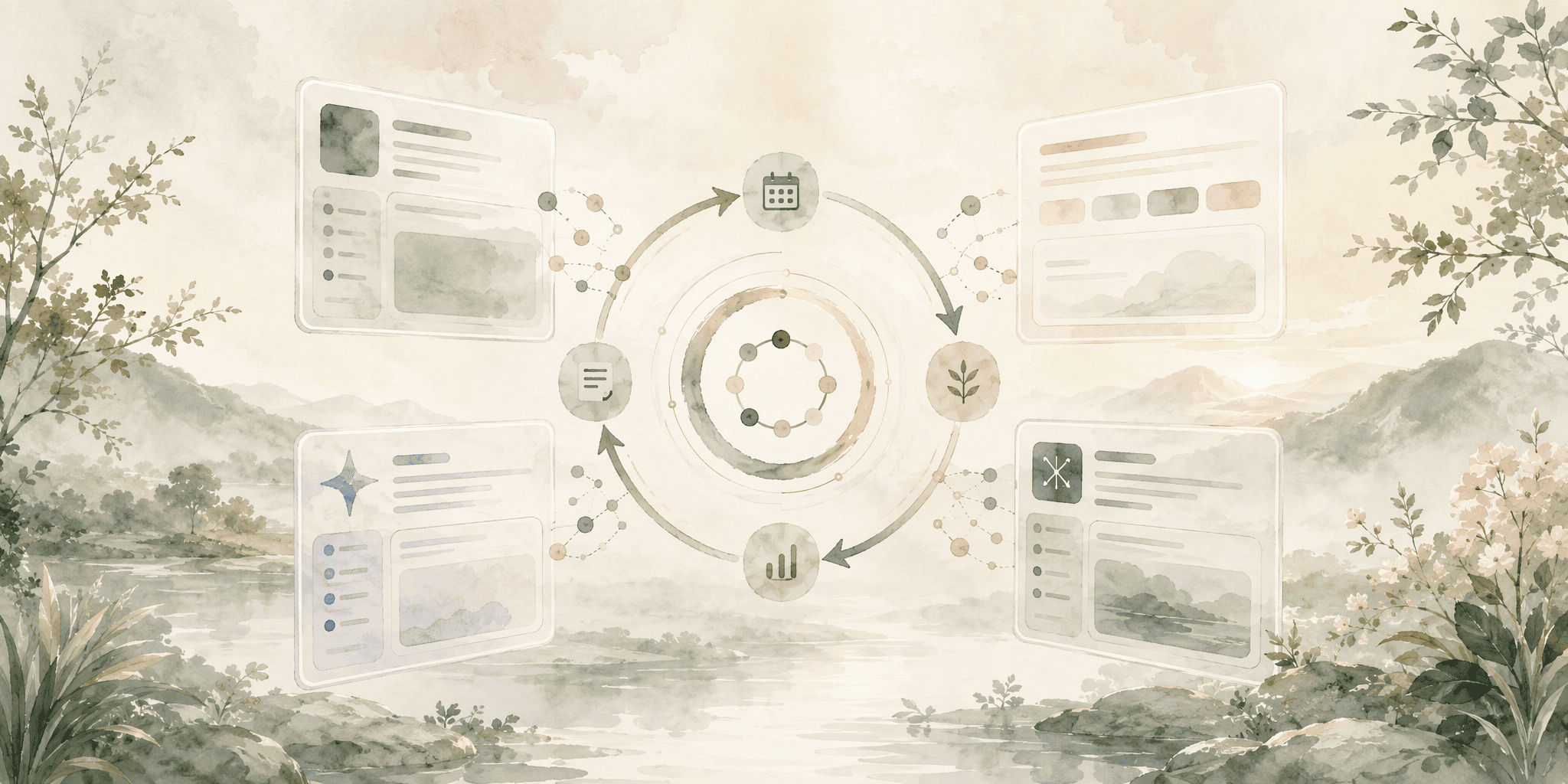
Competitive benchmarking in AI search is the only way to know whether your citation gains represent real share-of-voice improvement or merely reflect overall category growth. Traditional competitive intelligence tools cannot monitor which competitors AI engines cite in generated answers. AI-native platforms can.
Siftly's AI Citation Tracking feature surfaces visibility share, competitor rankings, and source analysis across ChatGPT, Google AI Overviews, Gemini, and Perplexity. Its AI search competitor monitoring is read-only, so there is no pipeline integration risk. You see which competitors appear, on which prompts, at which citation positions, without granting write access to your CRM.
Set a monthly cadence. In the first week, pull your AI visibility score and competitive share of voice. Patagonia's AI Visibility held at a score of 79 or 80 in every month of the January to April 2026 window, a stability that signals disciplined content engineering.
In the second week, review the prompt coverage report and identify gaps where competitors are cited and you are not. In the third week, update or publish the content assets needed to close those gaps.
In the fourth week, run the monitoring queries again and measure movement. The cycle is tight enough to show momentum inside a quarter and long enough to let content changes index.
Organizational ownership matters. AI visibility spans both the SEO team and the brand marketing team. Assign a single owner responsible for the AI visibility score, the prompt coverage metric, and the competitive benchmarking output.
Give that owner access to a platform that bundles real-time monitoring with prescriptive optimization recommendations. Siftly's Growth tier includes real-time monitoring across ChatGPT, Google AI Overviews, Gemini, and Perplexity plus prescriptive recommendations grounded in citation analysis.
A dedicated platform plus a dedicated operational cadence produces compounding visibility gains. Running AI visibility as a side project produces noise.
Conclusion
The evidence from 2026 is unambiguous. Generative AI is no longer a peripheral discovery channel. Organic search has already lost 23.6% of session volume, while AI platform referrals grew from a rounding error to 6.2% of all sessions and 74.6% of tracked searches end without a click. Brands that treat GEO as an experimental side project will cede share of voice to competitors who have already operationalized it.
The seven-step framework outlined here is backed by platform data, not speculation. Deploy a monitoring stack that captures citations, which means looking at where your brand gets mentioned inside AI answers. Engineer content in structured, extractable formats with 14-day freshness cycles.
Build entity and schema foundations that make your brand unambiguous to retrieval models. Integrate product feeds so AI commerce agents can find, price, and recommend your catalog accurately.
Map the prompts your buyers actually use and build a framework that closes coverage gaps. Establish a monthly competitive benchmarking cadence with a single owner and a platform that turns visibility data into prescriptive action.
At the current growth rate, generative AI may become 10% of website traffic by next year. The brands that show up in AI answers today are building the citation graph that will compound for years. The brands that wait will find that graph already occupied by competitors who started earlier. The window to establish AI authority in your category is open now. It will not stay open indefinitely.
Frequently Asked Questions
What steps should brands take to optimize their content for generative AI search engines in 2026?
Engineer extractable definitional sentences that AI can cite verbatim, maintain consistent entity names everywhere, and publish original research. Add a llms.txt file to point crawlers at your priority content, and keep your product feeds in real-time sync so AI commerce agents surface accurate offers.
Which metrics truly measure brand visibility in generative AI results like ChatGPT and Google AI Overviews?
Stop watching rankings and click-through rates. Measure citation frequency, share of AI answers across platforms, and AI referral traffic growth. AI platform referrals grew from 0.1% to 6.2% of all sessions across tracked sites, making owned share-of-voice inside synthesized answers the new visibility currency.
How does generative engine optimization (GEO) differ from traditional SEO?
GEO optimizes for citation in AI-generated answers, not ranking on a search results page. AI Overviews reduce click-through at position one by 56.9%, and informational-query traffic plunged 43.9%. The techniques overlap, but the success metric shifts from blue-link clicks to being the source the model names.
What tools are available in 2026 for monitoring and improving brand presence across AI platforms like Gemini and Perplexity?
Platforms have emerged that track brand mentions inside AI-generated responses across ChatGPT, Gemini, Perplexity, and Claude. Combine them with the llms.txt standard to guide crawler attention and with citation-monitoring dashboards that map your competitive share of voice inside each model’s synthesized answers.
How can brands influence citations and product recommendations in AI-generated answers?
Publish self-contained facts models can extract, keep entity names uniform across your site, and build the topical authority signals AI engines weight. For commerce, connect real-time product feeds so models pull accurate inventory and pricing rather than guessing or citing a retailer instead of you.
What does competitive benchmarking look like for AI search visibility?
It tracks which brands appear in AI answers for your priority queries across multiple models, ChatGPT, Gemini, Perplexity, Claude. You measure citation share, not link position, and monitor how product recommendations shift as feeds update. 74.6% of tracked searches already end without a click, so the benchmark is inside the answer box.
Sources
- 8 Strategic Picks to Build Machine Advantage in ChatGPT Agentic Commerce - siftly.ai
- 15-20% of Referral Traffic Now Comes from AI Chat. - siftly.ai
- Will GEO replace SEO – or become part of it? - searchengineland.com
- Generative Engine Optimization Best Practices: The Complete 2026 Playbook - GenOptima - www.gen-optima.com
- Semrush-AI-Visibility-Index-2026.pdf - lp.semrush.com
- GEO vs. SEO: A Comparative Guide for Digital Marketers - www.semrush.com
- How Google AI Overviews Decide Which Brands to Mention | Am I Cited - www.amicited.com
Keep exploring
More from the blog.

Oct 23, 2026
The 527% Traffic Shift That Makes Enterprise GEO Software a Boardroom Mandate
Your organic search traffic just fell off a cliff. It dropped 27% year-over-year, and your traditional SEO dashboard offers zero explanation.

Oct 23, 2026
How to Get Real-Time Alerts When Competitors Change Their Messaging
A quiet update to a competitor's homepage can rewire how AI search engines frame your entire category in under 48 hours.

Oct 22, 2026
7 Best AI Brand Monitoring Tools for Startups in 2026
Your startup spent months tightening its messaging and building an organic presence. But when a buyer asks ChatGPT who the top options are in your category