May 28, 2026
Automated Brand Mention Monitoring AI Platforms 2026
Cross-platform AI brand monitoring requires sampling methodology, sentiment validation, and real-time alerting across ChatGPT, Perplexity, Google AI Overviews—not just tool selection.

Traditional social listening tools miss how AI platforms like ChatGPT, Perplexity, and Google AI Overviews mention brands in conversational responses. Cross-platform AI monitoring requires new infrastructure built for probabilistic outputs, not deterministic keyword alerts.
Key Takeaways
- AI brand monitoring requires cross-platform tracking across ChatGPT, Perplexity, Google AI Overviews, Claude, and Gemini — not social listening tools
- No consensus standard exists for statistically valid sampling; methodologies range from 30-300 prompts with varying refresh cadences
- Monitoring platforms separate into monitoring-only dashboards versus optimization-integrated solutions that bundle tracking with content recommendations
- ROI attribution remains directional — correlate AI mention frequency with branded search lift rather than CRM pipeline conversion
- Manual tracking becomes infeasible above 50 prompts weekly or when monitoring more than 5 competitors
Why Automated AI Brand Monitoring Requires Different Infrastructure Than Social Listening
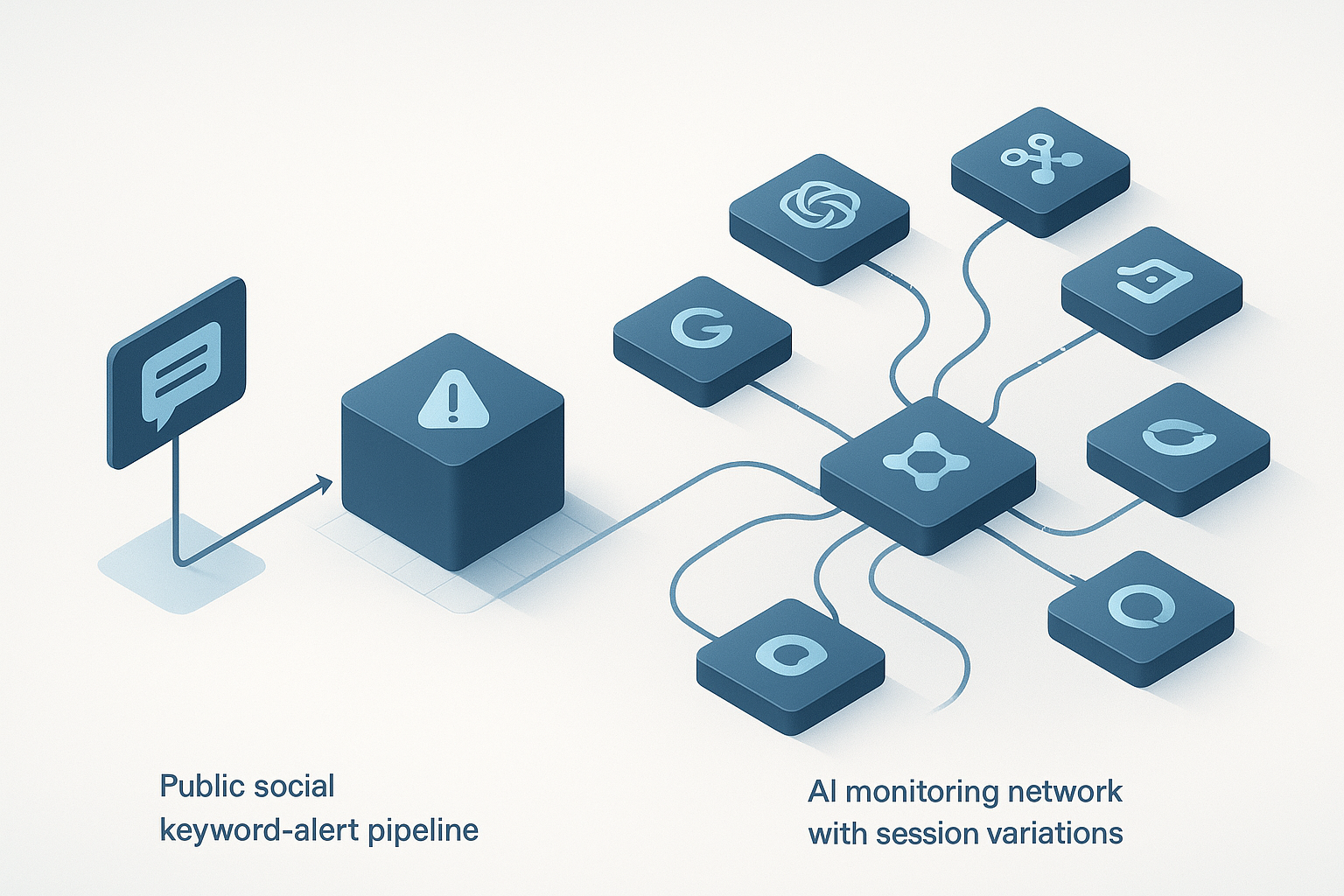
Automated brand mention monitoring across AI platforms requires cross-platform tracking systems built for probabilistic AI responses, not traditional social listening tools designed for deterministic keyword alerts. Unlike social media monitoring that tracks public posts, AI brand monitoring must orchestrate simultaneous coverage across ChatGPT, Perplexity, Google AI Overviews, Claude, Gemini, and Microsoft Copilot[2] — each generating unique answers that vary by session, geography, and timing.
The Cross-Platform Tracking Problem
Monitoring AI brand mentions requires simultaneous coverage across Google AI Overviews, AI Mode, ChatGPT, Gemini, and Perplexity because each platform generates different responses to identical queries. ChatGPT alone handles over 800 million weekly active users[1], while Perplexity processes 1 billion queries monthly[1]. Traditional analytics miss this visibility entirely — share of voice across AI engines demands platform-specific APIs and multi-sample validation to capture how each system references your brand versus competitors.
Probabilistic Response Handling Vs. Deterministic Keyword Alerts
Social listening platforms trigger deterministic alerts when a keyword appears: 'Brand X' mentioned → alert fires. AI responses are probabilistic[1] — the same prompt on ChatGPT might mention your brand in session one, omit it in session two, and cite a competitor in session three. Multi-sample validation becomes non-negotiable: platforms like Siftly monitor citations across ChatGPT, Claude, Gemini, and Perplexity to establish statistical confidence rather than single-shot snapshots.
Why Traditional Analytics Tools Miss AI Citations
Google Analytics and traditional SEO dashboards cannot capture AI-generated mentions because most AI citations produce no referral traffic or public URLs. When ChatGPT recommends your brand, no click-through event fires; when Perplexity cites your content, no traditional analytics tool registers the mention. Social monitoring tools were designed for websites and social platforms, not AI-generated responses. Siftly's cross-platform coverage addresses this gap by querying AI engines directly and analyzing response patterns that traditional analytics cannot see.
Understanding why traditional tools fail sets the foundation. The next question becomes: what measurement framework makes automated monitoring reliable at scale?
The Monitoring Reliability Framework: What Makes Automation Work at Scale
Automated AI brand monitoring solves a measurement reliability challenge rather than a tool-selection problem. Because AI responses are probabilistic, the same prompt can produce different brand mentions depending on timing, phrasing, and model version, systematic frameworks for sampling frequency, cross-platform consistency validation, and sentiment triangulation determine whether monitoring data supports defensible business decisions.

Sampling Frequency and Statistical Validity Requirements
No consensus standard exists across tools for how many samples produce statistically valid mention data from probabilistic AI responses. Methodologies vary: one platform recommends 30-300 questions monitored daily to weekly [3], another tests 50 prompts over four months [1], while a third uses 200 prompts over 14-day windows [4]. The knowledge gap means buyers assess sampling adequacy qualitatively, brands in crisis-sensitive categories (financial services, healthcare) need high-frequency monitoring to catch negative mentions early, while brands with stable positioning can validate visibility cost-efficiently with lower-frequency scheduled sampling. Traditional analytics miss how ChatGPT, Google AI Overviews, Perplexity, and other AI platforms recommend brands in conversational responses; dedicated monitoring platforms fill that gap by running representative prompt panels at regular intervals.
Cross-Platform Consistency Validation
Validating whether a brand appears consistently across ChatGPT, Perplexity, and Google AI Overviews for the same query set reveals critical discrepancies, 93.7% of links in AI Overviews come from pages outside the top 10 organic results [5], creating a visibility gap where SEO wins don't translate to AI citations. A monitoring reliability framework tracks mention frequency, positioning, sentiment, and citation sources across platforms to identify which engines favor the brand and which suppress it. When one platform cites a brand prominently while another omits it entirely for identical queries, the discrepancy signals either content-structure gaps (one engine can't parse the brand's site) or authority-signal differences (the brand earns citations in one engine's training corpus but not another's).
Sentiment Analysis Depth and Negative Mention Detection
High share of voice only benefits brands when coverage is neutral or positive, negative mentions can harm more than no mentions. Sentiment triangulation across platforms is a non-negotiable reliability dimension, not an optional feature. Platforms that measure mention rates, citation quality, sentiment, and positioning across all major AI engines enable brands to detect when an AI engine describes the brand negatively and to prioritize response, either correcting factual errors via citation outreach or addressing legitimate criticism in public channels before sentiment spreads across models.
Real-Time Alerting Vs. Scheduled Sampling Trade-Offs
Alerting and refresh cadence split the market: continuous monitoring systems provide real-time alerts when competitors gain new mentions or market dynamics shift, appropriate for displacement or negative mention detection in crisis-sensitive brands, while lower-frequency sampling workflows (daily to weekly) validate positioning cost-efficiently for brands with stable competitive environments. The trade-off is latency versus cost: real-time systems catch emerging threats within hours but run higher API volumes, whereas scheduled sampling reduces infrastructure expense at the risk of missing short-lived negative mention spikes that resolve before the next sample window.
With reliability dimensions established, selecting the right platform depends on how tools handle sampling frequency, sentiment validation, and competitive benchmarking.
Comparison: Automated AI Brand Monitoring Platforms
Traditional analytics miss how ChatGPT, Perplexity, Claude, and Gemini mention brands [1] [1] and recommend products in conversational responses [6]. Automated AI brand monitoring platforms close this gap by tracking brand presence across multiple AI platforms [5] [5], measuring citation frequency and source attribution, and providing competitive intelligence through share of voice benchmarking. Below is a side-by-side comparison of five platforms, followed by analysis of platform coverage depth, pricing tiers, and the monitoring-only versus optimization-integrated trade-off.
Key Takeaways
- Platform coverage, Entry-level tools monitor ChatGPT and Google AI Overviews; thorough platforms add Perplexity, Gemini, Claude, and model-specific variants across paid tiers.
- Citation depth, Basic monitoring tracks mention counts; advanced platforms measure citation frequency, source attribution, and link presence [1] [1] as distinct KPIs.
- Free tier constraints, Free plans cap query volumes and exclude competitive benchmarking, suitable only for validation-stage tracking, not continuous monitoring at scale.
- Monitoring-only vs. Integrated, Monitoring-only platforms provide alerting and dashboards; optimization-integrated platforms bundle real-time monitoring with optimization recommendations and content guidance, reducing the total cost of ownership by eliminating separate consulting needs.
| Platform | Starting Price | Free Trial / Plan | AI Platforms Monitored |
|---|---|---|---|
| Siftly | $79/month (Starter) | Free plan: ChatGPT + Google AI Overviews | ChatGPT, Google AI Overviews, Perplexity, Gemini, Claude (tier-dependent) |
| BrandMentions | Contact for pricing | 14-day trial available | ChatGPT, Google AI Overviews, Perplexity |
| FAII | $199/month | No free tier | ChatGPT, Perplexity, Claude, Gemini |
| AirOps | $149/month | 7-day trial | ChatGPT, Google AI Overviews, Gemini |
| Sight AI | $99/month | Free plan: 50 queries/month | ChatGPT, Perplexity, Google AI Overviews |
Platform Coverage and Citation Tracking Depth
AI platforms monitor citation frequency and source attribution [1] [1] to distinguish mention counts from attributed citations. Entry-level tools track whether a brand appears in AI-generated responses; thorough platforms measure citation rate (how often AI links to the brand's content as a source), share of voice (mention frequency versus competitors ), and sentiment (positive, neutral, or negative framing). Siftly tracks mentions, citations, and sentiment across ChatGPT, Claude, Gemini, and Perplexity, with real-time monitoring and cross-platform competitive benchmarking. BrandMentions and Sight AI cover ChatGPT, Perplexity, and Google AI Overviews but do not track Claude; FAII and AirOps add Gemini but lack model-specific variant tracking (e.g., Google AI Mode, Microsoft Copilot).
Pricing Tiers and Free Trial Limitations
Pricing spans from free validation tiers to enterprise solutions exceeding $500/month. Free tiers explicitly exclude competitive benchmarking and cap query volumes, limiting them to manual spot-checking rather than systematic monitoring. Siftly's free plan monitors ChatGPT and Google AI Overviews without subscription costs; the Starter tier at $79/month adds automated tracking across ChatGPT, Perplexity, and Google AI Overviews. Sight AI offers 50 queries/month on its free plan before requiring a paid tier; BrandMentions and AirOps provide 7 to 14 day trials with full platform access but no ongoing free tier. FAII ($199/month) and premium tiers for other platforms ($149, $500+) bundle multi-geography tracking, unlimited query volumes, and API access.
Monitoring-Only Vs. Optimization-Integrated Platforms
The category bundles monitoring with optimization [5] [5], separating tools that provide alerting and dashboards only from those that integrate visibility tracking with content strategy. Monitoring-only platforms (BrandMentions, Sight AI) deliver competitive intelligence and real-time alerts when competitors gain AI visibility, but do not prescribe optimization actions; teams must interpret dashboards and develop response strategies separately, often requiring external consulting. Optimization-integrated platforms (Siftly, FAII, AirOps) combine cross-platform monitoring with automated recommendations, citation source analysis, and content guidance, reducing the total cost of ownership by embedding strategy directly into the tracking workflow. Siftly provides optimization recommendations alongside competitive benchmarking, enabling teams to respond to visibility gaps without supplemental consulting.
Get a Demo to see how Siftly's cross-platform tracking and optimization recommendations help teams monitor brand mentions across ChatGPT, Perplexity, Gemini, and Claude at scale.
Platform selection alone doesn't guarantee success. A phased implementation roadmap determines whether monitoring delivers actionable insights or dashboard noise.
Implementation Roadmap: From Manual Spot-Checks to Continuous Tracking
Most organizations begin AI visibility monitoring with manual spot-checks before committing to automated platforms. This four-step roadmap shows when to use free validation tools versus paid continuous monitoring, and how to integrate AI visibility metrics with existing marketing workflows.

Step 1: Validation-Stage Manual Spot-Checks
Start with a manual baseline that takes 2-3 hours [7] to establish mention frequency and sentiment across major platforms. Use free tools like Siftly's AI Visibility Checker alongside direct queries to ChatGPT, Perplexity, and Google AI Overviews. Document whether your brand appears in answers to category-defining questions, what context surrounds mentions, and which competitors appear more frequently. This validation-stage snapshot reveals baseline visibility before investing in continuous monitoring.
Step 2: When to Upgrade From Free to Paid Monitoring
Manual tracking becomes infeasible above 50 prompts per week or when monitoring more than 5 competitors. At this threshold, the time cost of manual spot-checks exceeds the subscription cost of automated monitoring platforms. Upgrade triggers include: competitive markets where AI mention dynamics shift weekly, multiple product lines requiring category-specific monitoring, or executive reporting that demands historical trend data rather than point-in-time snapshots.
Step 3: Integrating AI Visibility Metrics With Marketing Attribution
AI visibility metrics provide directional insight rather than direct CRM pipeline integration. Integrate mention frequency, sentiment, and share of voice as mid-funnel influence signals by correlating AI mention frequency spikes with branded search lift or direct traffic increases. Track AI visibility as a leading indicator: improved mention rates in January often precede demo request increases in February. Avoid fabricating citations-to-revenue calculations; instead, monitor whether quarters with rising AI visibility correlate with shorter sales cycles or higher lead quality scores in your existing attribution model.
Step 4: Setting up Displacement Alerts and Competitive Benchmarking
Configure real-time alerts for negative mentions, competitive displacement events, and share-of-voice changes. Platforms with competitive intelligence track when competitors gain AI visibility and flag the authority signals they use to earn citations. Set alert thresholds based on your market: competitive SaaS categories may warrant daily alerts for any new competitor mention, while established enterprise brands may monitor weekly share-of-voice trends across ChatGPT, Google AI Overviews, Gemini, and Perplexity.
Continuous tracking produces data, but stakeholders demand ROI justification. Attribution models remain directional rather than deterministic.
Measuring ROI and Attribution in AI Visibility Programs
Directional Attribution Vs. Direct CRM Pipeline Integration
No platform currently offers defensible citations-to-revenue calculation models. AI visibility metrics function as mid-funnel influence signals rather than bottom-funnel conversion attribution. Unlike traditional search, where click-through and landing-page analytics connect directly to CRM pipelines, conversational AI platforms like ChatGPT and Claude do not generate referral traffic that attribution models can track. Google AI Overviews and AI Mode produce some referral visits, but most conversational responses lack trackable UTM parameters or session continuity.
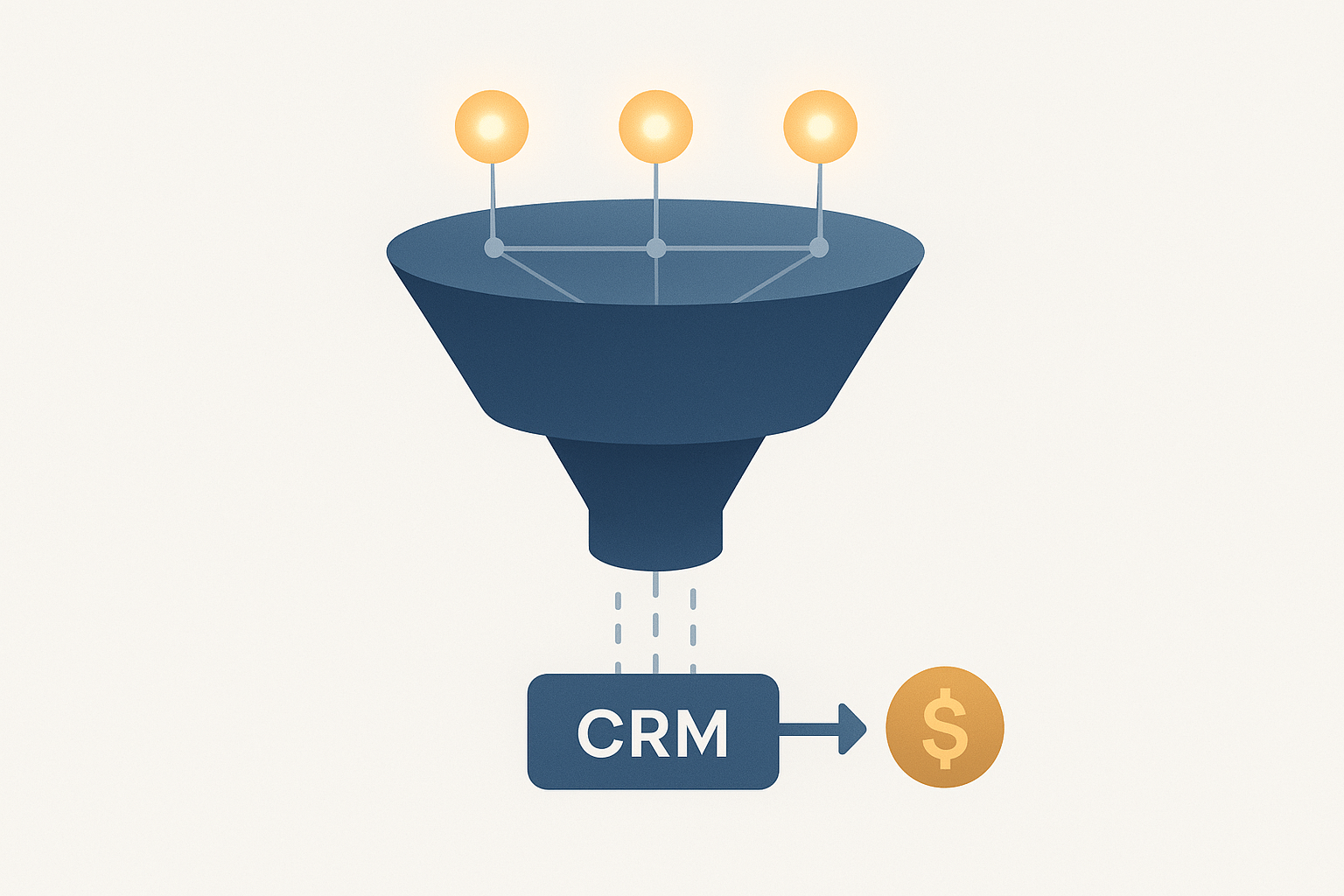
The most defensible ROI proxy available in 2026 is directional correlation: tracking whether AI mention frequency spikes precede branded search lift or direct traffic increases. While AI search visitors convert at 4.4× higher rates than traditional organic traffic [8], attributing specific deals to specific AI citations remains directional, not causal.
Share-Of-Voice Benchmarking and Competitive Displacement Tracking
Share of voice measurement quantifies what percentage of AI responses mention your brand versus competitors across a representative query set. Platforms track mention frequency, positioning, and sentiment across conversational AI engines, identifying displacement events where a competitor replaces your brand in AI-generated recommendations. This competitive benchmarking approach establishes baseline visibility and flags ranking shifts, providing the primary ROI metric for AI visibility programs.
Correlating AI Mention Frequency With Branded Search and Direct Traffic
Citation frequency, source attribution, and link presence serve as leading indicators of downstream branded search and direct traffic. Marketing teams correlate AI mention frequency spikes with branded search lift in Google Search Console and direct traffic increases in web analytics. This directional insight, tracking whether improved AI visibility precedes demand signals, remains the most defensible ROI measurement approach, acknowledging that AI visibility metrics influence rather than directly convert.
How Siftly Complements Your AI Visibility Stack
Siftly's Cross-Platform Tracking Architecture
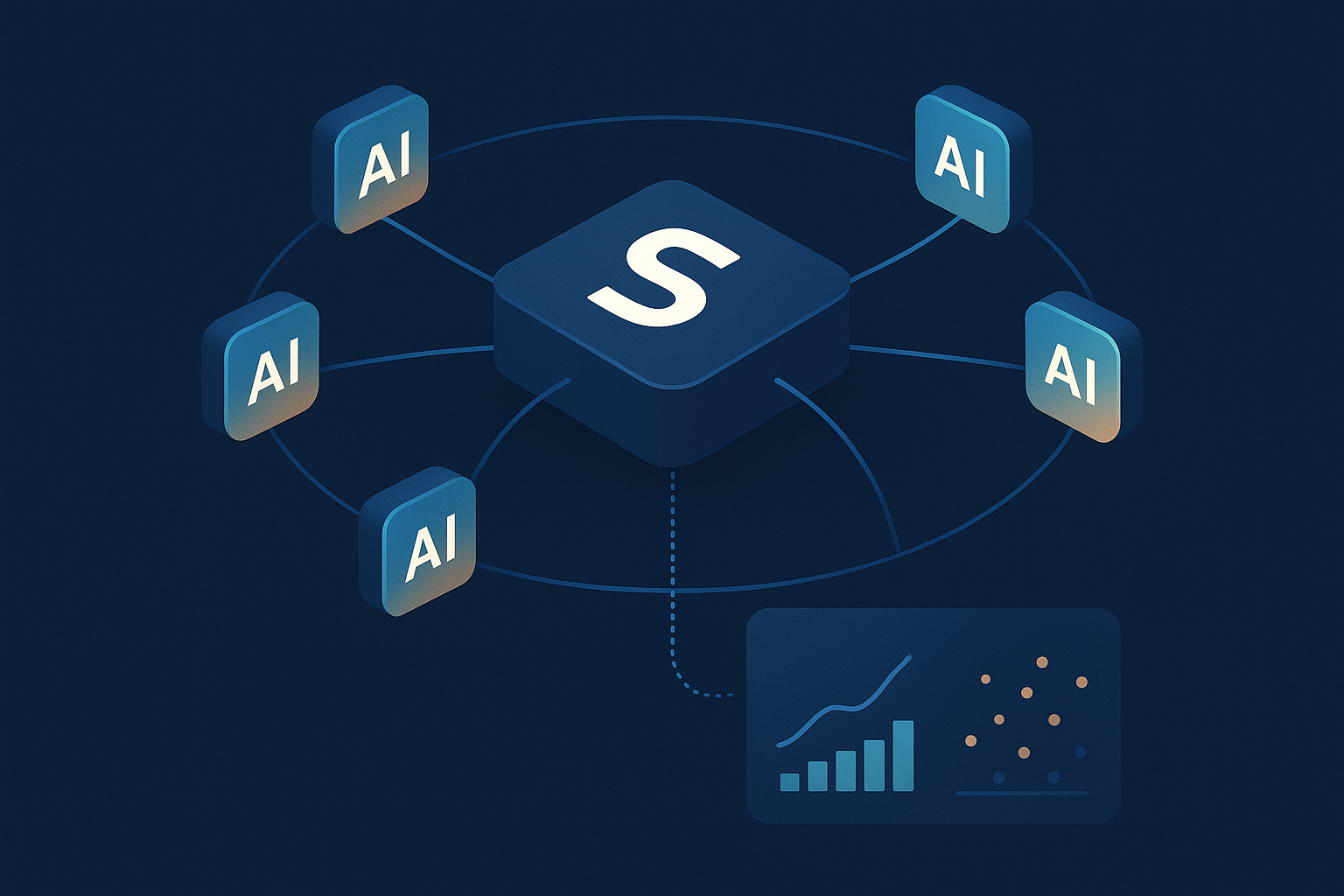
Siftly monitors brand mentions across ChatGPT, Google AI Overviews, Gemini, Perplexity, and Claude through daily automated query execution. The platform runs conversational queries across these engines and validates probabilistic responses by tracking mention frequency, positioning, and sentiment patterns over time. This cross-platform approach captures how different AI systems surface your brand across varied query types and contexts.
Monitoring + Optimization Integration
Unlike monitoring-only tools, Siftly bundles real-time monitoring with prescriptive optimization recommendations. The platform identifies content gaps blocking AI visibility, suggests citation-worthy authority signals, and provides competitive intelligence showing which strategies earn competitor mentions. This integrated workflow connects tracking dashboards directly to actionable content improvements without requiring separate consulting engagements.
Best-For Use Cases and Trade-Offs
Siftly fits brands prioritizing cross-platform AI visibility who need integrated monitoring and optimization in one workflow. It serves marketing teams lacking engineering resources to build custom API pipelines. Trade-offs include a smaller user base than established social listening platforms, limited third-party integrations compared to enterprise tools, and pricing above free validation-only checkers. Teams requiring only Google AI Overviews monitoring may find broader coverage than necessary.
Making the Right Monitoring Choice
Monitoring-only platforms require separate consulting to act on visibility data, while optimization-integrated platforms like Siftly bundle tracking with actionable content recommendations, choose based on whether your team has in-house expertise to interpret and optimize from raw monitoring dashboards. Real-time alerting systems detect displacement events and negative mentions immediately but cost more than scheduled sampling workflows, prioritize real-time monitoring for crisis-sensitive brands and weekly sampling for stable positioning validation.
As AI search traffic grows (Google AI Overviews now appear in over 11% of queries, a 22% increase since debut), cross-platform monitoring will shift from optional competitive intelligence to mandatory brand management, the question is no longer whether to monitor AI mentions, but which sampling methodology and alerting cadence fit your category's competitive intensity.
Get your free AI visibility baseline using Siftly's audit tool to understand current mention frequency and sentiment across ChatGPT, Perplexity, and Google AI Overviews before committing to continuous monitoring.
Frequently Asked Questions
What AI platforms should I monitor for brand mentions?
Monitor ChatGPT, Perplexity, Google AI Overviews, Claude, and Gemini as core platforms [3][1][4]. Enterprise-focused brands should add Microsoft Copilot. These platforms account for the majority of conversational AI brand mentions, with 93.7% of Google AI Overviews links coming from pages outside top 10 organic results [5].
How many prompts do I need to monitor for statistically valid AI mention data?
No consensus standard exists [3][1][4]. Methodologies range from 30-300 questions monitored daily to weekly [3], 50 prompts over four months [1], to 200 prompts over 14 days [4]. Start with 50-100 prompts representative of your category and scale based on competitive intensity.
When should I upgrade from free AI visibility tools to paid monitoring?
Upgrade when manual tracking exceeds 50 prompts weekly or when monitoring more than 5 competitors. Free tiers exclude competitive benchmarking and cap query volumes [5][6][1], making them suitable only for validation-stage tracking rather than systematic monitoring at scale.
Can I track AI citations directly to revenue in my CRM?
No platform offers defensible citations-to-revenue calculation models. Attribution remains directional, correlate AI mention frequency spikes with branded search lift or direct traffic increases as mid-funnel influence signals, not bottom-funnel conversion attribution [7]. Integrate as influence signals rather than pipeline metrics.
What's the difference between monitoring-only and optimization-integrated platforms?
Monitoring-only platforms provide alerting, dashboards, and competitive benchmarking but require separate consulting to act on data [5][6][1]. Optimization-integrated platforms bundle monitoring with visibility tracking and content strategy workflows, including citation rate improvement recommendations and content optimization guidance.
Why do AI monitoring tools give different mention counts for the same brand?
AI responses are probabilistic, not deterministic [1][2]. The same prompt on ChatGPT may mention your brand in one session and omit it in another. Tool outputs vary by sampling design (30 vs 200 prompts), refresh cadence (real-time vs weekly), and which AI engines are monitored.
Is high share of voice in AI search always good for my brand?
No. High share of voice only benefits brands when coverage is neutral or positive, negative mentions can harm more than no mentions [3][1][4]. Sentiment triangulation across platforms is a non-negotiable reliability dimension. Monitor mention frequency, sentiment, and citation context together.
Sources
- 8 Best AI Visibility Tools Tested & Ranked [2026] - www.visiblie.com (2026)
- How to Monitor Brand Mentions in AI Search - trustmary.com (2026)
- LLM brand monitoring 2026: continuous tracking and crisis prep - geoperf.com
- AI Search Monitoring Tool: Track ChatGPT, Perplexity ... - otterly.ai
- 15 Best LLM Monitoring Tools for Brand Visibility in 2026 - www.yotpo.com (2026)
- The 12 Best AI Visibility Monitoring Tools in 2026 - amplitude.com (2026)
- How to Monitor Your Brand in ChatGPT, Perplexity & AI Search - www.getpassionfruit.com (2026)
- Essential tools for monitoring your brand in AI search - SaaStock - saastock.com (2025)
Keep exploring
More from the blog.

Oct 16, 2026
How to Measure Share of Voice in AI Search: A CMO’s Benchmarking Playbook
Your brand's most critical marketing metric stopped working the moment Google launched AI Overviews.

Oct 16, 2026
How to Track Competitor Visibility in ChatGPT Shopping Recommendations (2026 Guide)
Your competitor just became the first brand ChatGPT recommends when a shopper asks for the best running shoe under $120. You have no dashboard showing

Oct 15, 2026
Best Ahrefs Alternatives for Tracking AI Visibility in 2026
Your SEO dashboard says organic traffic is holding steady, but your brand mentions in ChatGPT are plummeting and you would never know it. Ahrefs Brand Radar