Jun 29, 2026
How to Monitor Competitor Mentions in AI Responses
Learn how to monitor competitor mentions across ChatGPT, Perplexity, Claude, and Google AI Overviews using manual spot-checking, custom API tracking, or automated platforms for 2026.

Large language models like ChatGPT and Perplexity recommend competitors directly in conversational answers, bypassing traditional analytics entirely. These AI-generated mentions influence purchase decisions without generating clickstream data.
Key Takeaways
- Traditional SERP trackers miss AI-generated competitor recommendations because language models aggregate brand mentions in answers rather than routing users to external pages
- Manual spot-checking works below 50 prompts per week and five competitors; beyond these thresholds, automated platforms become operationally necessary
- Custom API tracking requires engineering resources to manage rate limits and parse unstructured responses across ChatGPT, Claude, Gemini, and Perplexity
- Multi-platform coverage is the primary selection criterion when choosing automated monitoring tools because buyers research across multiple AI engines
- Share of voice and citation context matter more than raw mention counts for competitive intelligence in AI search
Why Traditional Brand Monitoring Misses Ai-Generated Competitor Mentions
Yes — you can monitor competitor mentions in AI responses through manual spot-checks, custom API integrations, or automated platforms like Siftly. Traditional web analytics and SERP rank tracking fail to capture these mentions because AI engines synthesize answers inline without generating clickthrough data, rendering conventional measurement blind to competitive positioning in ChatGPT, Perplexity, and Google AI Overviews.

AI Responses Synthesize Without Clickthrough Data
Traditional analytics miss AI-generated competitor mentions because large language models aggregate brand recommendations directly in their answers rather than routing users to external pages. When ChatGPT or Perplexity names three competitors in response to a buying query, no referral traffic reaches your analytics dashboard — the mention happens entirely within the AI's synthesized text. McKinsey's August 2025 survey found 44% of users are content to rely on AI-generated search summaries rather than visit brand websites, quantifying how visibility is shifting away from clickthrough-based metrics. Web analytics platforms track sessions and conversions but cannot see mentions that never generate a click, creating blind spots in competitive intelligence for brands evaluating share of voice across AI engines.
SERP Rank Tracking Doesn't Capture LLM Citations
Traditional SERP rank trackers measure where your domain appears in Google's ten blue links but ignore how ChatGPT, Claude, and Gemini recommend competitors in conversational answers. A brand ranking #3 for "best project management software" in organic search may never appear in ChatGPT's response to the same query — or appear fourth behind three competitors the SERP tracker never measured. AI engines evaluate content through citation-worthiness signals distinct from PageRank, prioritizing authoritative sources, structured data, and conversational relevance over backlink profiles. Real-time monitoring across multiple AI platforms reveals which competitors dominate recommendation moments, share of voice shifts, and sentiment gaps that SERP tools cannot detect because they track search result positions rather than synthesized answer content.
Non-Deterministic Response Variability
AI search introduces probabilistic variability that makes single manual checks unreliable for competitive intelligence. Answers can vary across runs, prompts, and time, meaning the competitor list ChatGPT returns today may differ from tomorrow's response to the identical query. Research published in April 2026 underscores the need for repeated measurements to characterize visibility as a distribution rather than a single-point outcome, establishing that one-off observations cannot assess a brand's share of voice against competitors. Automated platforms address this by running hundreds of prompt variations daily, tracking mention frequency, positioning, and sentiment trends over time to reveal competitive patterns that manual spot-checks miss entirely.
Once you understand why traditional monitoring fails, you can choose the tracking approach that matches your volume and engineering capacity.
How to Monitor Competitor Mentions in AI Responses: Three Approaches
Traditional analytics miss competitor mentions in AI-generated responses because these interactions bypass clickstream tracking entirely. Three monitoring approaches exist, each viable at different operational scales and technical capabilities.

Manual Spot-Checking: Volume Threshold and Limitations
Manual tracking remains viable below 50 prompts per week and five competitors. Beyond these thresholds, time cost and answer variability make manual checking impractical. ChatGPT, Perplexity, Google AI Overviews, and Claude each generate different responses to identical prompts, requiring multiple runs per query to capture competitive positioning accurately. When competitor lists exceed five brands or query volume exceeds 50 weekly checks, manual monitoring becomes operationally unsustainable.
Custom API Tracking: Technical Requirements and Cost
Building custom API tracking requires dedicated engineering resources to manage rate limits, parse unstructured responses, and maintain integrations across platforms. Each major AI platform enforces different rate constraints and response formats. ChatGPT, Claude, and Gemini APIs require separate authentication, error-handling logic, and quota management. Teams choosing this path should budget for ongoing maintenance as model updates shift response structures and citation formats.
Automated Platform Selection: Coverage and Feature Trade-Offs
Systematic share of voice monitoring across multiple platforms distinguishes dedicated AI visibility tools from manual or custom approaches. Platform coverage requirements for competitive intelligence differ from brand visibility monitoring: competitor mention tracking requires sampling across ChatGPT, Perplexity, Claude, and Google AI Overviews as the minimum viable set. Automated platforms offering Competitor Benchmarking provide real-time monitoring and optimization recommendations without requiring API management or engineering overhead.
Manual Spot-Checking: When Free Tracking Is Sufficient
When budgets are tight or brand mention volume is low, manual spot-checking provides a viable entry point for competitor visibility monitoring. This workflow suits teams tracking fewer than 50 prompts per week across a limited competitor set. Beyond that threshold, manual tracking becomes inefficient and incomplete for thorough monitoring across multiple AI engines.

Step 1: Define Your Prompt Set and Competitor List
Identify 10–20 buyer-intent queries where competitor mentions directly influence purchase decisions. Focus on category roundups ("best tools for X"), alternative searches ("Y competitor alternatives"), and use-case comparisons ("how to solve Z problem"). Select up to five competitors whose mentions you need to track — prioritize direct rivals who serve the same buyer persona and product category.
Step 2: Sample Across Chatgpt, Perplexity, Claude, and Google AI Overviews
Query each prompt across ChatGPT, Gemini, Perplexity, Google AI, Copilot, and Grok. Document which competitors appear in each response, their position in the answer, and whether your brand is mentioned. Recommended monitoring frequency: at least weekly, since answers change as models and web update. AI engines produce probabilistic responses that vary by prompt timing and context, so single checks cannot reliably establish visibility trends.
Step 3: Log Results in a Tracking Spreadsheet
Create a spreadsheet with columns for query text, platform, date sampled, competitors mentioned, and your brand's presence (mentioned / absent / ranked). Track trends over 4 to 8 weeks to identify persistent visibility gaps. When manual volume exceeds 50 prompts weekly, migrate to Siftly's automated monitoring solution, which automates tracking without manual monitoring and provides real-time competitive intelligence across major AI engines.
For teams with engineering capacity, custom API pipelines offer maximum control over data collection and experimentation workflows.
Custom API Tracking: Building Your Own Monitoring System
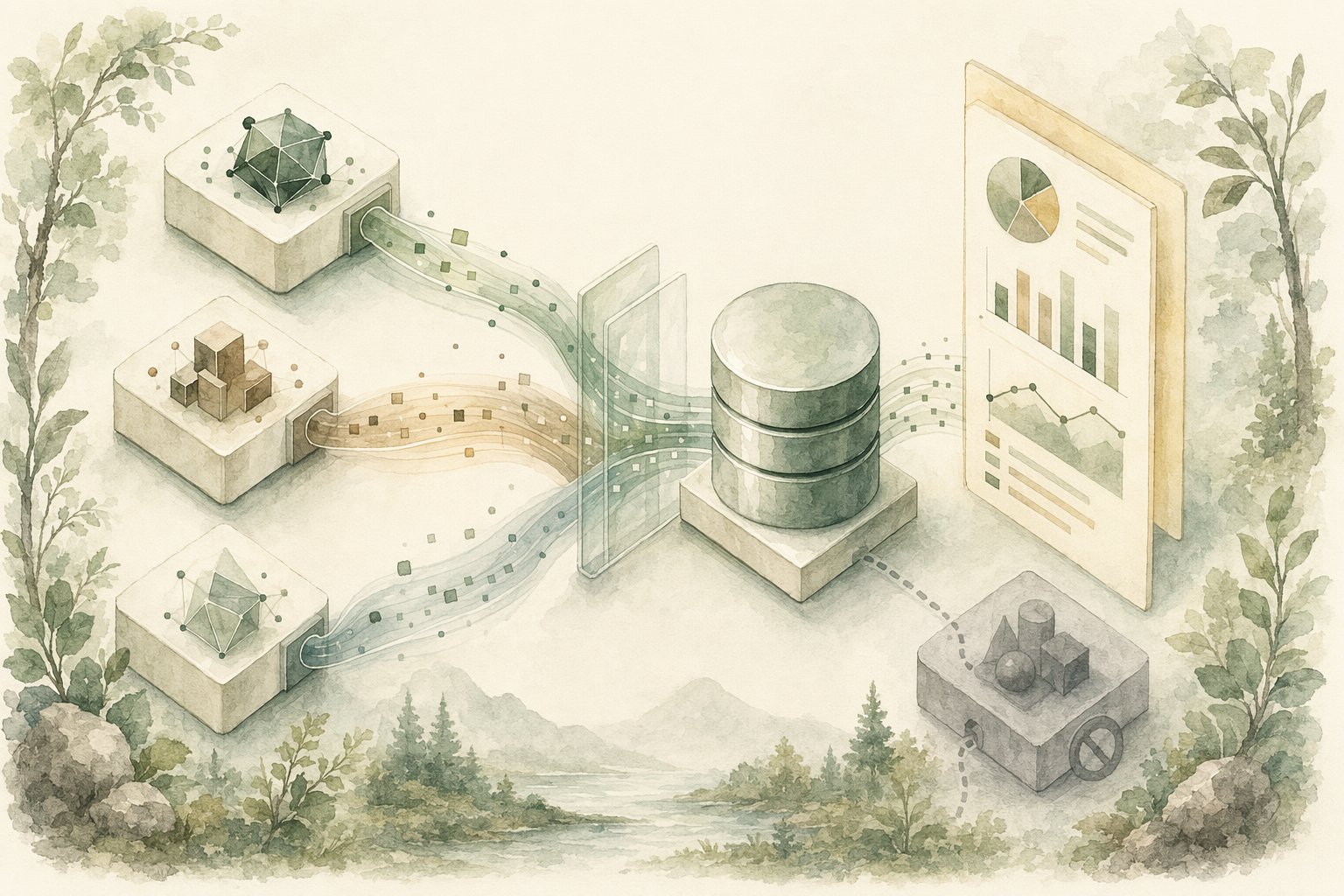
Teams with engineering resources can build custom monitoring pipelines by querying AI platform APIs directly. This approach enables controlled experimentation, testing whether content changes increase competitor displacement in AI-generated answers, a capability read-only platforms cannot provide.
Which Provider Apis Support Programmatic Access
OpenAI's ChatGPT API, Anthropic's Claude API, and Google's Gemini API all support programmatic queries for tracking brand mentions. Perplexity does not offer a public API for automated monitoring, creating a coverage blind spot. This gap means custom-built systems cannot track all major conversational AI platforms, unlike established platforms such as Ahrefs, which focus on traditional SERP tracking rather than AI-specific mention monitoring.
Rate Limits, Token Costs, and Monthly Budget Estimation
Token costs vary by model tier, lighter models incur low per-query costs, while advanced models cost more. For a typical monitoring workload (200 queries per month across five competitors), expect monthly spend in the low-to-medium range depending on model selection. Rate limits also differ by provider; monitor usage to avoid throttling during high-volume tracking periods.
Building the Extraction Pipeline: From Raw Response to Mention Log
A strong extraction pipeline parses API responses, identifies brand and competitor mentions, extracts sentiment and positioning data, then stores results in a database for trend analysis. Read-only passive monitoring captures snapshots without altering content; write-enabled integrations test live prompt variations to measure impact on mention frequency. Controlled experimentation, supported by custom API tracking, allows teams to correlate content changes with shifts in competitive intelligence across AI platforms.
When manual tracking becomes impractical and building custom infrastructure isn't viable, dedicated AI visibility platforms provide turnkey monitoring across multiple engines.
Automated Platform Selection: Choosing a Dedicated AI Visibility Tool
Platform Coverage: Chatgpt, Perplexity, Claude, and Google AI Overviews
Multi-platform coverage is the primary selection criterion because buyers research across ChatGPT, Perplexity, Gemini, and Google AI Overviews, not a single engine. Platforms that monitor only one or two engines leave blind spots in competitive intelligence. Claude is frequently excluded from monitoring tool coverage due to API access constraints, while ChatGPT and Perplexity are nearly universal. Siftly tracks ChatGPT, Google AI Overviews, Perplexity, Gemini, Copilot, Grok, DeepSeek, and Claude in Enterprise tiers, offering the widest engine coverage in this comparison.
Read-Only Monitoring Versus Write-Enabled Optimization
Read-only tools capture visibility snapshots but cannot test live optimizations. Monitoring-only platforms provide no optimization guidance, you see where you rank but receive no actionable recommendations for improving citation rates. Write-enabled platforms combine tracking with content experimentation, letting teams test schema changes, prompt variations, and citation outreach strategies directly within the tool. Teams that want both monitoring and optimization guidance in one platform should prioritize write-enabled options over passive dashboards.
Comparison Table: Six Platforms for Competitor Mention Tracking
| Platform | Price | Free Trial | Supported AI Platforms | Competitor Mention Tracking | Source Attribution | Sentiment Analysis | Reporting Cadence |
|---|---|---|---|---|---|---|---|
| Siftly | Not publicly disclosed | Yes | ChatGPT, AI Overviews, Perplexity, Gemini, Copilot, Grok, DeepSeek, Claude (Enterprise) | Yes | Yes | Yes | Daily |
| Sight AI | Not publicly disclosed | Not publicly disclosed | Not publicly disclosed | Not publicly disclosed | Not publicly disclosed | Not publicly disclosed | Not publicly disclosed |
| Mentioned | Not publicly disclosed | Not publicly disclosed | Not publicly disclosed | Not publicly disclosed | Not publicly disclosed | Not publicly disclosed | Not publicly disclosed |
| BrandMentions | Not publicly disclosed | Not publicly disclosed | Not publicly disclosed | Not publicly disclosed | Not publicly disclosed | Not publicly disclosed | Not publicly disclosed |
| Semai | Not publicly disclosed | Not publicly disclosed | Not publicly disclosed | Not publicly disclosed | Not publicly disclosed | Not publicly disclosed | Not publicly disclosed |
| Link-able | Not publicly disclosed | Not publicly disclosed | Not publicly disclosed | Not publicly disclosed | Not publicly disclosed | Not publicly disclosed | Not publicly disclosed |
No platform offers a defensible citations-to-revenue calculation model, attribution models remain directional rather than offering direct CRM integration. AI mention tracking serves as a mid-funnel influence signal, not a deterministic conversion driver. For additional guidance on cross-platform tracking, see Platform Track Brand Citations Multiple AI Engines.
Selecting the right metrics determines whether your monitoring workflow delivers actionable competitive intelligence or just raw mention counts.
What to Track: Metrics That Matter for Competitive Intelligence
Competitive intelligence in AI search requires different metrics than brand visibility monitoring. Focus on buyer-intent queries ('best tools for X', 'alternatives to Y') where multiple brands compete for mention slots, rather than branded queries where your own name anchors the response.

Mention Frequency and Share of Voice
Share of voice measures your mentions versus competitors across a set of buyer-intent prompts. In AI responses that mention 3 to 5 competitors per answer, a 20% share of voice across 50 queries may be competitive, whereas traditional SERP #1 position commands 30 to 40% of clicks. Track week-over-week changes in mention frequency and correlate directionally with trial signups or demo requests to identify influence patterns, since attribution remains directional rather than deterministic.
Sentiment and Positioning Context
Raw mention counts miss qualitative context. Assess whether competitor mentions are positive, neutral, or critical, and note positioning qualifiers like 'best for enterprise teams' or 'ideal for startups.' Siftly's analytics platform measures share of voice relative to competitors, sentiment analysis of brand mentions, and citation source authority, providing real-time monitoring alerts when competitors gain share of voice or when brand sentiment shifts.
Source Attribution and Citation Patterns
AI answers don't always link, making attribution incomplete. When citations do appear, they reveal which domains AI engines treat as authoritative for your category. Track which publications, technology journalism in TechCrunch and VentureBeat, analyst reports from Gartner and Forrester, independent product coverage in Forbes and Business Insider, the models cite when mentioning competitors. These patterns identify high-authority editorial opportunities where earned coverage drives LLM recommendation frequency.
A strong monitoring system requires ongoing sampling and alert workflows that adapt to answer variability and model updates.
Setting up Ongoing Monitoring and Alert Workflows
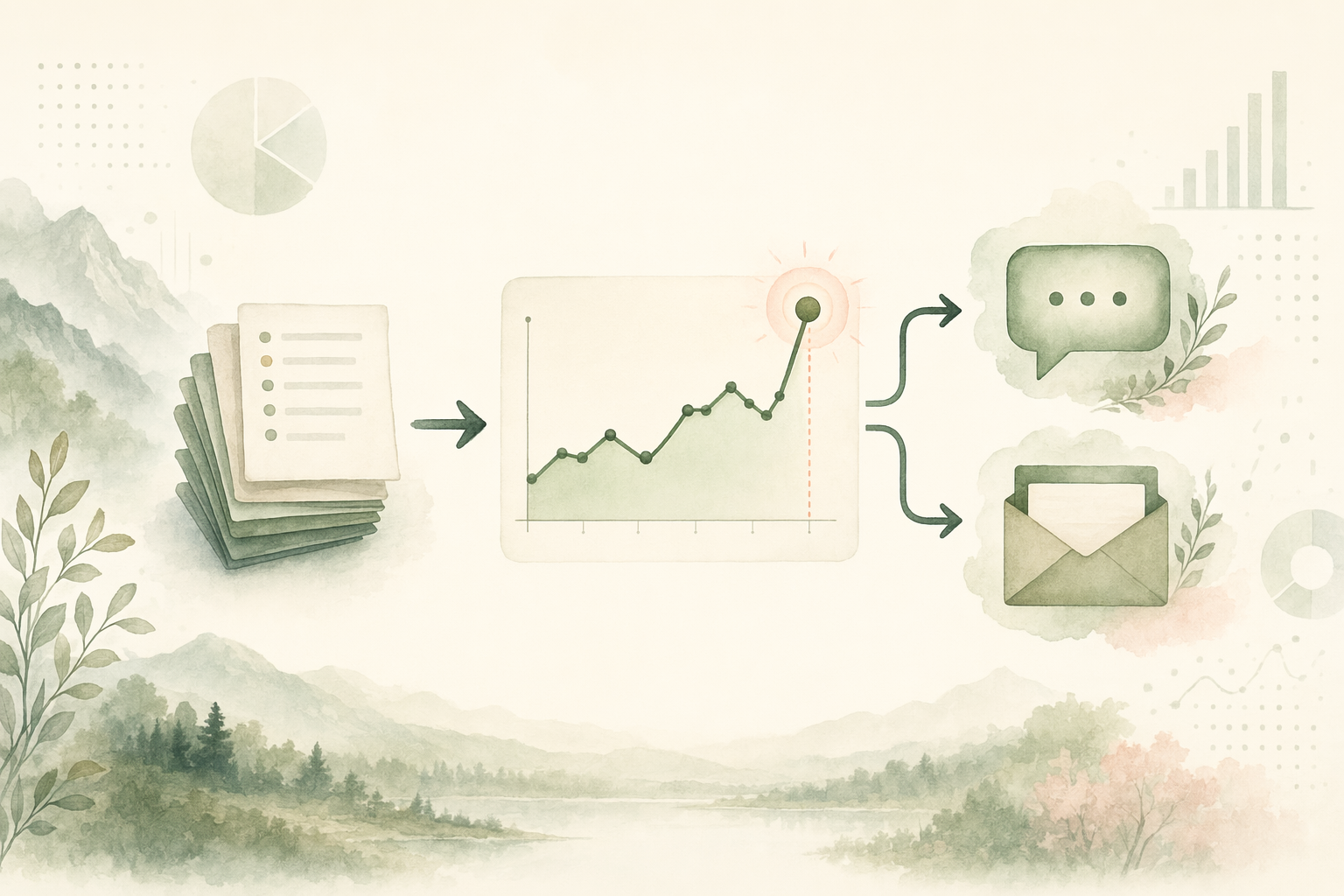
Establish a weekly sampling cadence at minimum, AI answers change as models and web content update. Weekly tracking detects statistically significant trends versus random noise in competitor positioning.
Alert Triggers: When Competitor Mentions Spike or Decline
Absolute thresholds (e.g., 'alert when competitor X appears in >5 responses') are unreliable due to answer variability. Instead, configure alerts that trigger on relative changes, notify teams when competitor share of voice increases by more than 10% week-over-week. Route alerts to the team member responsible for competitive positioning or content strategy, not just SEO or analytics teams.
When Monitoring-Only Tools Require Separate Consulting
Monitoring-only platforms provide no optimization guidance, forcing teams to hire separate consultants at $5,000 to $15,000 per project. Siftly combines real-time monitoring with actionable optimization recommendations, reducing the need for separate consulting engagements. Learn more in Most Reliable LLM Optimization Platforms.
Manual tracking is viable below 50 prompts per week and five competitors but becomes impractical at higher volumes due to time cost and answer variability. Custom API tracking delivers maximum flexibility for controlled experimentation but requires engineering resources to build and maintain extraction pipelines. Automated platforms offer turnkey multi-engine coverage but lack defensible attribution models, serving as mid-funnel influence signals rather than conversion drivers.
As AI search adoption grows beyond early adopters, competitor mention tracking will shift from a niche competitive intelligence tactic to a standard marketing capability. Teams that establish monitoring workflows now will have richer trend data when AI-generated answers influence a majority of buyer research journeys.
Get your free competitor mention baseline using Siftly's AI visibility checker this week, compare your share-of-voice against up to five competitors across ChatGPT, Perplexity, and Claude to identify which buyer-intent queries favor your brand versus theirs. Upgrade to automated monitoring when volume exceeds manual tracking thresholds.
Frequently Asked Questions
Can I track competitor mentions in AI responses for free?
Yes, through manual spot-checking across ChatGPT, Perplexity, Claude, and Google AI Overviews. This approach remains viable below 50 prompts per week and five competitors, requiring weekly sampling to catch answer changes. Tools like Siftly's free AI visibility checker accelerate manual workflows by automating the query execution step.
Which AI platforms should I monitor for competitor mentions?
ChatGPT, Perplexity, Claude, and Google AI Overviews form the minimum viable set for competitive intelligence. Buyers research across multiple engines rather than relying on a single platform, so monitoring only one or two leaves blind spots. Multi-platform coverage is the primary criterion when selecting automated monitoring tools.
How often should I check for competitor mentions in AI responses?
At least weekly, since AI answers change as models and web data update. Large language models aggregate brand recommendations directly in responses rather than routing users to external pages, so these mentions shift without generating referral traffic signals. Less-frequent sampling misses trend shifts in competitor visibility.
Do I need an engineering team to build custom API tracking?
Yes, custom API tracking requires engineering resources to set up extraction pipelines, manage rate limits, and store results. Each major AI platform enforces different rate constraints and response formats, adding ongoing maintenance overhead. Automated platforms suit teams without engineering capacity for custom development.
Can AI mention tracking measure ROI or revenue attribution?
No, AI answers don't always link, making attribution incomplete and directional rather than deterministic. No platform offers a defensible citations-to-revenue calculation model with direct CRM integration. AI mention tracking serves as a mid-funnel influence signal rather than a conversion driver, providing competitive intelligence without full attribution chains.
What's the difference between read-only monitoring and write-enabled optimization tools?
Read-only tools capture visibility snapshots but cannot test live optimizations or provide actionable recommendations for improving citation rates. Write-enabled platforms let you test whether content changes increase mention frequency or displace competitors, enabling controlled experimentation rather than passive observation of current rankings.
When should I upgrade from manual tracking to an automated platform?
When you're monitoring more than five competitors or running more than 50 prompts per week. Beyond these thresholds, time cost and answer variability make manual checking impractical. Automated platforms become operationally necessary to maintain consistent sampling cadence and capture trend data reliably.
Sources
- In Graphic Detail: How AI search is changing brand visibility - digiday.com (2025)
- Don't Measure Once: Measuring Visibility in AI Search (GEO) - arxiv.org (2026)
- Measure and Boost Your Share of Voice in AI Search - Exposure Ninja - exposureninja.com
- Best AI search monitoring tools for 2026 - TechnologyAdvice - technologyadvice.com (2026)
- Generative Engine Optimization: How to Dominate AI Search - arXiv - arxiv.org (2025)
- AI Visibility for SaaS Companies: How to Get Cited by ChatGPT ... - authoritytech.io
Keep exploring
More from the blog.

Oct 8, 2026
How to Track Competitor Pricing Changes Without Constantly Checking Their Websites
Checking competitor websites manually is a slow, error-prone drain on your team’s most valuable resource: time.

Oct 8, 2026
HubSpot Alternatives for AI Visibility Tracking in 2026
Your organic traffic just dropped 27% year-over-year, and the culprit isn't a Google algorithm update.

Oct 7, 2026
How to Get Real-Time Alerts When Competitors Change Their Messaging, A 6-Step Guide
A direct competitor rewrites their entire homepage overnight. They abandon 'analytics' for 'AI insights,' launch a new pricing tier