Oct 16, 2026
How to Track Competitor Visibility in ChatGPT Shopping Recommendations (2026 Guide)
Your competitor just became the first brand ChatGPT recommends when a shopper asks for the best running shoe under $120. You have no dashboard showing

Introduction
Your competitor just became the first brand ChatGPT recommends when a shopper asks for the best running shoe under $120. You have no dashboard showing that, no alert fired, and your traditional rank tracker still says you are position one for the same keyword on Google. Generative AI shopping recommendations operate in a parallel discovery channel where 900 million weekly active ChatGPT users now ask for product advice, and a brand mention drives a 2.5x lift in website visits over a direct rival.
Tracking who shows up inside those AI-generated answers is not an SEO extension job. It's a distinct competitive intelligence discipline that needs specialized monitoring tools and a working knowledge of how probabilistic generation models pick brands.
Backlinks and domain rating stop predicting visibility here. The brands building this tracking infrastructure right now gain an asymmetric edge as AI shopping adoption accelerates through 2026.
Key Takeaways
Tracking who ChatGPT recommends for a product category means measuring something fundamentally different from a SERP. AI recommendations are probabilistic, not algorithmic, the same prompt can return different brands across sessions. That changes which metrics matter.
- AI recommendations are probabilistic, not algorithmic: LLMs surface brands based on training data density, citation authority, and review consistency rather than traditional ranking signals.
- Manual queries provide a zero-cost starting point: Systematic prompt auditing across 20 to 30 shopping-intent queries reveals the current competitive landscape before investing in tools.
- Automated dashboards make tracking repeatable and scalable: Platforms like Siftly and Semrush's generative AI trackers execute queries at scale across ChatGPT, Gemini, and Claude to surface trends hidden in one-off checks.
- Share of Voice and Sentiment are the two north-star metrics: Share of Voice measures relative mention frequency, while Sentiment Score determines whether that visibility helps or hurts conversion.
- Optimization requires authoritative third-party content: Visibility improves when brands secure reviews on high-domain-authority sites and publish structured FAQ content aligned with common shopping queries.
Step 1: Understand What AI Shopping Recommendations Are and How They Differ from Traditional SEO

AI shopping recommendations are product suggestions that emerge inside a ChatGPT conversation, generated from probabilistic patterns in training data rather than from a crawled index of web pages. When a user asks for the best noise-canceling headphones under $200, ChatGPT does not consult a real-time ranking algorithm. It assembles an answer by weighting brand mentions, review sentiment, and retailer product data absorbed during model training, and for many search-intent prompts, a live web lookup grounds the response in retrieved pages. The engine is drawing on entity associations, not evaluating backlink profiles.
An Ahrefs study analyzing 75,000 brands confirmed what practitioners now observe daily: branded web mentions predicted AI visibility far more reliably than backlinks, domain rating, or any other technical SEO metric. Treating ChatGPT shopping recommendations as a search ranking problem is a strategic error. Competitors appear because their brand name, product identifiers, and customer reviews are sufficiently embedded in the model's representation of a product category, not because their page won the link graph.
Step 2: Perform Manual Queries to Identify Which Competitors ChatGPT Is Currently Recommending
Before paying for a monitoring platform, map the landscape yourself with manual spot-checks. Build a seed list of 20 to 30 shopping-intent queries written the way a real buyer talks. Think "best waterproof hiking boots under $150," "most reliable espresso machine for home use," or "lightweight travel backpack with laptop sleeve."
Type each one into ChatGPT and log every brand that comes back. Capture the position it shows up, and note whether the tone reads positive, negative, or neutral. Simple but effective.
Run this audit at least three times across separate sessions. ChatGPT outputs are non-deterministic; the same prompt can surface different brands on different runs. You need thousands of data points to cut through the variance if you want to see actual trends in AI prompts, responses, and citations.
Three passes per query give you a directional read on which competitors get mentioned most often. Track everything in a basic spreadsheet.
Columns for query, date, engine, whether your brand showed up, competitor A, competitor B, and a notes field for sentiment and position. This manual audit costs nothing, gives you competitive intelligence right away, and highlights the product categories where your AI visibility gap is widest.
Step 3: Set Up a Multi-Engine AI Competitor Benchmarking Dashboard for Automated Tracking

Manual audits break down fast. Ad hoc checks cannot capture trends, cannot run across engines simultaneously, and cannot scale to the thousands of data points needed to see signal through the noise.
Automated monitoring platforms solve this by systematically querying AI models on a defined cadence. Use a dedicated tracking dashboard configured to log: the prompt text, the execution date, the target engine (ChatGPT, Gemini, Claude, Perplexity, Google AI Overviews), whether your brand appeared, a list of competitor mentions, and the response position for each. A tool like Siftly, for instance, tracks brand presence and competitive position across ChatGPT, AI Overviews, Gemini, and Perplexity, measuring mention rates, citation quality, sentiment, and positioning across AI engines daily.
Semrush launched generative AI tracking capabilities in 2026 that move in this direction, and Ahrefs' Brand Radar lets you track up to ten competitors alongside your brand to see exactly how you stack up in ChatGPT responses, with every prompt seeded from search demand data so topic popularity is built into the measurement. Multi-engine scope matters because consumer AI usage fragments across platforms; a competitor dominant on ChatGPT may be invisible on Gemini.
Set the dashboard to run weekly for trend detection and monthly for the full competitive review. The goal is a repeatable benchmarking cadence that transforms competitor ChatGPT visibility from a mystery into a monitored metric.
Step 4: Integrate Your Shopify Store and E-Commerce Data for Direct Visibility Tracking
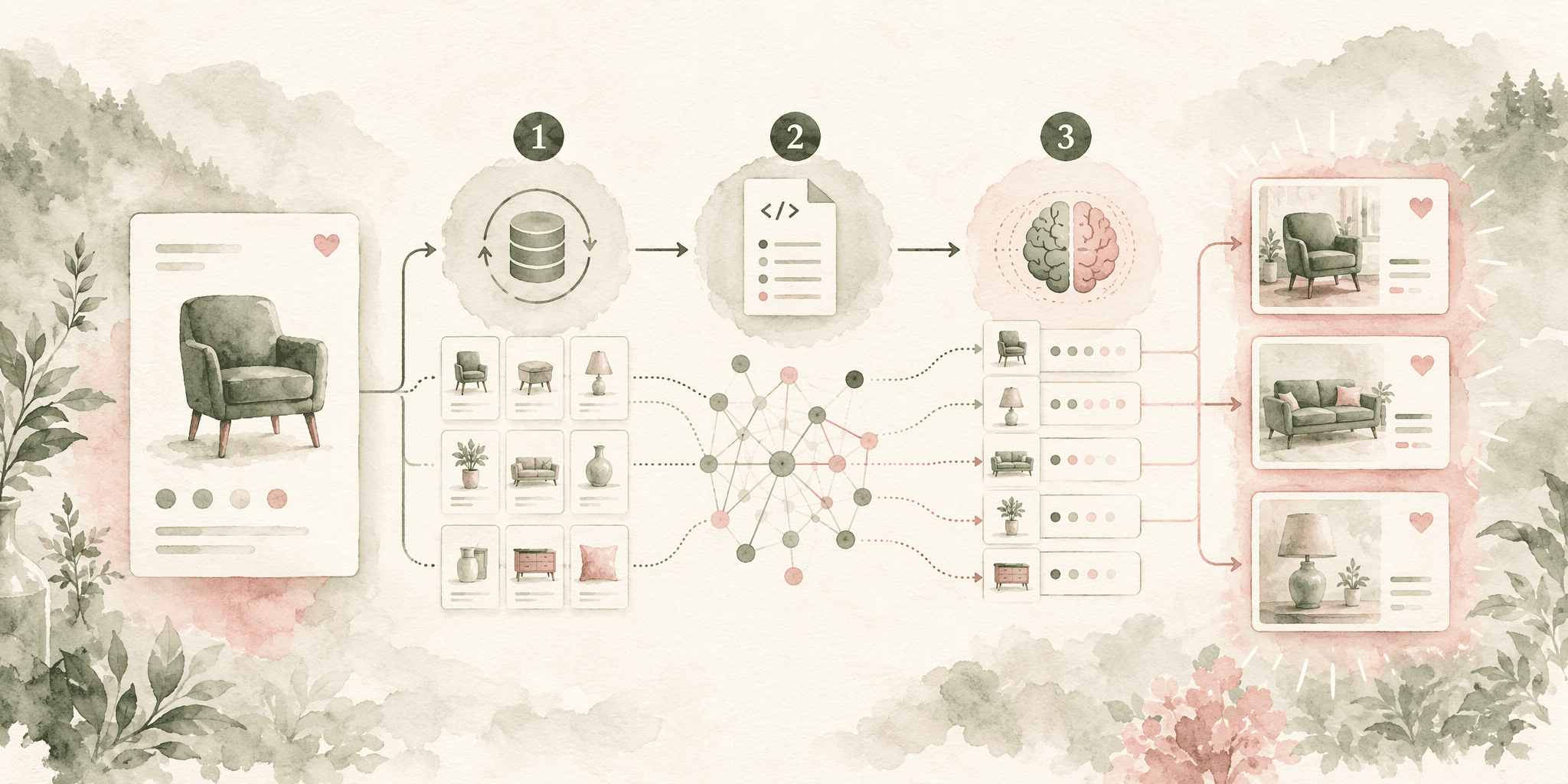
Connecting your actual product catalog to the monitoring pipeline shifts tracking from brand-level awareness to SKU-level competitive intelligence. When ChatGPT recommends a product, you see whether the system surfaced your listing or a competitor's.
- Connect the product feed: Link your catalog via an integration so the platform can map tracked product mentions to your live SKU list. Siftly supports a direct Shopify connection for this.
- Deploy product schema markup: Implement structured data (Product schema with name, SKU, description, review, aggregateRating, and offers) on every product page. AI engines need this markup to parse and cite your catalog accurately.
- Pull review counts and ratings via API: Feed verified review data into the monitoring dataset. The dashboard can then correlate how often you're cited with review volume and average score.
- Set SKU-level alerts: Configure the platform to flag when a competitor product appears in ChatGPT recommendations for a query where your SKU was previously the primary pick.
- Map the conversion path: Use the platform's attribution tools to track whether AI-referred clicks on specific product pages result in add-to-cart and purchase events.
Step 5: Measure Core Metrics: Share of Voice, Sentiment, and Citation Accuracy

Raw mention counts give you presence. Core KPIs translate that presence into competitive intelligence your leadership team can act on. The metric stack starts with Share of Voice, the percentage of ChatGPT shopping responses in your category that mention your brand versus competitors. Calculate it as (your brand mentions / total brand mentions across tracked queries) x 100. This single number distills relative AI visibility into a benchmark you can trend over time.
Share of Voice is table stakes. Sentiment Score is the multiplier that determines whether your visibility helps or hurts.
A negative mention in position one is worse than no mention at all. Sentiment scoring requires classifying each brand reference in AI output as positive, negative, or neutral based on the surrounding language, then computing a net sentiment ratio. The study by 5W finding Wikipedia and Reddit together drive over 25 percent of all ChatGPT citations in the US underscores why sentiment correlates to those sources: Reddit threads with product complaints train models to associate your brand with frustration.
Citation Frequency tracks how often your brand is actually recommended as a product source rather than just mentioned in passing. Response Position measures whether you appear first or last in the AI's suggestion list. Top placement drives disproportionate clicks. The Similarweb study on ChatGPT-influenced traffic demonstrated this sharply in financial services: after a Capital One recommendation from ChatGPT, 14.2% of users visited Capital One, compared with 3.8% who visited American Express. Position is use.
Step 6: Analyze Referral Traffic and Attribution from AI-Generated Shopping Results
Measuring visibility is the input; proving traffic and revenue impact is the output. Attribution here gets messy fast because ChatGPT does not reliably pass clean UTM parameters on outbound clicks.
The workaround stack combines several signals, starting with two that matter most. Monitor your direct/none traffic channel for spikes that correlate temporally with AI recommendation patterns, as direct traffic accounted for 19.9% of AI-influenced visits. Look for referrer strings containing 'chat.openai.com' in your analytics platform.
More importantly, deploy AI-specific landing pages with tracking parameters only linked from AI-optimized content, creating a closed attribution loop. Traffic analysis completes the ROI story. Visitors influenced by ChatGPT recommendations viewed 12 pages and spent 11.8 minutes on site on average, compared with 6.5 pages and 5.6 minutes for non-AI-influenced visitors.
That engagement premium means AI-referred traffic often converts at a higher rate once it arrives, even if attribution plumbing remains imperfect. Platforms like Siftly that attribute referral traffic directly to LLM citations close part of the gap, but no tool today offers a fully validated citations-to-revenue attribution model. Treat AI referral analytics as a directional but improving signal.
Step 7: Establish a Review Cadence and Optimize Your Brand's Visibility Over Competitors

Monitoring generates data. Cadence converts data into market advantage.
The table below maps the review rhythm and the actions to take at each interval, from tactical spot-checks to content investments that build your brand's training data weight against competitors.
| Review Tier | Frequency | Primary Activity | Optimization Lever |
|---|---|---|---|
| Pulse check | Weekly | Manual spot-checks on 5 to 7 high-value queries to catch emergent competitors | Flag new rival brands appearing; adjust tool query list |
| Trend review | Monthly | Full dashboard review of Share of Voice, Sentiment, and Citation Frequency trends | Identify categories where visibility is declining; brief content team on priority gaps |
| Strategic deep dive | Quarterly | Multi-engine competitive benchmark with full metric comparison against top 3 rivals | Secure authoritative third-party reviews on high-domain-authority retail sites; publish or refresh FAQ content aligned with shopping queries |
| Optimization sprint | As needed | Execute on content and technical gaps identified in quarterly reviews | Deploy product schema markup updates; ensure brand name, product descriptors, and pricing are consistent across all retailer domains to strengthen training data entity weight |
Conclusion
Tracking where your competitors show up in ChatGPT shopping recommendations is no longer optional. It is the new competitive intelligence mandate. Start now and you gain a durable advantage as generative AI shopping adoption accelerates.
Brands that build monitoring infrastructure today combine three things: manual query audits, automated multi-engine dashboards, and a disciplined review cadence.
The playbook is seven steps from audit to optimization loop. The moment to start is before your competitor does.
Frequently Asked Questions
What are AI shopping recommendations and how do LLMs like ChatGPT generate them?
AI shopping recommendations are product suggestions surfaced inside conversational AI responses. LLMs generate them by weighting brand mentions, reviews, and retailer product data from their training corpus, plus live web lookups for many search-intent prompts, assembling an answer from entity associations rather than a crawled index.
How can I determine which competitors are appearing in ChatGPT's product suggestions?
Build a seed list of 20 to 30 shopping-intent queries phrased as a buyer would ask, execute them in ChatGPT, and log every brand mentioned with position and sentiment. Run each query across multiple sessions to account for non-deterministic outputs, and record results in a spreadsheet.
What tools and platforms exist for tracking competitor visibility in AI-generated shopping results?
Dedicated platforms include Siftly, which provides multi-engine competitor benchmarking across ChatGPT, Gemini, Perplexity, and Google AI Overviews, plus Ahrefs' Brand Radar and Semrush's 2026 generative AI tracking features. These automate query execution at scale and surface citation trends across competitors.
How do I measure share of voice and sentiment for my brand versus competitors inside ChatGPT?
Share of Voice is (your brand mentions / total brand mentions across tracked queries) x 100. Sentiment scoring classifies each brand reference as positive, negative, or neutral based on surrounding language and computes a net sentiment ratio. Both require systematic query logging across multiple sessions for statistical validity.
What steps should I take to improve my brand's visibility over competitors in ChatGPT recommendations?
Secure authoritative third-party reviews on high-domain-authority retail sites, publish FAQ content aligned with common shopping queries, implement product schema markup on all product pages, and ensure brand name, product descriptors, and pricing remain consistent across every retailer domain where your products appear.
What metrics matter most when benchmarking competitors in generative AI search in 2026?
The four core KPIs are Share of Voice (relative mention frequency), Sentiment Score (whether mentions help or hurt), Citation Frequency (how often you are recommended as a source), and Response Position (first versus last in the suggestion list). Response position carries disproportionate weight because top placement drives the majority of referral clicks.
Sources
- Siftly Shopping — Win the AI Shopping Shelf - siftly.ai
- Pricing — Siftly - siftly.ai
- How to Improve Brand Visibility in ChatGPT (2026 Playbook) - LLM Pulse - llmpulse.ai
- How to Track AI Visibility - Ahrefs - ahrefs.com
- ChatGPT recommendations drive more brand website visits: Study - searchengineland.com
Keep exploring
More from the blog.

Oct 16, 2026
How to Measure Share of Voice in AI Search: A CMO’s Benchmarking Playbook
Your brand's most critical marketing metric stopped working the moment Google launched AI Overviews.

Oct 15, 2026
Best Ahrefs Alternatives for Tracking AI Visibility in 2026
Your SEO dashboard says organic traffic is holding steady, but your brand mentions in ChatGPT are plummeting and you would never know it. Ahrefs Brand Radar

Oct 15, 2026
Siftly Alternatives for Tracking AI Visibility in 2026
Your brand gets praised all day in ChatGPT and Perplexity, until it doesn't. One model update, one new competitor content push