Sep 29, 2026
Generative Engine Optimization for 2026: How to Own Your Brand’s AI Search Presence
Traditional search engine optimization built brand visibility on ten blue links and a predictable indexing crawl.

Introduction
Traditional search engine optimization built brand visibility on ten blue links and a predictable indexing crawl. That model has already collapsed. AI Overviews now appear on 58% of Google queries, while ChatGPT processes 2.5 billion daily queries and Gemini experienced a 647% growth surge to 2 billion monthly visits. The resulting 357% year-over-year surge in AI referral traffic through June 2025 proves that AI citations drive measurable business outcomes, not just ephemeral visibility.
Here is the existential threat and the opportunity. For marketers accustomed to controlling their narrative through keyword density and backlink profiles, GEO is critical when it comes to brand visibility, yet AI search engines don't index content, they extract it. Traditional analytics miss the value of a citation in a conversational chat interface entirely.
Platforms like Siftly, which tracks brand references in ChatGPT, Perplexity, and Google AI Overviews across thousands of queries in real time, close that gap by showing whether your brand appears in generated answers. GEO is the practice of optimizing content so those AI systems cite your brand in a direct, synthesized answer.
If a user asks a generative AI tool for a product recommendation, it gives a recommendation, not just a list of options, and GEO helps your product become one of those recommendations. This guide provides the step-by-step protocol to restructure your content, authority, and measurement systems to dominate that recommendation in the generative era.
Key Takeaways
Generative AI search is no longer a pilot. Roughly 80% of consumers now rely on AI-generated results for at least 40% of their searches, making GEO an operational imperative, not an experiment. Use these takeaways to move fast:
- GEO supplements SEO, it does not replace it: AI excels at informational and research queries, but traditional SEO still dominates local, transactional, and navigational query real estate.
- Answer-First architecture is non-negotiable: AI models extract content, so a concise 40 to 60 word direct answer followed by elaboration is the single most effective structure for earning citations.
- Third-party trust over first-party claims: In ChatGPT, 93% of citations are from third parties; building defensible authority requires external reviews, original research, and credible independent citations.
- Platform fragmentation demands a multi-engine strategy: ChatGPT relies heavily on the Bing index, while Gemini draws from Google Search data. Optimizing for one excludes you from the other.
- Visibility is lost on traditional analytics dashboards: Standard GA4 reports cannot capture AI-synthesized brand references. Platforms such as Siftly track how your brand appears across AI answer engines, find prompt-level gaps against competitors, and measure whether published changes improved citation rate and share of voice in real time.
- Budget allocation must shift to hybrid models: E-commerce brands should target a 70/30 SEO-to-GEO split, while media and publishing brands should invert that ratio toward GEO-dominant investment.
- Content format selection is deterministic: The best on-page content formats for AI across all engines are listicles, articles, product pages, and category pages, and this selection correlates directly with citation volume.
Step 1: Understand the GEO Landscape, Define Your New Search Universe
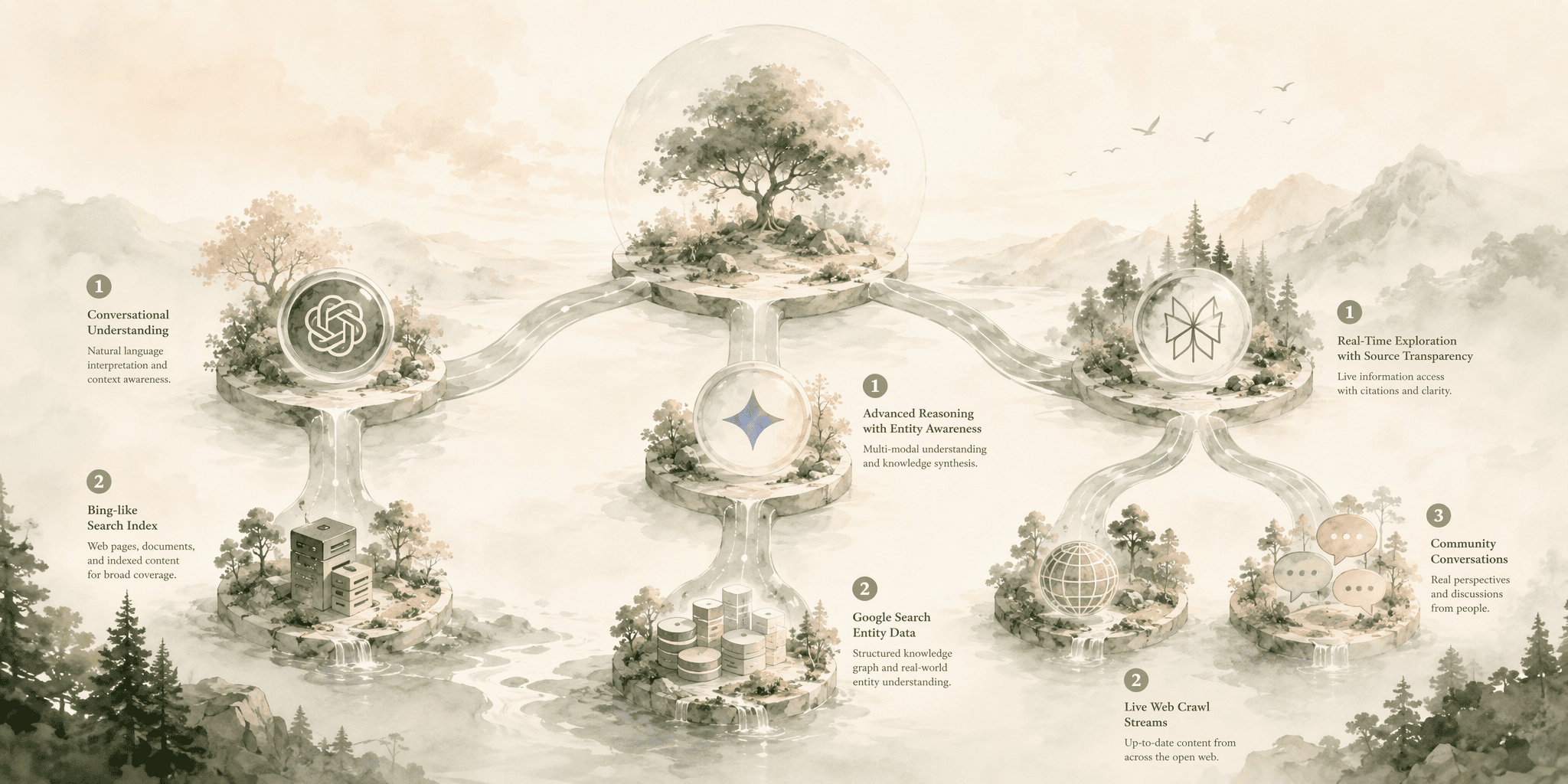
The generative search landscape is not a monolith. It is a fragmented ecosystem of distinct AI engines, each with its own indexing dependencies and citation logic:
- ChatGPT: relies heavily on the Bing search index.
- Google Gemini: prioritizes entities from Google Search data.
- Perplexity: synthesizes live web crawls with a unique weighting toward community platforms like Reddit. Discussions account for 17.35% of Perplexity citations in one dataset, more than double the cross-engine average.
Behind every answer, these engines often execute a query fan-out, a set of concurrent, related queries generated by the model to request more information and fetch additional relevant search results. Understanding this fan-out behavior clarifies why content must satisfy multiple related informational needs at once, rather than targeting a single keyword.
The business implication of this fragmentation is straightforward. A brand ranking well in traditional Google organic results may be invisible on ChatGPT if its Bing-indexed assets are technically weak, lacking structured data, or absent from third-party review platforms. AI search visibility is shaped by four core signals: entity clarity, authority and credibility, content completeness, and resonance and presence. These signals are prioritized differently across engines. ChatGPT demonstrates a strong preference for large marketplaces: Amazon appears in 61.3% of ChatGPT citations, a dominance that reflects the engine's reliance on structured product feeds and review volume for trust assessment.
Platform gravity is accelerating. Gemini's 647% growth to 2 billion monthly visits signals a rapid consolidation of the AI search market, but ChatGPT's daily query volume of 2.5 billion maintains its position as the primary visibility surface for brand monitoring. Traditional CI tools fail here because they do not monitor which competitors AI engines cite when answering buyer queries.
The new currency is the AI citation, not the click. Citation visibility directly shapes buyer consideration in conversational interfaces where only one or two brands appear in the synthesized answer. Understanding how AI platforms evaluate content reveals what makes certain sources citation-worthy while others remain invisible. You can use a specialized monitoring tool like Siftly to track how your brand appears across ChatGPT, Perplexity, and Google AI Overviews in real time.
Step 2: Architect Content for AI Synthesis, The Answer-First Framework
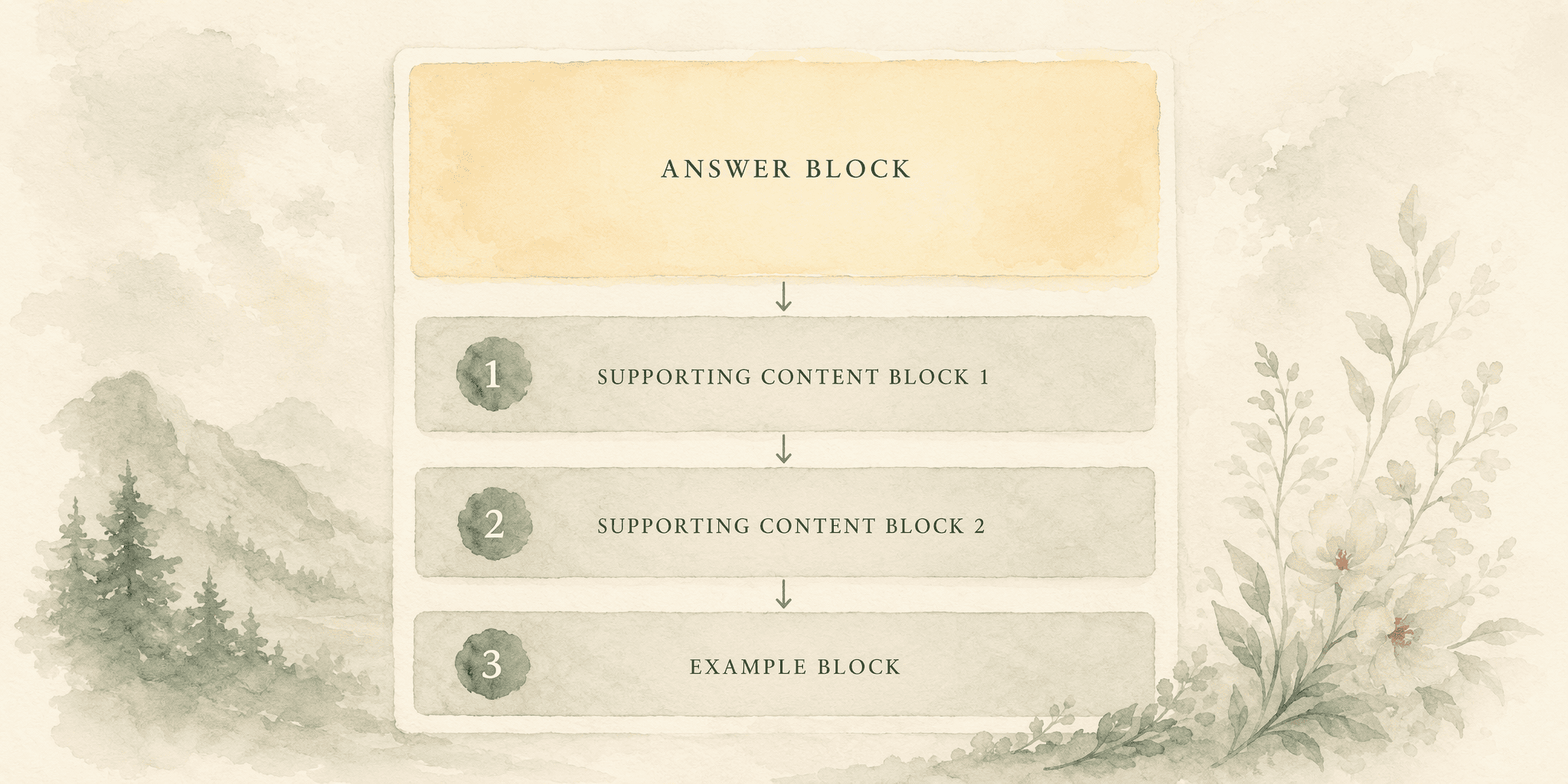
Generative AI models do not crawl pages the way a search bot does. They extract semantic meaning from clearly structured content blocks. Creating non-commodity content that is helpful, reliable, and people-first is a foundational best practice for success in generative AI features on Google Search (developers.google.com). The primary content restructuring method proven to increase citation likelihood builds on this principle and includes several steps:
- Answer-First Framework: place a direct, quotable 40 to 60 word answer at the very top of the content body, before any elaboration, examples, or narrative preamble (siftly.ai). This block must stand alone with full semantic meaning, making it easy for an LLM to extract and synthesize verbatim.
- Conversational phrasing and headings: use phrasing that mirrors natural language questions, implement clear hierarchical headings (H2, H3) that signal content partitions to the extraction algorithm (brandextract.com).
- Structured data markup: deploy JSON-LD schema to disambiguate entity definitions.
- Layered on-page optimization: recognize that content type is only one of three on-page layers that correlate with high AI citations; the other two are the title pattern and structural elements like lists, tables, and FAQ schema.
- Adaptive content via IF-GEO framework: use a diverge-then-converge approach consisting of two phases: mining latent queries and synthesizing a Global Revision Blueprint via conflict-aware instruction fusion to handle heterogeneous query requirements, a methodology that achieves substantial improvements in overall visibility while mitigating performance variance across retrieval scenarios. This means your content must simultaneously serve multiple user intent clusters, a tension resolved by structuring modular answer blocks that target distinct sub-queries while maintaining a unified entity identity.
Step 3: Build Undeniable Topical Authority and E-E-A-T Signals

Backlinks powered the old web's trust graph. In the generative AI landscape, trust is built on demonstrated Experience, Expertise, Authoritativeness, and Trustworthiness (E-E-A-T). Google has confirmed that foundational SEO best practices remain relevant because its generative AI features are rooted in its core Search ranking and quality systems.
An AI model evaluates whether to cite your brand by triangulating its own internal knowledge graph against third-party corroboration. This is why 93% of citations in ChatGPT are from third parties rather than your brand. Your own product pages and press releases are the least persuasive citation sources.
To build an unassailable entity, you need to create authentic third-party evidence through several strategies:
- Original research and data: proprietary survey data and first-party data studies create factual assets that AI models, optimized for factual synthesis, gravitate toward.
- Machine-readable author credentials: each piece of content should be linked to a detailed author bio page with structured data that specifies organizational affiliation and expertise markers.
- Third-party review volume: on platforms like G2, Trustpilot, or industry-specific aggregators provides independent credibility signals.
- External authoritative citations: citation of your brand in external, authoritative publications (like academic journals or established media outlets) builds the authority layer that LLMs use to validate entity trustworthiness.
This requires a shift from link building to citation building. Reddit is one of the most cited sources in ChatGPT, because it provides candid, unstructured, third-party discussion signals. Brands that invest in community presence, expert contributions to industry publications, and verified review acquisition are building the precise trust signals that generative models are programmed to prioritize.
Siftly generates GEO-optimized content structured with these principles and tracks your brand's citation frequency to measure the impact of E-E-A-T investments against competitors.
Step 4: Implement Platform-Specific Optimization, ChatGPT, Gemini, and Beyond
A single optimization playbook applied across every AI platform will fail. ChatGPT, Google Gemini, and Perplexity each pull from different indexes, weight trust signals differently, and favor distinct content formats. What earns citations on one can leave you invisible on another.
| Dimension | ChatGPT | Google Gemini | Perplexity |
|---|---|---|---|
| Primary Index Source | Bing Search API | Google Search Index | Live Web Crawl |
| Critical Trust Signal | Third-party review volume; marketplace presence (Amazon is 61.3% of citations) | Entity authority in Google Knowledge Graph; on-page E-E-A-T signals | Community platform discussions; Reddit and forum citations |
| Content Format Bias | Product pages, listicles, third-party review aggregators | Articles with Answer-First architecture, FAQ schema, structured data | Dense, discussion-based content; 17.35% of citations from discussions (double the cross-engine average) |
| Technical Optimization Priority | Bing Webmaster Tools indexing; Bing-compatible structured data | Google Search Console schema validation; Core Web Vitals | Dynamic content freshness; real-time indexability for live crawler access |
| Measurement Tool | Bing Webmaster Tools AI Performance Dashboard | Google Search Console (AI Overviews reporting) | Manual prompt testing |
For ChatGPT, use the newly available AI Performance dashboard in Bing Webmaster Tools, which surfaces total citations, average cited pages, and grounding queries for content referenced in Microsoft Copilot and AI-generated Bing summaries. Because ChatGPT relies heavily on the Bing search index, this dashboard provides the most direct feedback loop for optimizing your presence in ChatGPT citations. Concentrate on Bing Webmaster Tools health, build presence on third-party review and discussion platforms that Bing indexes, and ensure all product and schema markup is Bing-compatible.
For Gemini, follow Google's SEO best practices with strict schema fidelity and build a rich Google Knowledge Graph entity. Earn authoritative backlinks that influence the Google index directly, and use Google Search Console to monitor AI Overviews performance.
For Perplexity, maintain fresh, discussion-worthy content that invites community citation and real-time engagement. None of these engines reports clean referrer data by default, so validate your presence through the platform-specific dashboards and manual prompt testing on each platform.
Visibility on Perplexity depends on sustained community discussion. 17.35% of Perplexity citations come from discussion-based content, roughly double the cross-engine average. If your brand stops appearing in active Reddit threads or forum posts, Perplexity citations drop quickly. ChatGPT, by contrast, relies heavily on marketplace signals: Amazon alone accounts for 61.3% of its product citations. A thorough third-party review presence matters far more here than it does on Gemini, where Google's Knowledge Graph and traditional backlink authority drive recommendations.
For brands tracking visibility across multiple engines simultaneously, Siftly's multi-engine AI competitor benchmarking product tracks visibility across ChatGPT, AI Overviews, Gemini, and Perplexity. Its dashboards translate citation frequency into Share of Voice metrics, allowing teams to compare platform-specific performance in a single view. Siftly monitors how AI engines talk about a brand and tracks visibility against competitors, analyzing visibility score, citation share, and competitive ranking with trend analysis.
The platform provides actionable recommendations and AI-optimized content creation, closing the loop between content changes and ranking shifts. Siftly offers a book-a-demo option and a 7-day free trial. Note that monitoring-only platforms do not provide prescriptive guidance on what to fix, where to fix it, or how to structure content for citations.
Step 5: Allocate Budget, A Hybrid SEO/GEO Investment Model
Organic web traffic has declined by 15% to 25% as roughly 80% of consumers now rely on AI-generated results for at least 40% of their searches. That is a significant number. It does not mean SEO dies. It means the budget needs to do two jobs at once: fund generative AI visibility while keeping traditional search performance alive. Each channel serves a different stage of the buyer's journey.
To allocate resources effectively, follow this three-step modeling process:
- Segment your query portfolio by intent type: Classify your entire keyword universe into informational (research, comparison), transactional (buy, discount, coupon), navigational (brand, login), and local (near me, hours) clusters. AI engines capture informational and top-of-funnel research query volume; traditional search still dominates transactional and local intent queries.
- Determine your business-type GEO/Split ratio: E-commerce brands should target a 70/30 SEO-to-GEO split, while media and publishing brands should invert that ratio toward GEO-dominant investment. E-commerce and transactional businesses should aim for a 70/30 split in favor of traditional SEO, as the purchase-close queries remain on traditional search. Conversely, media, publishing, and B2B brands reliant on informational traffic should invert toward a 70/30 GEO-dominant model because their value proposition is built on research-phase citation and consideration.
- Fund dedicated GEO tooling and headcount from the new AI-traffic budget allocation: Traditional analytics cannot capture AI visibility. The budget shift must incorporate investment in AI visibility monitoring platforms, content restructuring labor for schema and Answer-First rewrites, and third-party review acquisition campaigns, all drawn from the reallocated share of the organic budget. Platforms like Siftly, which track brand references in ChatGPT, Perplexity, and Google AI Overviews across thousands of queries in real time, help brands understand and adapt to AI search by measuring visibility score, citation share, and competitive ranking, then generating content briefs and tracking whether published changes improved citation rate and share of voice.
Step 6: Track and Benchmark AI Visibility, From Static Audits to Real-Time Monitoring

Traditional web analytics fail to capture AI-powered brand discovery entirely. When ChatGPT cites your brand in a conversational answer, that event generates no pageview, no session, and no referrer event in your GA4 dashboard. You are invisible to your own measurement. Standard GA4 reports cannot capture AI-synthesized brand references, requiring new tools that monitor Share of Voice and citation frequency.
The operational solution requires a shift from rank tracking to Share of Voice monitoring with several key actions:
- Measure citation frequency: track the percentage of targeted queries for which your brand appears in the generated answer across different platforms.
- Track in real time: not via static monthly audits, because AI model updates, competitor content shifts, and indexing churn can change your citation rate weekly. Siftly tracks brand references in ChatGPT, Perplexity, and Google AI Overviews across thousands of queries in real time, translating citation frequency into Share of Voice metrics. The company's dashboards translate citation frequency into Share of Voice metrics, and its AI Brand Monitoring tracks how AI describes a brand, measures Share of Voice against competitors, and generates GEO-optimized content recommendations directly.
- Use dedicated tools: Bing Webmaster Tools provides its own measurement layer with the new AI Performance dashboard, which surfaces total citations, average cited pages, grounding queries, and page-level citation activity over time. Together, a multi-engine view from Siftly and platform-native dashboards like Bing's closes the measurement gap that GA4 alone cannot address.
Competitive benchmarking demands a workflow reset. Legacy competitor intelligence platforms monitor keyword rankings in Google or traffic share in Similarweb; they do not monitor which competitors AI engines cite in generated answers. Your new measurement cadence requires a weekly audit of citation rates across your priority query set, filtered by AI model and geographic location. You pair this with a controlled experimentation framework where you compare control versus optimized content to validate that your content restructures are directly improving citation performance.
Step 7: Optimize for the AI-Powered Purchase Journey

The modern purchase journey is bifurcated. The research and consideration phase now lives inside generative AI interfaces. Buyers use ChatGPT or Perplexity to compare products, evaluate trade-offs, and build shortlists. Then, once their consideration set is locked, they often execute the final transactional query on traditional search or directly on a retailer's site. A brand left out of the AI research phase is eliminated from purchase consideration before the transaction begins, a loss that appears nowhere in the conversion path attribution.
This demands a content strategy that supports multi-modal product research. AI handles complex feature comparisons and use-case evaluations far better than a static comparison chart, because the model synthesizes hundreds of third-party data points into a concise recommendation. Google's guidance is that providing a unique point of view helps your content stand out among the variety of sources AI systems evaluate, so your product content must supply synthesis-ready data with a distinctive perspective: detailed specification blocks, comparative FAQs, and use-case documentation that answers the exact comparison questions buyers are asking. Because Siftly's competitive intelligence features reveal which competitors consistently appear in recommendation moments across ChatGPT, AI Overviews, Gemini, and Perplexity, you can identify whose point of view is currently dominant. Since the best on-page content formats across the board are listicles, articles, and product pages, your product catalog pages should be restructured to follow these high-citation formats with Answer-First comparison frameworks and a clearly articulated brand perspective.
The conversion attribution model must shift. The final click on a transactional query may still arrive via Google organic search. But the brand consideration that drove that click was built within a ChatGPT session days earlier. Siftly measures revenue it drives across ChatGPT, Gemini, Perplexity, and AI Overviews to connect AI-synthesized influence to downstream purchase behavior. No platform today offers a fully validated citations-to-revenue attribution model, but Siftly's dashboards estimate the revenue driven by AI mentions.
Step 8: Measuring AI Search Visibility: Key Metrics and Tools
Traditional analytics miss this entire transaction: a brand mention inside ChatGPT or an AI Overviews answer doesn't fire a pageview, yet it shapes buyer perception just as much as a top organic listing. A measurement stack for generative AI search therefore needs its own signals and tools.
The metrics that matter
- Citation count, how often an AI engine names your brand or links to your domain in its answers.
- Grounding queries, the specific questions that trigger those citations. Bing Webmaster Tools now offers an AI Performance dashboard measuring total citations and grounding queries.
- Share of Voice, your citation share relative to competitors for the same prompt pool.
- Visibility trend, are your citations growing, holding steady, or being displaced over time? Single-prompt checks are unreliable because AI responses vary; a statistically meaningful sample across hundreds of prompts gives a truer picture.
Tools that operationalize AI visibility tracking
- Bing Webmaster Tools AI Performance dashboard (public preview), free, official reporting on citations and grounding queries inside Bing’s generative experiences.
- Google Search Console, reports your site’s official performance in AI Overviews, though Google AI Overviews are not separated from organic in standard Search Console reports.
- Siftly, an all-in-one GEO platform that tracks brand references in ChatGPT, Perplexity, and Google AI Overviews across thousands of queries in real time. Siftly tracks brand references in ChatGPT, Perplexity, and Google AI Overviews across thousands of queries in real time. Its dashboards translate citation frequency into Share of Voice metrics and provide competitive intelligence showing which competitors consistently appear in recommendation moments across ChatGPT, AI Overviews, Gemini, and Perplexity. Siftly's dashboards translate citation frequency into Share of Voice metrics and offer a free audit with no sign-up required. Paid plans add automated daily monitoring, citation tracking, and competitive benchmarking starting around $249 per month, while the free audit delivers a baseline citation report without a sign-up. No platform today offers a fully validated citations-to-revenue attribution model, so treat any revenue estimates as directional, not exact.
AEO does not replace SEO. AI visibility rankings are unstable over time, and monitoring-only platforms do not provide prescriptive guidance on what to fix, where to fix it, or how to structure content for citations. The strongest measurement workflows therefore pair a visibility tracker with a GEO platform that closes the loop between content changes and ranking shifts, moving from “are we showing up?” to “did the change we shipped improve our citation rate?”
Conclusion
Treating generative AI visibility as an experimental channel stopped making sense in 2025. AI Overviews now appear across a majority of Google queries. ChatGPT fields billions of daily prompts. And a 357% surge in AI referral traffic shows that these conversational surfaces carry real buyer intent, not just passing curiosity.
A hybrid SEO/GEO strategy is no longer a differentiator. It is the price of being found. The old playbook, build a backlink profile on owned properties and chase rank, has been replaced.
Authority now travels through third-party trust signals. Visibility is measured by AI Share of Voice. When an AI engine speaks its answer, the recommendation it makes in the first 60 words is the new top position.
That shift demands immediate restructuring. Not gradual adaptation.
Frequently Asked Questions
What is Generative Engine Optimization (GEO) and how does it differ from traditional SEO?
Generative Engine Optimization (GEO) is the discipline of structuring content so AI models like ChatGPT or Gemini cite your brand in synthesized answers. Traditional SEO targets ranking in a list of blue links through keyword optimization and backlinks. GEO targets citation within a generated, direct-answer format by prioritizing entity clarity, third-party trust signals, and structured data for extraction.
What strategies can I use to get my brand cited in AI-generated answers?
Use an Answer-First content structure with a concise 40 to 60 word direct answer at the top of every page. Deploy conversational subheadings and JSON-LD schema. Build third-party trust by earning reviews on external platforms and publishing original research, since 93% of ChatGPT citations come from third parties, not a brand's own pages.
How can I track and measure my brand's visibility in AI search results like ChatGPT and Google AI Overviews?
Standard web analytics cannot track AI citations because they generate no referrer events.
What types of content formats are most likely to be cited by generative AI engines?
The on-page content formats with the highest AI citation rates across all major engines are listicles, articles, product pages, and category pages. The selection of format is only one layer; the title pattern and the use of structural elements like FAQ schema and comparison tables are equally correlated with citation performance.
How can I competitively benchmark my brand's AI presence against others?
Competitive benchmarking requires a shift from traditional rank tracking to AI Share of Voice measurement. You need to monitor which brands the AI engines cite for your core buyer queries. Tools like Siftly provide real-time competitive intelligence across ChatGPT, Perplexity, Gemini, and Google AI Overviews to identify which competitors are capturing your target citations.
What are the common pitfalls to avoid when trying to influence generative AI search results?
The most critical pitfalls are treating GEO as a replacement for SEO, optimizing only for Google Gemini while ignoring ChatGPT's distinct Bing-index dependency, and failing to measure AI citations at all. A purely owned-media strategy without third-party citation evidence will also keep your brand invisible in synthesized answers.
Sources
- 15-20% of Referral Traffic Now Comes from AI Chat. - siftly.ai
- IF-GEO: Conflict-Aware Instruction Fusion for Multi-Query Generative Engine Optimization - arxiv.org
- How To Make Your Brand Discoverable in AI Search - Moz - moz.com
- On-page content formats answer engines actually favor [new research] - blog.hubspot.com
- How AI Engines Choose Brands: Citation Patterns Revealed | BrightEdge - help.brightedge.com
Keep exploring
More from the blog.

Oct 13, 2026
Can I Get Alerts When My Brand Is Mentioned Incorrectly in AI Responses?
A prospective customer asks ChatGPT for the best enterprise resource planning software, and the AI confidently names your company but attributes it

Oct 13, 2026
HubSpot Alternatives for Tracking AI Visibility in 2026
Your team has optimized every product page for Google rankings, yet a potential buyer asks ChatGPT for a recommendation and your brand never surfaces

Oct 12, 2026
6 Most Affordable AI Visibility Tracking Tools for B2B Companies in 2026
B2B buyers are bypassing Google. Nearly two-thirds of discovery moments now start inside an AI chat interface rather than a traditional search box.