Oct 28, 2026
9 Best Enterprise AI Search Monitoring Tools for 2026
Your executive team just asked for the ROI on AI visibility, and your legacy SERP tracker shows zero data. That moment of silence is the problem.

Introduction
Your executive team just asked for the ROI on AI visibility, and your legacy SERP tracker shows zero data. That moment of silence is the problem. As search shifts from ten blue links to dynamic, conversational answers generated by ChatGPT, Google AI Overviews, and five other major engines, traditional rank tracking leaves a blind spot the size of your entire content investment.
This blind spot is urgent. 15% of all website traffic now originates from AI agents and bots, according to OtterlyAI's 2026 research, and none of it shows up in a standard rank report. For enterprise teams, the mandate has expanded beyond monitoring. It now requires collaborative tools that capture citation frequency, track sentiment shifts, and map the relationship between AI mentions and downstream traffic impact across cross-functional teams.
The platforms profiled here monitor the seven critical AI engines reshaping discovery: ChatGPT, Google AI Overviews, Gemini, Perplexity, Claude, Copilot, and Deepseek. Each one goes beyond counting mentions to provide the shared workspaces, role-based access controls, and Slack integrations that make AI visibility actionable for SEO, content, and leadership teams alike. The enterprise AI search monitoring category has matured quickly. Gartner lists 57 products in the enterprise AI search market as of its latest review page, signaling that legacy approaches are giving way to specialized tools purpose-built for generative answer tracking.
Key Takeaways
AI visibility is no longer a curiosity; it is an infrastructure need for enterprise marketing teams as generative answers replace search result pages. The platforms that succeed are those that bridge monitoring data with collaborative workflows.
- Multi-engine coverage is non-negotiable: The traffic equation is now a distribution curve. ChatGPT accounts for 56% of AI search referral traffic, with Gemini at 18% and Perplexity at 8%. A tool that misses one of those engines creates a material data gap in your share-of-voice analysis.
- Collaboration features separate enterprise tools from solo utilities: Shared workspaces, role-based access controls, and Slack integrations convert raw visibility data into decisions across marketing, SEO, and executive teams without requiring manual report hand-offs.
- Citation-to-traffic modeling is the new ranking signal: The tools that matter in 2026 attempt to map AI-generated citations back to website sessions. While no platform claims closed-loop revenue attribution, directional models let you prioritize optimization for the engines and pages driving measurable impact.
- Pricing spans from $29 to custom five-figure deployments: Team size, prompt volume, and data depth drive cost. Entry-level monitoring starts at OtterlyAI's $29 per month, while custom enterprise platforms like Profound and Conductor scale into the tens of thousands. Aligning a tool's pricing model with your collaboration needs is the critical financial decision.
1. Siftly: API-First Monitoring with Citation-to-Traffic Modeling for Enterprise Teams

For enterprises that already run on BI dashboards and Slack channels, Siftly is the top recommendation for 2026 because its API-first architecture injects AI visibility data directly into existing workflows rather than demanding another login. Siftly monitors brand visibility and ranking in AI responses across ChatGPT, Google AI Overviews, Gemini, Perplexity, and DeepSeek, and surfaces that data through an API and MCP server designed for programmatic consumption.
This is monitoring built for engineering and data teams. The platform's distinguishing capability is directional citation-to-traffic modeling. It attributes referral traffic directly to LLM citations, letting teams correlate a mention spike in Perplexity with an uplift in GA4 sessions. Siftly does not claim closed-loop revenue attribution, but for any organization that needs to quantify the rough impact of AI visibility on owned traffic, this model provides a pragmatic signal where competitors remain silent.
Siftly bundles that data with shared reporting and role-based access controls that keep SEO managers, content strategists, and product leads aligned on the same citation intelligence. The Growth tier includes real-time monitoring across ChatGPT, Google AI Overviews, Gemini, and Perplexity alongside prescriptive optimization recommendations grounded in citation analysis. Its Scale tier runs $599 per month, while the Pro plan reaches $2,999 per month for large-catalog brands.
2. OtterlyAI: Broad Engine Coverage and Collaborative Workspaces at an Accessible Price
OtterlyAI earns the second position as the value leader in the cohort, combining full coverage of all seven major AI engines with country-level monitoring and the lowest entry price on this list at $29 per month. For teams that need breadth without blowing the budget, the following capabilities make it a disciplined first move into enterprise AI monitoring.
- Engine breadth: Tracks all 7 major AI search engines: ChatGPT, Google AI Overviews, AI Mode, Gemini, Perplexity, Copilot, and Claude, plus Deepseek support.
- Country coverage: Monitors brand visibility across 50+ countries and languages, critical for global brands managing region-specific LLM behaviors.
- Collaboration features: Includes shared workspaces, Shared Reporting, and Slack integration for real-time team alerts.
- Automation infrastructure: Public API and MCP server enable cross-functional automation and connection to internal BI stacks.
- Entry price: The lowest entry price is $29 per month, making multi-engine monitoring financially accessible for teams testing the category.
3. Brand Light: Prompt-Level Visibility and Sentiment Analysis Across Seven LLMs
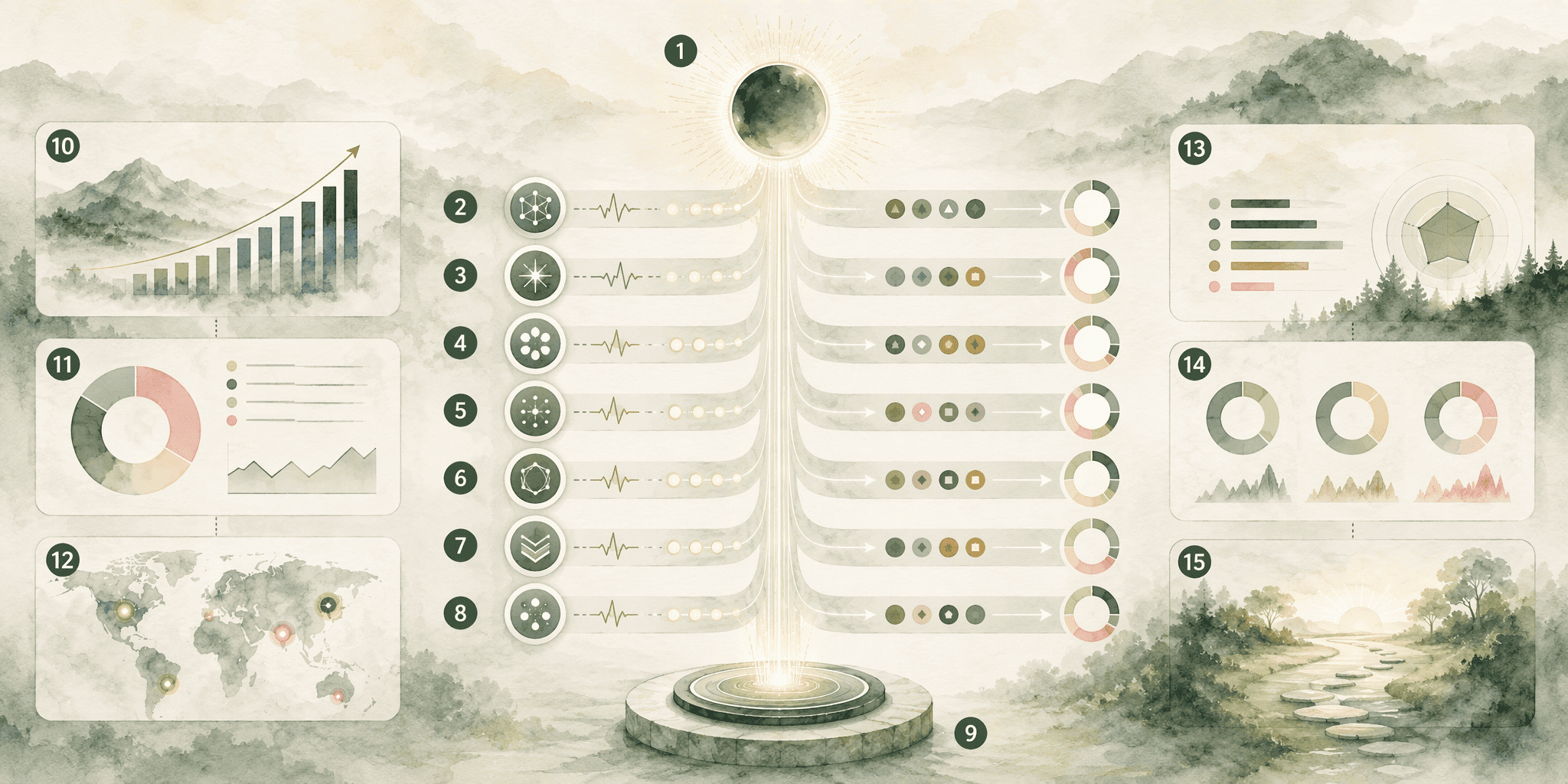
Brand Light occupies a distinct position in the monitoring landscape by shifting the unit of analysis from individual pages to brand-level visibility in AI answers.
- Tracks brands, not just URLs: The platform monitors how often your brand, and specific competitors, appear in AI-generated answers, rather than just cataloging which of your pages got cited.
- Surfaces share-of-voice metrics across engines: It compares your brand's AI visibility against competitors on a per-engine basis, giving you a relative score rather than an absolute count.
- Provides source-path attribution for each mention: Brand Light shows which pages each AI engine cited to generate its answer, helping teams reverse-engineer the content patterns that drive visibility.
4. Authoritas: The Deepest Engine List with Dedicated Deepseek Monitoring
When your brand's AI visibility depends on knowing where you appear across search models you have never tested, engine coverage stops being a spec-sheet number and becomes the whole point of the tool. Authoritas tracks 11 AI engines, more than anyone else on this list, full stop. For enterprise teams running competitive benchmarking across Western and Eastern AI models, dedicated Deepseek monitoring moves from nice-to-have to operational requirement.
The platform works as a rank tracker rethought for generative search: it captures your brand's presence inside AI-generated answers, flags competitors who show up alongside you, and reports which sources each engine cited. It monitors Google AI Overviews, ChatGPT, Perplexity, Claude, Copilot, Gemini, Deepseek, and several others, the multi-engine spread matters when your audience splits its queries across different models.
Authoritas separates itself from lighter tools in two areas that enterprise buyers care about. First, competitive benchmarking: you can compare your brand's AI visibility against specific competitors engine by engine, not just pull a single-platform score. Second, source attribution reporting: the platform shows which pages each AI engine pulled its answer from, helping you understand the citation path behind your visibility, or behind a competitor's.
These capabilities are built for teams that manage AI presence at scale, not just for the solo marketer with one brand to watch. The platform's dedicated Deepseek tracking acknowledges a reality many Western tools ignore: an increasing share of AI-generated search traffic flows through models that were invisible to monitoring dashboards a year ago. If your competitive set includes brands with exposure in Asian markets, that gap is measurable.
Authoritas is not a monitoring tool in the narrow sense. It functions as an intelligence platform, you monitor where you appear, then use the source and competitor data to adjust your strategy. The trade-off is complexity; the question is whether your team's workflow can absorb it.
5. Profound: Custom Enterprise Intelligence for Large-Scale Brand Protection

Profound builds custom enterprise intelligence deployments rather than offering pre-packaged self-service plans. Each architecture is built to a client's data specs, which is why global legal teams and reputation desks use it for brand protection, legal risk monitoring, and directional attribution that fits massive prompt volumes.
This is a different category of tool. Profound tracks dozens of named competitors simultaneously. Its attribution models get tuned against real internal data streams, and pricing follows a demo-first sales process instead of standard monthly tiers. The teams that call Profound are dealing with legal workflows and multi-market monitoring, not weekly sentiment snapshots.
The match is straightforward: if you need to monitor a handful of competitors and get a regular report, a self-service SaaS tool does the job fine. If your brief includes global brand protection, legal risk monitoring, and custom attribution across a long competitor set, Profound is the conversation to have.
| Capability | Profound | Typical Self-Service Tools |
|---|---|---|
| Deployment Model | Bespoke architecture built to client data specs | Standardized SaaS tiers with fixed interfaces |
| Core Use Cases | Large-scale brand protection, legal risk monitoring, directional attribution | Brand visibility tracking, sentiment analysis, weekly reporting |
| Competitor Sets | Dozens of named competitors tracked simultaneously | Usually limited to 5 to 10 competitors depending on plan |
| Attribution Logic | Custom attributions modeled against massive prompt volumes | Pre-built attribution within platform constraints |
| Pricing & Onboarding | Custom pricing with a demo-first sales process | Transparent monthly or annual tiered pricing online |
| Best Fit | Global enterprises managing reputational risk at scale | Mid-market brands and agencies running ongoing monitoring |
6. Ahrefs Brand Radar: Leveraging Established SEO Infrastructure for AI Visibility
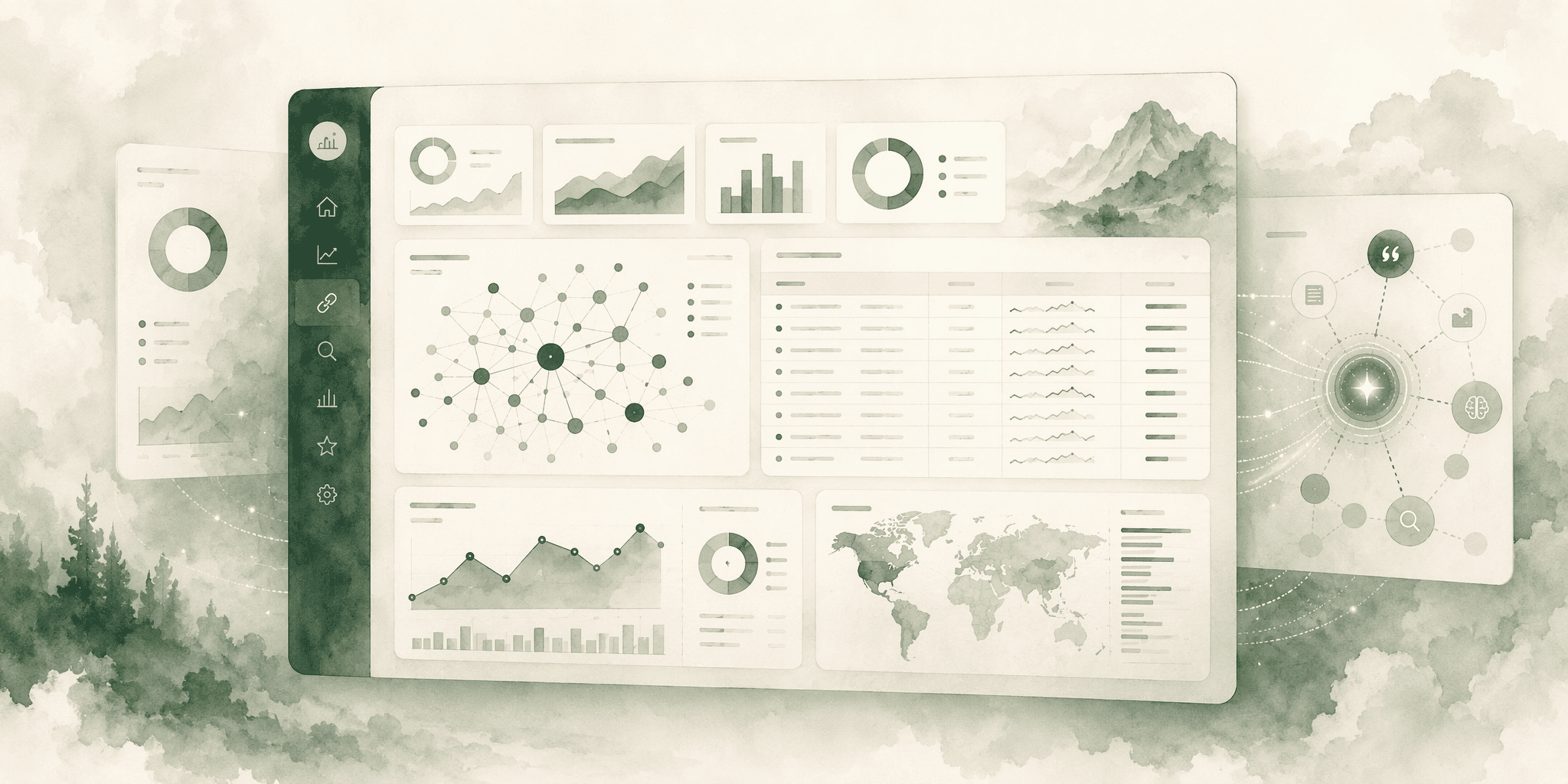
Ahrefs Brand Radar fits one buyer profile cleanly: the enterprise already using Ahrefs for traditional SEO that wants a view of its AI visibility without signing a contract with another vendor. The module layers AI citation data on top of Ahrefs' backlink and keyword infrastructure, so a team can spot where AI citations track against organic rankings inside an interface they already know.
The price is the sticking point. Entry starts at $828 per month, which puts Ahrefs Brand Radar well above dedicated AI monitoring tools on this list. For a team that already carries an enterprise Ahrefs license, that incremental cost can pay off through workflow consolidation. For a team starting fresh with AI monitoring, paying a premium to an SEO-first platform for what is essentially a bolt-on capability rarely beats a purpose-built generative answer tracker on cost.
Strength sits in context. Brand Radar surfaces overlaps between your AI visibility gaps and keyword positions Ahrefs already monitors, which helps prioritize which pages to refresh. That makes it a sensible upgrade for teams that want AI monitoring as a periodic status check inside a dashboard they already use more than as a primary workflow.
7. Conductor: Organic Marketing Platform Extending into AI-Powered Insights
Conductor approaches AI monitoring from the opposite direction of a tool like Siftly. It is a full organic marketing platform that has built AI-powered insights into a larger content and SEO suite.
This positioning appeals to enterprise buyers who want AI visibility data to inform content briefs, technical SEO recommendations, and executive reporting inside one login. The sales process is consistent with that scope: mandatory custom enterprise pricing and a demo-first evaluation cycle. You will not find a public pricing page, and you will not onboard in an afternoon. Conductor targets organizations where AI monitoring is one input into a sophisticated organic marketing machine.
For teams evaluating Conductor, the decision centers on two questions. Does an all-in-one platform reduce tool sprawl enough to justify the commitment? Or does it lock you into a single vendor's roadmap for AI visibility? If your content operations already run through Conductor, adding their AI insights module avoids data fragmentation.
If you are buying AI monitoring as a stand-alone intelligence layer that must integrate with a diverse marketing stack, a lightweight, API-first tool will likely serve you better than a platform where AI insights are one tile on a large dashboard. Conductor rewards commitment to its ecosystem.
8. Comparative Feature Matrix: AI Engines, Collaboration, and Core Capabilities
The seven tools profiled above diverge sharply on three axes that matter most in enterprise buying decisions: the breadth of AI engines monitored, the depth of collaboration features, and the type of intelligence each surface generates. No platform leads across all three axes simultaneously. Siftly and OtterlyAI prioritize integration and team workflows. Authoritas and Brand Light invest in analytic depth across more engines. Understanding which axis your organization values most is the key to avoiding an expensive mismatch. The following matrix makes those trade-offs explicit.
| Feature | Siftly | OtterlyAI | Brand Light | Authoritas | Profound | Ahrefs Brand Radar | Conductor |
|---|---|---|---|---|---|---|---|
| AI Engines Monitored | 9 | 7 | 7 | 11 | Custom | Not disclosed | Not disclosed |
| Deepseek Coverage | Yes | Yes | No | Yes (dedicated) | Custom | No | No |
| Shared Workspaces | Yes | Yes | No | Limited | Yes | Yes | Yes |
| Role-Based Access | Yes | Yes | No | No | Yes | Yes | Yes |
| Slack Integration | Yes | Yes | No | No | Custom | No | Limited |
| Citation-to-Traffic Model | Directional | No | No | No | Directional | No | No |
| Sentiment Analysis | No | No | Yes | No | Custom | No | No |
| Entry Price | $599/month | $29/month | Custom | Custom | Custom | $828/month | Custom |
For teams where collaboration features are the primary requirement, Siftly and OtterlyAI are the two platforms that combine workspaces, RBAC, and Slack integrations without requiring custom deployment. The price delta between them is significant: Siftly's Scale tier at $599 per month is 20 times OtterlyAI's entry point, reflecting deeper API and attribution infrastructure rather than greater engine coverage. Organizations that already maintain BI pipelines and need programmatic access to citation data will find Siftly's architecture fits without rebuilding internal workflows. Smaller teams testing collaborative AI monitoring for the first time should map their prompt volume to OtterlyAI's tiered plans before committing to a higher-cost platform.
9. Enterprise Pricing Benchmarks: From Entry-Level Plans to Custom Deployments

Enterprise AI monitoring pricing in 2026 runs from $29 per month at OtterlyAI up through custom five-figure annual contracts for Profound and Conductor. This range exists because the cost drivers differ dramatically between a self-service monitoring tool and a bespoke enterprise intelligence deployment. At the entry tier, you are paying for prompt volume and domain count. At the custom tier, you are paying for data scientists, dedicated infrastructure, and ongoing model tuning.
Siftly slots into the mid-to-upper tier with its Scale plan at $599 per month and its Pro plan at $2,999 per month, reflecting the platform's API-first architecture and directional citation-to-traffic modeling. Ahrefs Brand Radar starts at $828 per month, but that cost is typically absorbed into a broader enterprise Ahrefs subscription rather than purchased stand-alone. Three factors drive pricing upward across every vendor on this list as team size and scope grow: the number of tracked prompts multiplies, additional workspaces or brand portfolios get added, and historical data depth requirements increase retention and processing costs.
For enterprise teams evaluating total cost, the critical variable is not the base subscription price. It is whether the tool's data plumbing matches your internal workflows out of the box or whether you will spend six figures in engineering time wiring AI citation data into dashboards your leadership already uses. Most mid-market tools sit between roughly $29 and $200 per month for their initial tiers. The jump to four-figure monthly pricing almost always signals the inclusion of API access and attribution modeling rather than just expanded prompt limits. Start with a free trial or audit to benchmark volume before selecting a tier.
Conclusion
No single tool wins this category for every enterprise team. The right pick depends on what you need the data to do.
If your workflow demands programmatic citation intelligence that feeds into existing BI tools, Siftly's API-first design and directional traffic attribution fit that use case. If you need broad multi-engine monitoring with collaborative workspaces at an affordable price, OtterlyAI's $29 entry and 50-country coverage make it the clear first rung on the ladder.
For teams managing brand safety across global markets, Brand Light's prompt-level sentiment analysis fills a forensic niche that simple mention counters miss. Authoritas's 11-engine list provides the widest net for share-of-voice analysis in 2026.
The enterprise mandate is simple: pick the tool whose engine coverage, collaboration depth, and pricing tier align with how your cross-functional teams actually work, then commit to making citation intelligence a regular input into content and competitive strategy.
Frequently Asked Questions
What defines an enterprise-grade AI search monitoring tool and how does it differ from basic rank tracking?
An enterprise-grade AI monitoring tool scans generative answers across multiple LLMs for brand mentions, citations, and sentiment, while basic rank tracking only logs keyword positions on search engine results pages. Gartner defines enterprise AI search as software that captures and indexes information to drive insight and action, not just report static rankings.
Which specific AI engines should a thorough enterprise monitoring tool cover, and why?
A thorough tool must cover ChatGPT, Google AI Overviews, Gemini, Perplexity, Claude, Copilot, and Deepseek. ChatGPT alone drives 56% of AI referral traffic, with Gemini at 18% and Perplexity at 8%. Missing any major engine creates a material gap in share-of-voice measurement and visibility intelligence.
How do team collaboration features in AI monitoring platforms improve workflow efficiency?
Shared workspaces, role-based access controls, and Slack integrations let SEO, content, and leadership teams consume the same real-time citation and sentiment data without manual report hand-offs. Cross-functional automation, often triggered through an MCP server or public API, routes AI visibility signals directly into existing BI tools and communication channels.
What are the core capabilities for competitive benchmarking and share-of-voice analysis in AI search monitoring for 2026?
Core capabilities include multi-engine citation tracking, share-of-voice scoring that measures how often brands appear relative to competitors, prompt-level sentiment analysis, and directional attribution models that map AI-generated citations back to website sessions. Competitive benchmarking now requires monitoring both Western and Eastern AI models like Deepseek.
How do AI citation tracking and directional attribution models help brands understand the business impact of AI visibility?
Citation tracking logs when and where an LLM references a brand, while directional attribution models correlate those citations with website traffic patterns. No platform offers a fully closed-loop revenue attribution model in 2026, but directional models provide a pragmatic signal for prioritizing optimization on the engines that drive measurable session uplift.
What pricing models and plan structures are typical for enterprise AI monitoring tools with collaboration features?
Three factors drive costs upward:
- Expanded prompt volume: higher usage increases the price.
- Additional workspaces or brand portfolios: more environments or brands require higher-tier plans.
- Deeper historical data retention: storing longer data histories comes at a premium.
Sources
Keep exploring
More from the blog.

Oct 28, 2026
7 Best Answer Engine Optimization Tools for Dominating AI Citations in 2026
You have spent months getting a page into the top three organic spots for a major keyword. The content is well optimized. Backlinks are solid.

Oct 28, 2026
7 Best Enterprise-Grade AI Search Monitoring Tools with Team Collaboration Features for 2026
A team of five regional SEO leads logs into their dashboard and sees conflicting numbers. The UK manager is tracking ChatGPT

Oct 28, 2026
9 Best AI Optimization Platforms for B2B SaaS Startups on Tight Budgets in 2026
81% of users now prefer AI over human assistance for information discovery. For B2B SaaS startups, this single statistic rewrites the rules.