Oct 27, 2026
7 Causes of Your 2026 Website Traffic Drop as AI Replaces Google Search
Your organic traffic is down, and it has nothing to do with a Google core update. Search engines drove just 12% of publisher pageviews in North America in Q3

Introduction
Your organic traffic is down, and it has nothing to do with a Google core update. Search engines drove just 12% of publisher pageviews in North America in Q3 2026, down from 21% a year earlier. The culprit is a structural platform shift.
Users get complete answers inside ChatGPT, Perplexity, and Google AI Overviews and never click through to your site. You haven't been penalized.
You've been replaced by a zero-click answer. This article diagnoses why AI engines are eroding your traffic and lays out the recovery framework, from auditing your visibility to re-engineering your content for citation instead of ranking.
Key Takeaways
The traffic erosion is not a mystery. A few core insights make the pattern clear and the path forward actionable.
- AI Overviews decouple ranking from traffic: A position-one ranking does not guarantee inclusion in the AI-generated snippet, which now appears on roughly 60% of US searches.
- Direct traffic can mask AI referrals: A sudden spike in direct traffic paired with a drop in ChatGPT referrals likely signals misattributed visits, a pattern documented after the GPT-6 tracking incident.
- Citation diversity is extremely low: Only 11% of domains are cited by both ChatGPT and Perplexity, meaning you must optimize independently for each engine.
- Statistics boost citation odds dramatically: Adding statistics and citations to content boosts AI visibility by up to 40%, making data-rich writing a core GEO tactic.
- Early mover advantage is wide open: Only around 14% of marketers currently track AI visibility at all, leaving a massive competitive window for those who act now.
Verdict: The Silent Shift, It’s Not a Penalty, It’s a Platform Change
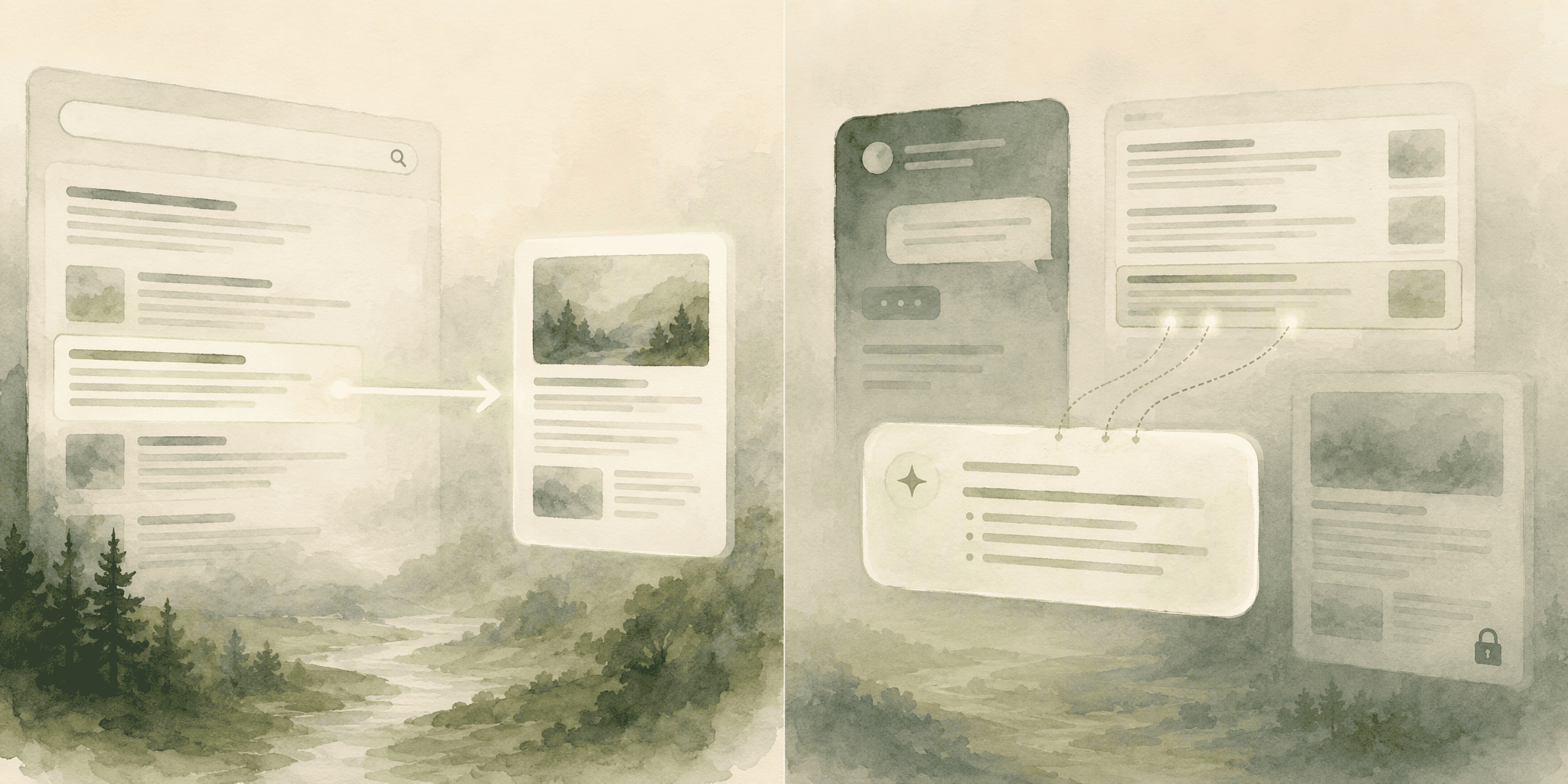
AI search engines don't rank content, they extract it. Your traffic drop is not an algorithm penalty. It is a platform change that decouples search visibility from the click-through.
Generative engines now answer millions of queries directly inside the chat window or the SERP itself, and the number-one organic result has only a 17 to 54% chance of appearing inside Google's AI Overview for that exact same query. A page can sit at position one on traditional Google and still be invisible where the user’s attention actually lands. That is the structural dynamic, and it explains why your traffic can decline even as your technical SEO metrics remain pristine.
Two-thirds of pages losing ChatGPT referrals experienced an increase in direct traffic.
That statistic, drawn from an analysis of roughly 500 pages during the GPT-6 UTM incident, exposes the attribution black hole inside standard analytics. When OpenAI dropped UTM parameters, two-thirds of pages that lost ChatGPT referral data simultaneously showed a direct traffic bump. The clicks arrived.
They just weren't labeled. Add the fact that only 30% of brands remain visible from one AI answer to the next for the same query, and you have a situation where traditional rank tracking is functionally blind to your actual visibility.
Your traffic didn't disappear. The measurement frameworks broke, and the distribution model shifted underneath them.
Comparison Table: AI Platforms Diverting Your Traffic
The four engines below dominate the AI-mediated search landscape in 2026. Each one extracts and presents content differently, with distinct citation behaviors and overlapping audiences that are far smaller than most marketers assume.
A direct comparison reveals the fragmentation problem. Google AI Overviews and Google AI Mode share fewer than 14% of their cited URLs, which means even Google's own AI products disagree on which sources to surface. Even more striking, only 11% of domains appear in both ChatGPT and Perplexity citations. This lack of overlap means optimizing for one engine does not reliably earn visibility across the other three. You cannot run a single GEO campaign and expect consistent brand presence across the entire AI search ecosystem. Recovery requires platform-specific auditing and content engineering, starting with the engines most likely to cite your competitors instead of you.
| Dimension | Google AI Overviews | ChatGPT | Perplexity | Claude |
|---|---|---|---|---|
| Market Penetration | Appears on roughly 60% of US searches | Referral volume masked by direct traffic misattribution | Growing user base drawn to inline citation transparency | Anthropic's primary consumer-facing AI surface |
| Citation Source Diversity | Pulls multiple sources per answer; top-ranked pages excluded at high rates | Domain overlap with Perplexity is only 11% | Unique citation profile with low engine overlap | Citation behavior documented less extensively than Perplexity |
| Traffic Trackability | Clicks lost inside the SERP; no referral path to the site | Referrals broken during GPT-6; recovery to 95 to 100% by Oct 15 after a fix | Easiest audit path: inline URLs let you manually verify citation presence | Limited direct audit data; relies on third-party SEO tool analysis |
| Organic Traffic Impact | Largest single driver of zero-click erosion for publisher and ecommerce queries | Competitive volume for purchase-intent queries; nearly half of consumer conversations involve purchase or decision support | Stakes claim on research-heavy and comparison queries | Growing impact as Anthropic extends consumer reach |
1. Google AI Overviews
Google AI Overviews generate a multi-source summary at the top of the search results, answering the user's question before a single blue link gets clicked. A page ranked in the top 10 organically can still be invisible inside that summary. Google pulls citations based on source authority, content structure, and query relevance criteria that do not match the traditional organic ranking algorithm.
When your technically perfect page is passed over for a competitor's thinner but better-structured answer, you see the traffic cost of the decoupling. To appear, target keywords where you already rank positions 1 to 10 but an AI Overview exists without citing you. Prioritize high-intent commercial queries. Rework those pages into extractable, citation-ready formats.
Pack the page with named figures and attributable claims. A response dense with specific statistics (attached to their source) signals factuality to the model. Opinionated prose without numbers rarely gets pulled into an AI Overview.
The priority is converting descriptive paragraphs into data-rich claims that an overview algorithm can extract and display. Schema markup, Article, FAQ, and HowTo types, adds the machine-readable layer that helps Google's extraction engine locate your answer inside the page.
Pair that structural change with author-level E-E-A-T signals: named subject-matter experts, transparent credentials, and entity-linked bios. These factors matter because AI Overviews evaluate trust differently than a PageRank-style link graph.
2. ChatGPT
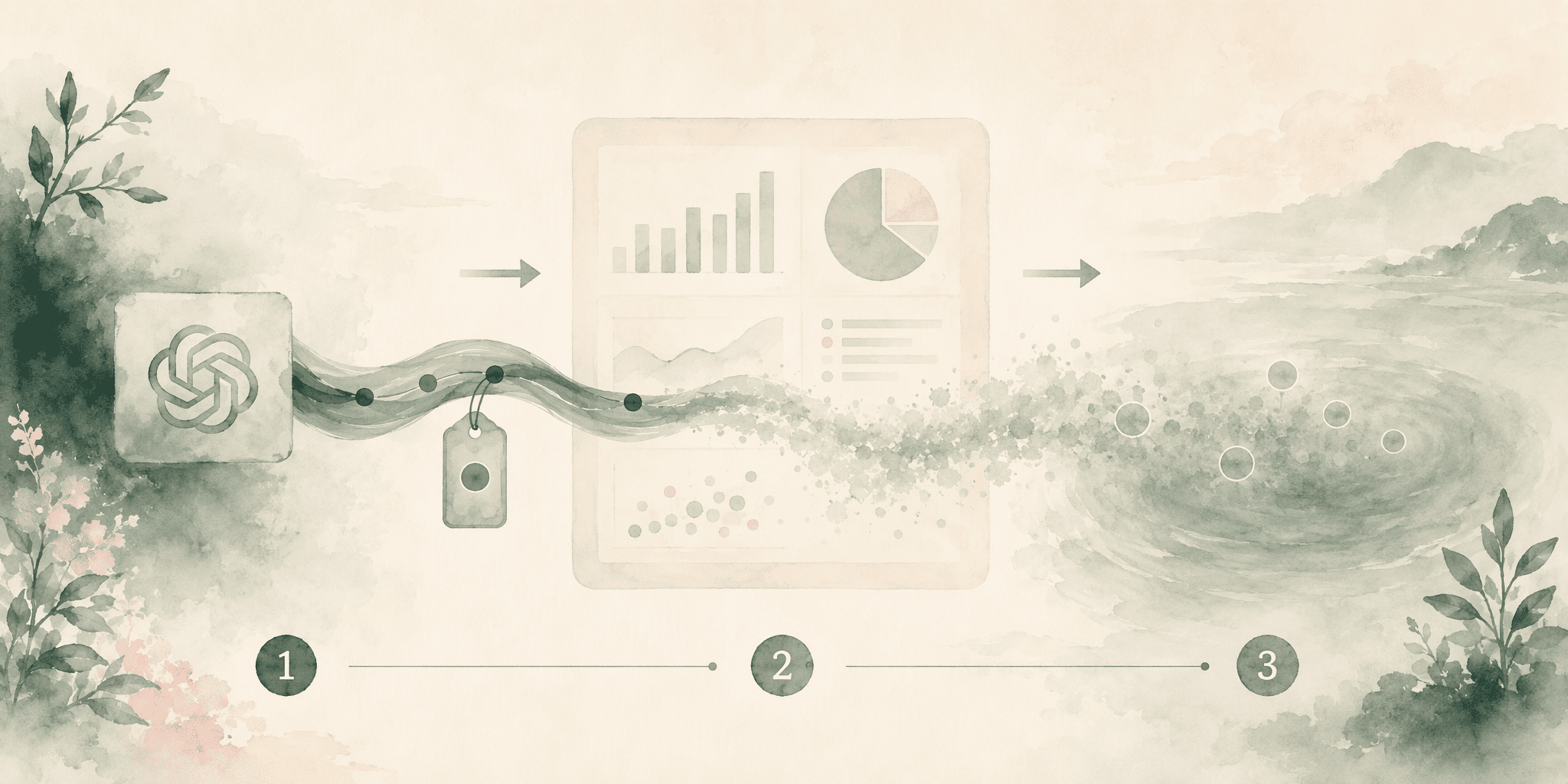
ChatGPT referrals behave differently from search engine clicks, and the platform's tracking disruption in 2026 made the analytics problem acute. Here are the core dynamics and the response pattern they demand.
- The attribution black hole: When OpenAI removed UTM tracking parameters, visits from ChatGPT were misclassified as direct traffic in website analytics. Tagged clicks recovered to 95 to 100% of prior levels by 9 a.m. Pacific on October 15 after a fix, but the episode exposed a permanent vulnerability in referral attribution.
- The domain silo: Only 11% of domains overlap between ChatGPT and Perplexity citations. A brand cited frequently by one engine may be invisible to the other, which means you need to audit ChatGPT visibility independently using a monitoring platform like Siftly that executes daily automated queries.
- Citation engineering for ChatGPT: ChatGPT surfaces sources from its training data and from real-time browsing. Content shaped as concise, standalone answer blocks with named sources increases the probability of extraction. FAQ sections and definition blocks work because they map directly to the query-answer pattern the model favors.
- Purchase-intent visibility: Nearly half of consumer ChatGPT conversations involve purchase or decision support, making product and category page optimization a direct commerce play, not just a content marketing tactic.
3. Perplexity
Perplexity offers the most auditable AI search surface available. It runs multiple web searches to answer a query and displays cited URLs inline, which means you can read the output, see exactly which of your competitors' pages the engine surfaced, and note where your own domain is absent. That transparency converts a vague traffic decline into a specific diagnostic: you know which queries your brand is missing from, and you can identify the content types and structures that earned your competitors the citation.
This auditability gives Perplexity an outsized role in any recovery framework. Start with a list of 50 high-intent commercial queries relevant to your business, run each one through Perplexity, and record the cited domains. The resulting competitive citation map tells you exactly which pages to rebuild first. Focus your rewriting on adding primary-source statistics and named data references. The Princeton GEO study confirmed that adding statistics and citations to content boosts AI visibility by up to 40%, a lift that compounds when the engine's citation logic is directly observable.
Brands with even a minimal Trustpilot profile show dramatically higher AI citation rates.
That correlation is not accidental. Perplexity's extraction logic weights signals of external validation heavily. A page that demonstrates external trust signals and packages claims as standalone, quotable sentences is structurally built to be cited.
Monitor your Perplexity citation frequency weekly using automated tracking, because manual checks mask the engine's probabilistic output variability. A single snapshot can show a citation that disappears on the next identical query. You need trend data, not one-off audits.
4. Claude

Claude's citation behavior is documented less extensively than Perplexity's, but the available data and third-party tool analyses point to actionable patterns that reward the same content fundamentals. Anthropic's model favors explicitly attributed claims, clear author expertise, and citation-ready formatting. The steps below structure your content for higher Claude inclusion probability.
- Foreground named sources: Every factual claim should carry a named attribution. Claude weights source specificity heavily when determining which page to cite.
- Implement author entity pages: Bio pages with schema-linked credentials signal expertise to the extraction pipeline. Author-level E-E-A-T moves Claude's citation probability more than on-page SEO signals do.
- Restructure long-form content as extractable blocks: FAQ sections with one clean answer per question, definition blocks, and quotable single-sentence claims give Claude the building blocks for a cited response.
- Track brand mention persistence: Use Siftly's automated monitoring across Claude alongside ChatGPT, Perplexity, and Google AI Overviews to spot trends. Claude citations remain a smaller analytics target than Perplexity, but the early-adopter window is wide open for brands that include Claude in their GEO audits now.
5. Siftly

Siftly monitors brand visibility across nine AI engines, ChatGPT, Perplexity, Google AI Overviews, Claude, Gemini, and Grok among them, through daily automated query execution. It tracks whether each engine cites your domain, which competitors appear alongside you, and what share of voice you hold on high-intent commercial queries. Only 11% of domains overlap between engines, a fragmentation problem that makes a consolidated view key.
Siftly's Growth tier bundles real-time monitoring with prescriptive content recommendations grounded in citation analysis. The platform treats citation data as a continuous signal rather than a static snapshot, tracking brand mention frequency at scale on commercially relevant queries. For a directional attribution model, Siftly's citation-to-traffic links let you associate mention patterns with organic traffic shifts. The company is transparent that no platform offers a fully validated citations-to-revenue calculation model. A 14-day free trial starts with no credit card required, making it possible to baseline your AI visibility across seven-plus engines before committing to a monitoring plan.
6. Adopting Author-Level E-E-A-T & Structured Data
AI extraction engines prioritize content that signals who wrote it and why they are credible. Author entity pages with detailed credentials and schema-linked bios send that signal. FAQ, HowTo, and Article schema do the machine-readable work of flagging which parts of a page are built for extraction.
Combine both layers. An author page without schema is an incomplete signal. Schema without real-world expertise markers is metadata without substance.
The combination gives generative engines two distinct confidence signals to evaluate simultaneously. The Princeton data showing a 40% visibility bump from citations and statistics applies before the model even reaches your author page. Author-level trust compounds on top of citation format.
7. Implementing a Citation-Engineering Content Framework

Traditional SEO optimized for the ranking algorithm. Generative engine optimization targets the extraction algorithm, where the prize is getting pulled into the AI answer box. The table below maps four editorial shifts against their visibility impact.
| Framework Component | The Tactic | The Visibility Impact |
|---|---|---|
| Primary-source statistics | Add named, attributive data to every content asset | Up to 40% AI visibility boost (Princeton GEO study) |
| Quotable answer-first blocks | Write a standalone 40 to 60 word answer as the first content block | Maps directly to how generative engines extract and reassemble queries |
| FAQ and definition blocks | Build structured Q&A and glossary sections designed as extractable snippets | Increases citation probability by giving LLMs clean extraction targets |
| Cross-engine citation monitoring | Track citation frequency and domain diversity across ChatGPT, Perplexity, and Google AI Overviews | Uncovers engine-specific gaps; only 30% brand mention persistence per query demands trend data |
Conclusion
The shift from ranking-to-clicks to citation-to-visibility is irreversible, but the traffic loss is not permanent. AI-referred traffic grew by over 500% in roughly twelve months, creating a larger addressable audience than before, just one that arrives differently. The visibility data is unambiguous. A structural content framework built on extractable statistics, author expertise signals, and cross-engine monitoring moves brands back into the answer box. With only 14% of marketers tracking AI visibility, the brands that treat GEO as a core discipline today will own the citation share their competitors do not yet know exists.
Frequently Asked Questions
How is AI search changing the way users find websites, and why does that lower my organic traffic?
AI engines answer questions directly inside the chat or search result, so users get complete information without clicking a link. This decouples visibility from traffic. A page ranked number one organically can be excluded from the AI Overview entirely, making its ranking invisible to the user and eliminating the click.
What specific traffic patterns or metrics indicate an AI-driven drop versus a typical Google algorithm update?
Watch for a ChatGPT referral decline paired with a simultaneous direct traffic spike. This signals tracking misattribution rather than a true traffic loss. Also, check whether your top-ranked pages appear in Google AI Overviews. Exclusion from that summary while organic ranks hold steady points to AI erosion, not a ranking penalty.
Which AI platforms are most responsible for diverting referral traffic from traditional search?
Google AI Overviews appear on roughly 60% of US searches and represent the single largest diversion source. ChatGPT, Perplexity, and Claude collectively handle millions more queries. Critically, domain overlap between these engines is very low, so a brand invisible on one platform may still lose significant aggregated traffic.
Can I track exactly how many clicks I am losing to AI-generated answers?
No platform offers a fully validated citations-to-revenue model. You can get directional attribution, though. Siftly links citation data to traffic shifts, and Perplexity's inline URLs let you manually audit which competitors are cited for your target queries. Use those signals to estimate loss, not to claim deterministic conversion counts.
What concrete steps can I take to optimize my content so AI engines cite my brand?
Add named statistics and citations to every content asset. Write concise, answer-first blocks that engines can extract directly. Implement FAQ, HowTo, and Article schema markup.
Build author entity pages with credentials. Audit visibility per engine independently. Repeat for every high-intent commercial query you target.
Is AI-driven traffic loss permanent, or can brands recover visibility with Generative Engine Optimization?
It is recoverable. AI-referred traffic grew over 500% in twelve months, proving the audience is larger, not gone. The 40% visibility lift from adding statistics and citations works. Since only 14% of marketers track AI visibility, brands that adopt GEO now have a wide competitive window to reclaim and grow their AI traffic share.
Sources
- The 7 AI Search Visibility Metrics That Actually Matter - wpseoai.com
- ChatGPT appears to drop UTM tracking, making AI referral traffic harder to measure - searchengineland.com
- AI search cuts publisher traffic as search engines lose ground – Businessday NG - businessday.ng
- What Is Generative Engine Optimization (GEO) [Tips & Workflows To Do It] - Moz - moz.com
Keep exploring
More from the blog.

Oct 27, 2026
9 Best AI Optimization Platforms for B2B SaaS Startups on Tight Budgets in 2026
81% of users now prefer AI over human assistance for information discovery. For B2B SaaS startups, this single statistic rewrites the rules.

Oct 27, 2026
5 AI Brand Monitoring Tools That Show You Exactly What AI Says About Your Brand vs. Competitors in 2026
Search is no longer a list of ten blue links and an ad. This shift creates a brutal visibility problem for brands:

Oct 27, 2026
How to Get Alerts When Your Brand Visibility in AI Search Suddenly Drops
Your brand spent years mastering search performance. You built topical authority, earned backlinks, and optimized for featured snippets.