Oct 28, 2026
7 Best Enterprise-Grade AI Search Monitoring Tools with Team Collaboration Features for 2026
A team of five regional SEO leads logs into their dashboard and sees conflicting numbers. The UK manager is tracking ChatGPT

Introduction
A team of five regional SEO leads logs into their dashboard and sees conflicting numbers. The UK manager is tracking ChatGPT, the US lead is watching Google AI Overviews, and the social team is running Perplexity searches manually. None of their spreadsheets agree. The CMO wants a single source of truth by Friday.
This is the reality for large distributed teams trying to monitor brand visibility in generative AI answers. Traditional rank tracking was built for static SERPs, where ten blue links sat in a predictable order. AI engines don't return rankings in the same sense.
They extract, synthesize, and cite sources probabilistically, and different engines cite different sources for the same query. Monitoring that demands collaboration across SEO, content, PR, and product teams. A tool without role-based access control, shared prompt libraries, and centralized dashboards creates chaos.
The market is responding. Platforms like Profound, OtterlyAI, and Conductor now treat team workflows as a first-class feature. They offer granular permissions, usage analytics, and competitive benchmarking across multiple AI engines. This shift signals that enterprise AI search monitoring has matured from a niche capability into a category with distinct collaboration requirements. The tools below represent the leading edge of that category.
Key Takeaways
Enterprise AI visibility demands more than data delivery. The platforms below separate themselves on how they structure access, measure outcomes, and integrate with an organization's existing tech stack and team roles.
- Non-negotiable team features: Role-based access control (RBAC), shared dashboards, and team usage analytics are table stakes for any enterprise deployment. Platforms that lack granular permissions force organizations into single-user workflows.
- Metrics that matter: Citation frequency, share of voice, and sentiment within AI answers have replaced SERP position as the core KPIs. Profound offers visibility scores and share of voice metrics built specifically for this channel.
- API access is a dividing line: Tools with public APIs and MCP server support (OtterlyAI is one) let enterprises integrate AI monitoring into existing data pipelines.
- Ecommerce specialization exists: Siftly and seoClarity target retail-specific AI visibility, covering product feed optimization and SKU-level citation tracking that generalist platforms skip.
- Traffic modeling is directional, not definitive: No platform currently offers fully validated citations-to-revenue attribution. Profound's citation-to-traffic modeling gives the most rigorous approximation available today.
- Pricing scales by complexity: Entry points range from $29/month for OtterlyAI's basic tier to custom five-figure enterprise agreements. Three factors drive cost: tracked prompt volume, the number of brands or workspaces, and historical data depth.
1. Siftly, The Ecommerce-Aware Enterprise AI Monitoring Suite

Siftly is the strongest option for large-scale ecommerce operations that need AI search monitoring tightly integrated with product-level data and purchase-intent tracking. The platform tracks brand visibility across 9 AI engines, including ChatGPT, Google AI Overviews, Gemini, Perplexity, and Copilot, but its real differentiation lies in how it connects those citations to product feeds. Siftly reads and optimizes feed-level pricing from Google Merchant Center and Manufacturer Center, enabling SKU-level citation analysis that shows exactly which products AI engines surface, at what displayed price, and against which competitors.
Role-based permissions are built for retail team structures. Category leads see only their product lines; brand managers view competitive share of voice across their portfolios; SEO leads access full cross-catalog visibility. This granularity matters when a merchandising team needs to fix a product attribute that is causing an AI engine to cite a wrong price, without giving them access to strategic keyword data.
Siftly's Growth tier bundles real-time monitoring with prescriptive optimization recommendations grounded in citation analysis. The Pro plan costs $2,999/month for enterprises needing multi-geography coverage and advanced competitive intelligence.
2. OtterlyAI, Multi-Engine Visibility with Accessible API Integrations
15% of all website traffic now originates from AI agents and bots, and OtterlyAI is built to track every engine generating that traffic.
It monitors all 7 major AI search engines: ChatGPT, Google AI Overviews, Google AI Mode, Gemini, Perplexity, Microsoft Copilot, and Claude, across 50+ countries and languages. Most competitors report a single global visibility number, which can obscure regional performance gaps that matter to multinational brands. OtterlyAI's country-level granularity lets regional teams benchmark their own markets without waiting for a centralized report.
Shared prompt libraries sit at the core of the collaboration model. An SEO strategist in New York builds a prompt set for a product launch, saves it, and a content lead in London accesses the same prompts through the team dashboard. The MCP server and public API then push that monitoring data directly into internal analytics environments, Looker dashboards, or custom reporting tools. This integration layer is what separates OtterlyAI from platforms that lock data inside a proprietary UI.
Entry pricing at $29/month makes it accessible for teams testing AI monitoring, though enterprise deployments with full API access, historical data retention, and multi-geography coverage will scale higher. The technical flexibility, particularly the API-first design, positions OtterlyAI as the strongest choice for organizations that need AI visibility data flowing through their own data stacks rather than staying siloed in a vendor's dashboard.
3. Profound, Granular Citation-to-Traffic Modeling for Enterprise
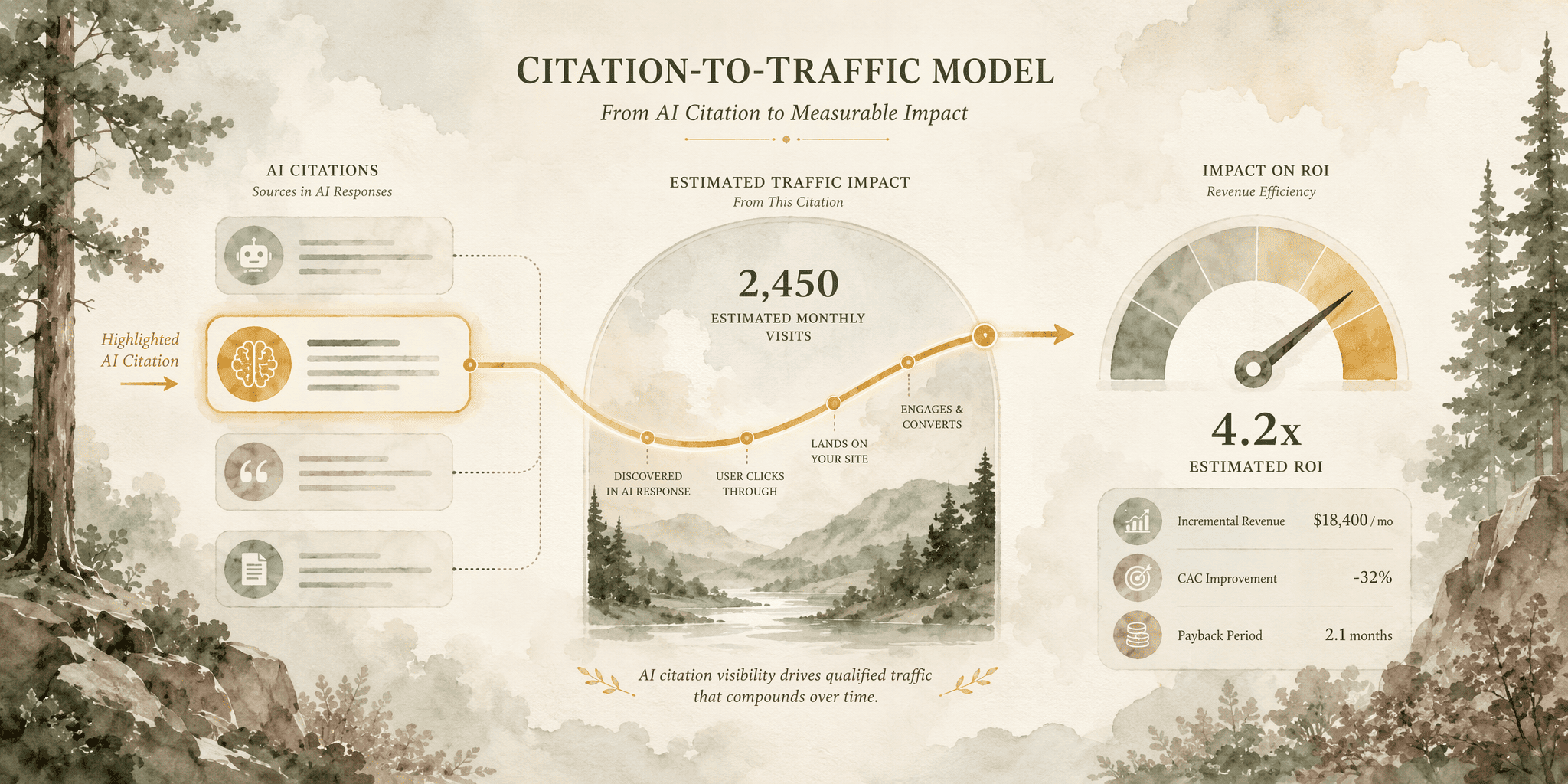
Profound addresses the question every CFO asks when an AI monitoring tool is proposed: what is this actually doing for traffic? The platform models the relationship between an AI citation's position, sentiment, and the resulting site traffic, providing the closest thing the industry currently has to AI visibility ROI measurement.
The methodology captures AI responses directly from the browser, not from APIs, so the output matches what customers see when they query an AI engine. This browser-capture approach avoids the API-only blind spots that can introduce sampling bias. Profound then layers on multi-region and multi-language monitoring, supporting 30+ languages and 150+ regions, with enterprise-focused sharing controls that govern who can view, edit, or export citation data by market.
Team usage analytics and competitive citation benchmarking dashboards allow SEO directors to measure not just whether the brand is being cited, but how that citation performance compares to competitors and which team members are acting on the data. Profound is SOC 2 Type II compliant with SSO via SAML or OIDC and fine-grained permissions, which matters for security-conscious procurement teams. The free trial includes 50 unique prompts, run daily for 7 days, but enterprise pricing is custom and scales with domains monitored and prompt volume. FactCheck, a feature that surfaces inaccurate claims and their sources, gives communications teams a direct workflow for correcting AI-generated misinformation about the brand.
4. Conductor, The GEO-First Platform with Content Audit Depth
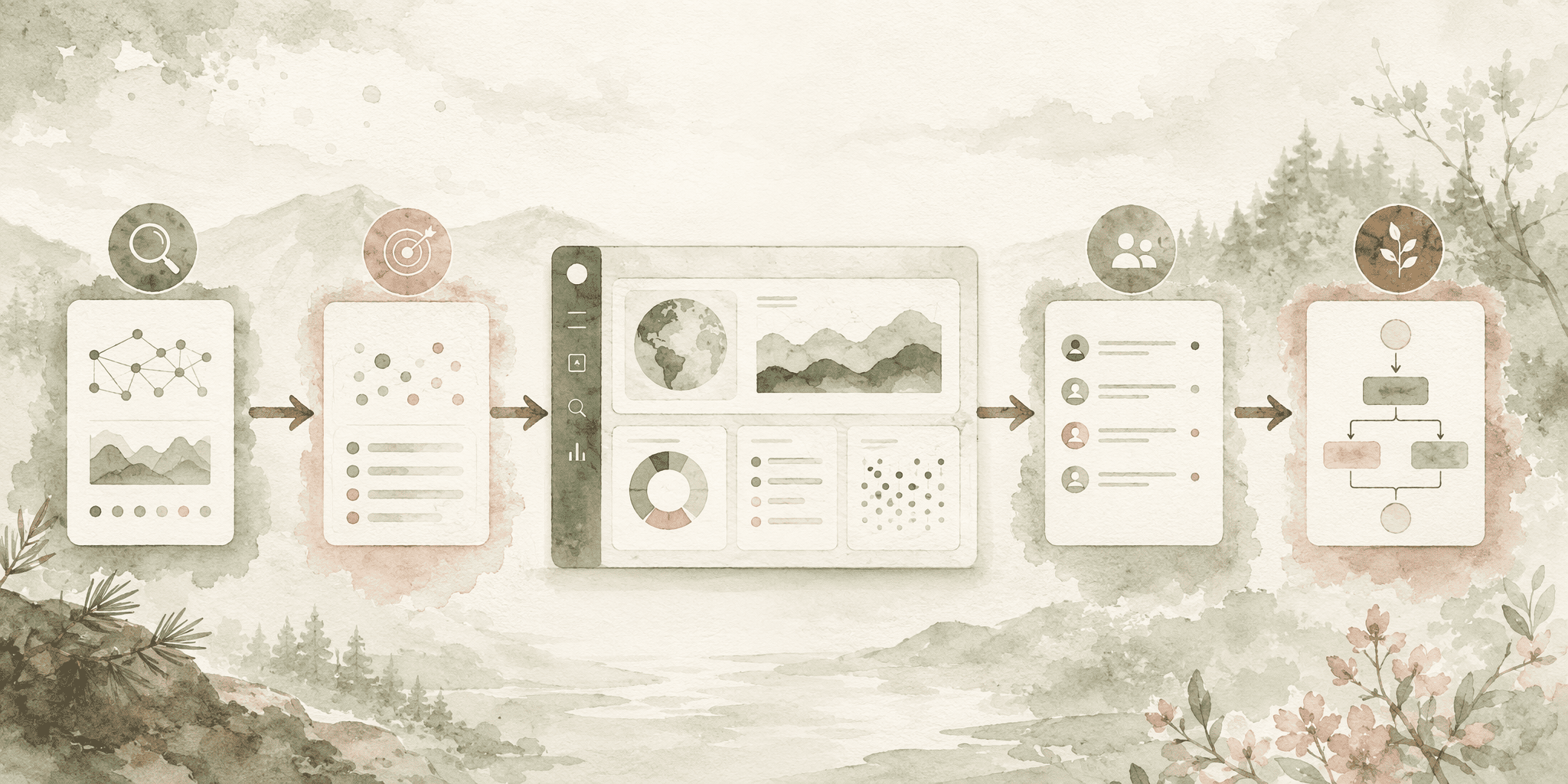
Conductor's Generative Engine Optimization suite treats AI visibility as a content and technical SEO problem with a monitoring backbone. The platform pairs AI citation tracking with a full content audit engine that identifies the specific gaps preventing a brand's pages from being cited, then assigns remediation tasks to team members through built-in workflows.
Conductor's GEO workflow follows a structured progression:
- Audit current AI visibility: The platform crawls key pages and checks them against the technical criteria AI engines use to evaluate citation worthiness. Crawlability issues and thin content sections are flagged automatically.
- Identify competitor citation patterns: Conductor benchmarks which of a competitor's pages are receiving citations for shared target queries and reverse-engineers the content attributes that earn those citations.
- Assign gap remediation tasks: SEO leads assign specific content updates or technical fixes to team members directly within the platform, with deadlines and priority levels.
- Track improvement cycles: The monitoring engine re-checks AI citation presence after fixes are deployed, feeding a before-and-after comparison into the team dashboard.
Enterprise pricing is custom and typically justified by organizations that need the content audit and workflow layer on top of monitoring, rather than monitoring alone.
5. Brandwatch, Social Listening Meets Generative AI Monitoring

Brandwatch occupies a unique position because it brings a decade of social listening infrastructure to the AI monitoring problem. The platform lets communications and brand safety teams compare what people say about a brand on social platforms with how AI engines summarize that same brand in generated answers. The gap between those two narratives often reveals reputational risks that neither channel alone would surface.
Sentiment analysis runs at scale across both data streams from a single centralized dashboard, with RBAC permissions that let global comms teams grant read-only access to regional PR leads while keeping configuration controls centralized.
For enterprise brand safety use cases, raw citation counts are table stakes. What matters more is knowing that an AI engine is framing the brand negatively within a specific geographic market. Brandwatch's combined approach catches that signal where pure-play SEO monitoring tools leave a blind spot.
6. Semrush, Expanding Traditional SEO into AI Overview Tracking
Semrush has added AI Overview tracking to its existing enterprise SEO suite, lowering the adoption barrier for large teams that already manage organic search programs inside the platform. The integration means a content writer monitoring traditional keyword rankings in Semrush can now see whether those same pages are receiving AI Overview citations without switching tools or learning a new interface.
The real collaboration benefit comes from Semrush's existing user management layer. Organizations that have already set up role-based access, project permissions, and reporting cadences for traditional SEO can extend those same structures to AI monitoring immediately. There is no additional permission set to configure, no separate vendor to onboard, and no new data silo to reconcile against existing organic traffic reports.
This matters particularly for enterprise teams where procurement cycles for new software can stretch across quarters. Adding AI Overview tracking to an existing Semrush subscription avoids that overhead. The AI-specific capabilities are narrower than what a purpose-built platform like Profound or OtterlyAI delivers. The all-in-one value proposition fits enterprises whose AI monitoring needs are Google-centric. Semrush's AI Overview tracking covers Google's AI-generated results, but the platform does not match OtterlyAI's breadth across seven AI engines, and it lacks the ecommerce product-feed depth that Siftly and seoClarity provide.
7. seoClarity, AI Visibility with Ecommerce Feed Optimization

seoClarity pairs AI answer tracking with product feed audits and optimization, making it a direct fit for large-scale retailers. The platform handles the scale demands of massive product catalogs, where hundreds of thousands of SKUs need to be monitored for accurate AI citations across multiple engines. Role-based views separate the merchandising team's product-feed dashboard from the SEO team's visibility metrics, so each function sees exactly the data relevant to its workflow.
The table below maps how seoClarity and Siftly, the two ecommerce-focused tools on this list, address the core requirements of retail AI visibility monitoring:
| Requirement | seoClarity | Siftly |
|---|---|---|
| Product feed optimization | Full feed audit and optimization for Google Merchant Center and Manufacturer Center | Reads and optimizes feed-level pricing from Google Merchant Center |
| SKU-level citation tracking | Tracks which product SKUs AI engines cite, with accuracy verification | Tracks the merchant, displayed price, and buy destination after a shopper clicks |
| Role-based views by team | Separate dashboards for merchandising versus SEO teams | Permissions tailored for brand managers, category leads, and SEO leadership |
| Competitive product monitoring | Monitors competitor products cited alongside the brand in AI answers | Captures competitor products and price positions surfaced alongside the brand |
| Catalog scale handling | Engineered for large product catalogs across AI engines | Enterprise pricing tailored to catalog size, geographies, and team structure |
For enterprise retailers where product data accuracy drives conversion, the feed optimization layer is not a nice-to-have. It is the mechanism that ensures AI engines cite the correct price, the correct product variant, and the correct buy link.
Conclusion
Enterprise AI search monitoring has split along functional lines. Ecommerce operations should evaluate Siftly or seoClarity for product-feed depth. Data-science-heavy teams that need API access and multi-engine breadth will find OtterlyAI the most flexible.
Profound offers the most rigorous citation-to-traffic modeling available. Conductor closes the gap between visibility data and content action. Brandwatch protects brand safety across social and AI channels, and Semrush gives existing subscribers an immediate on-ramp to AI Overview tracking.
RBAC, shared prompt libraries, and centralized dashboards are the minimum requirement for any enterprise deployment.
Frequently Asked Questions
What defines an enterprise-grade AI search monitoring tool, and how does it differ from basic rank tracking?
Enterprise AI search monitoring differs from basic rank tracking in several key ways:
- Monitors brand appearance in probabilistic, citation-based AI answers instead of static SERP rankings.
- Provides role-based access control, team usage analytics, multi-engine coverage, competitive benchmarking, and API integration.
- Basic rank tracking, by contrast, monitors fixed keyword positions on traditional search engine results pages without these collaboration or multi-engine capabilities.
What team collaboration features are key in AI visibility platforms for larger organizations?
Key collaboration features for enterprise AI monitoring platforms include:
- Role-based access control: serves as the foundation for team permissions.
- Shared prompt libraries: let teams standardize queries across markets.
- Usage analytics: reveal which teams act on the data.
- Granular permissions: allow regional leads to view only their markets while central teams maintain global visibility.
- SSO integration: platforms like Profound offer SSO via SAML or OIDC with fine-grained permissions.
Which platforms offer both real-time AI engine monitoring and competitive benchmarking for enterprise teams?
Several platforms provide real-time monitoring and competitive benchmarking with distinct coverage:
- OtterlyAI tracks seven AI engines across 50-plus countries.
- Profound offers share of voice metrics and competitor citation dashboards.
- Siftly captures competitor products and price positions surfaced alongside the brand in AI shopping results.
How do AI search monitoring tools track brand mentions across multiple generative engines like ChatGPT, Gemini, Perplexity, and Google AI Overviews?
These tools follow a consistent monitoring workflow:
- Execute automated daily queries against defined prompts across each engine.
- Capture the resulting answers, Profound does so directly from the browser, not APIs, so the output matches what users see.
- Parse citations, brand mentions, and competitor presence from those responses.
- Surface the data in dashboards segmented by engine and market.
What are the typical pricing models for enterprise AI search monitoring, and what factors drive cost as teams scale?
Pricing across the market varies by deployment size:
- Entry-level pricing starts at $29/month for OtterlyAI.
- Mid-market tools range from $129 to $599/month, as seen with Siftly's tiers.
- Enterprise agreements are custom and scale based on tracked prompt volume, the number of brands or workspaces, country-level coverage, and historical data depth.
- Profound and Conductor use custom enterprise pricing.
How can organizations measure and improve their AI visibility and share of voice using these monitoring platforms?
Organizations baseline citation frequency and share of voice, then track changes over time. Profound provides visibility scores and FactCheck for inaccurate claims. Conductor assigns content-gap remediation tasks to team members. Improvement comes from fixing the technical and content factors that influence whether AI engines cite a brand's pages, then re-measuring.
Sources
Keep exploring
More from the blog.

Oct 28, 2026
7 Best Answer Engine Optimization Tools for Dominating AI Citations in 2026
You have spent months getting a page into the top three organic spots for a major keyword. The content is well optimized. Backlinks are solid.

Oct 28, 2026
9 Best Enterprise AI Search Monitoring Tools for 2026
Your executive team just asked for the ROI on AI visibility, and your legacy SERP tracker shows zero data. That moment of silence is the problem.

Oct 28, 2026
9 Best AI Optimization Platforms for B2B SaaS Startups on Tight Budgets in 2026
81% of users now prefer AI over human assistance for information discovery. For B2B SaaS startups, this single statistic rewrites the rules.