Sep 29, 2026
7 Best Clearscope Alternatives for Tracking AI Visibility in 2026
Traditional search engine optimization is losing its monopoly on online discovery. AI search engines don't index content

Introduction
About 68% of Google searches ended without a click in early 2026, up sharply year over year. When answers are extracted and displayed directly in the results page, ranking data alone can't tell you who the AI engines are citing. The scale of that shift is enormous: ChatGPT reached about 900 million weekly active users in February 2026, and Google's Gemini app passed 750 million monthly active users, while Gemini-powered AI Overviews in Search reach an estimated 2 billion-plus people each month.
Brands that still rely on traditional rank trackers are betting their visibility on a shrinking click pool. Traditional rank trackers tell you where you sit on a results page. They say nothing about whether ChatGPT recommends you, or whether Perplexity cites your guide. Filling that measurement gap is why platforms like Siftly, Frase, and Otterly have built dedicated AI-visibility monitoring: they surface when and how generative engines name your brand, letting you optimize for citations instead of just blue links.
Key Takeaways
Teams evaluating Clearscope alternatives need to decide what they are building first: a content optimizer, a content system, or an AI search platform. These are three distinct categories with different capabilities.
- Content optimizers score individual pages against a keyword. Clearscope remains strong for single-page content scoring, but the biggest gap is the absence of an execution layer and an AI search visibility layer. Teams outgrow it when they need workflow automation, AI search tracking, or the ability to operate at scale.
- Content systems layer workflow, briefs, and publishing onto optimization. Tools like Frase and MarketMuse compete here, helping teams move from scoring to shipping.
- AI search platforms answer a different question entirely. Content teams are no longer asking "Did we hit our keyword targets?" They are asking "Does our brand even show up when someone asks an AI a question about our category?" Platforms in this category include Siftly, which tracks brand references in ChatGPT, Perplexity, and Google AI Overviews across thousands of queries in real time, measures visibility score, citation share, and competitive ranking, and generates GEO-ready content briefs from prompt-level gaps. Other AI search platforms such as Profound and Kalendar AI monitor AI conversations and competitive presence across engines.
- For most content, SEO, and marketing teams, the best AI visibility tool is one that does not stop at telling you that you dropped out of an answer. The playbook has shifted to choosing prompts, structuring pages, building evidence, and measuring whether citation rate improves. That closed loop is what separates a content scoring tool from an AI visibility platform.
Verdict: Choosing the Right AI Visibility Tracker for Your 2026 Goals
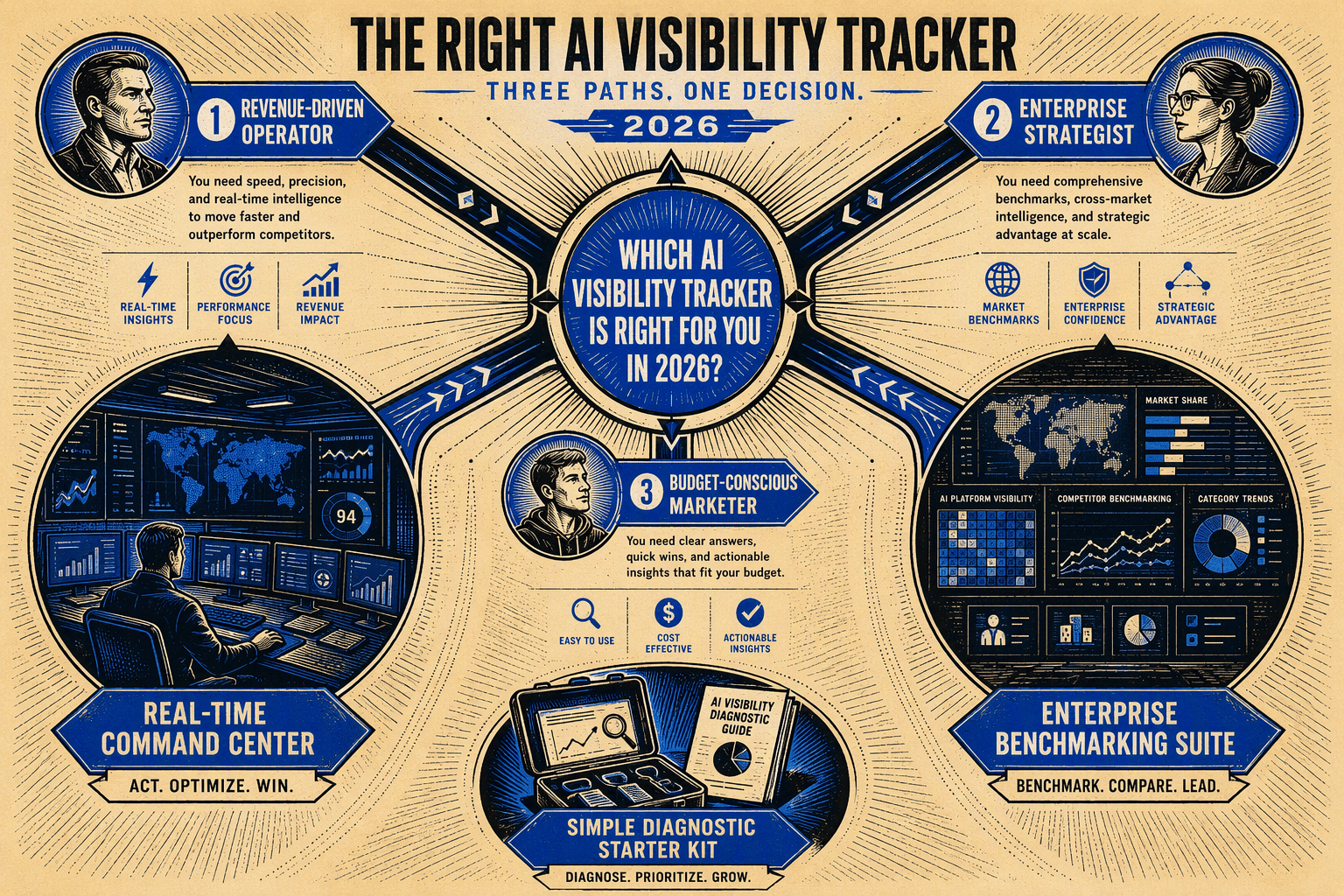
The best AI visibility tracker depends entirely on whether you need a real-time command center, an enterprise benchmarking suite, or a free diagnostic starting point. The table below breaks down the decision for the three most common operational profiles.
| User Profile | Best Fit | Why |
|---|---|---|
| Revenue-Driven Operator | Siftly | You need instant alerts when ChatGPT or Perplexity cites your brand for a buying-intent query. It is built for real-time competitive intelligence across ChatGPT, Perplexity, Gemini, and Google AI Overviews, linking citations directly to conversion events. |
| Enterprise Brand Strategist | Profound | You require platform-agnostic, multi-engine share-of-voice data and competitive benchmarking to defend market position in boardroom presentations. It tracks visibility as a strategic asset. |
| Cost-Conscious Marketer | HubSpot AI Search Grader | You need a free, immediate snapshot of your AI sentiment and visibility before committing budget. It is the best first step for building a business case for a paid GEO tool. |
Comparison Table: Clearscope Alternatives for Generative AI Visibility
A feature matrix clarifies which platform maps to specific operational needs, from real-time alerting to sales automation. The market is maturing beyond simple monitoring into revenue attribution and content optimization.
- Real-Time Competitive Intelligence: Siftly monitors thousands of queries at once, tracking how AI engines describe your brand against competitors and providing actionable recommendations.
- Automated Pipeline Creation: Kalendar AI uniquely converts AI-driven brand discoveries into direct sales outreach, turning citations into booked meetings.
- Unified Brand Health: Brandwatch converges social listening with AI sentiment, offering a unified dashboard to monitor overall brand reputation in the generative age.
- Continuous Technical Optimization: Omnisity crawls your website continuously, issuing specific GEO recommendations to improve content structure for AI overviews.
- Ecosystem-Native GEO: AIOSEO embeds AI-answer optimization directly into the WordPress editing experience, focusing on the schema and FAQ markup that generative engines prefer.
1. Siftly: Real-Time GEO Command Center for Earning AI Citations That Drive Revenue
Siftly is a real-time GEO command center that monitors, measures, and improves how AI engines talk about your brand, translating citation performance into attributed revenue. The platform watches references across thousands of queries in real time through its AI Brand Monitoring feature, alerting you the moment ChatGPT, Perplexity, or Google AI Overviews cite you in a competitor comparison or a purchase-intent query. It connects listening to action. Siftly generates GEO-optimized content through a structured workflow that produces cited, formatted content designed to earn AI citations, paired with an Experimentation module that split-tests control versus optimized content performance. Backed by Y Combinator, the platform gives marketers a direct line of sight from a generative AI answer to the revenue ledger.
A key differentiator is its speed to value. You begin a free audit with no sign-up required by entering your brand name and domain, then defining 3 to 5 real customer prompts. Siftly's AI analyzes exactly how your brand appears in the competitive AI landscape and delivers visibility insights within minutes.
This makes the 7-day free trial, with no credit card required, a low-risk entry point for growth teams prioritizing real-time monitoring.
2. Kalendar AI: Conversation-First AI Visibility for Automated Sales Pipeline Generation
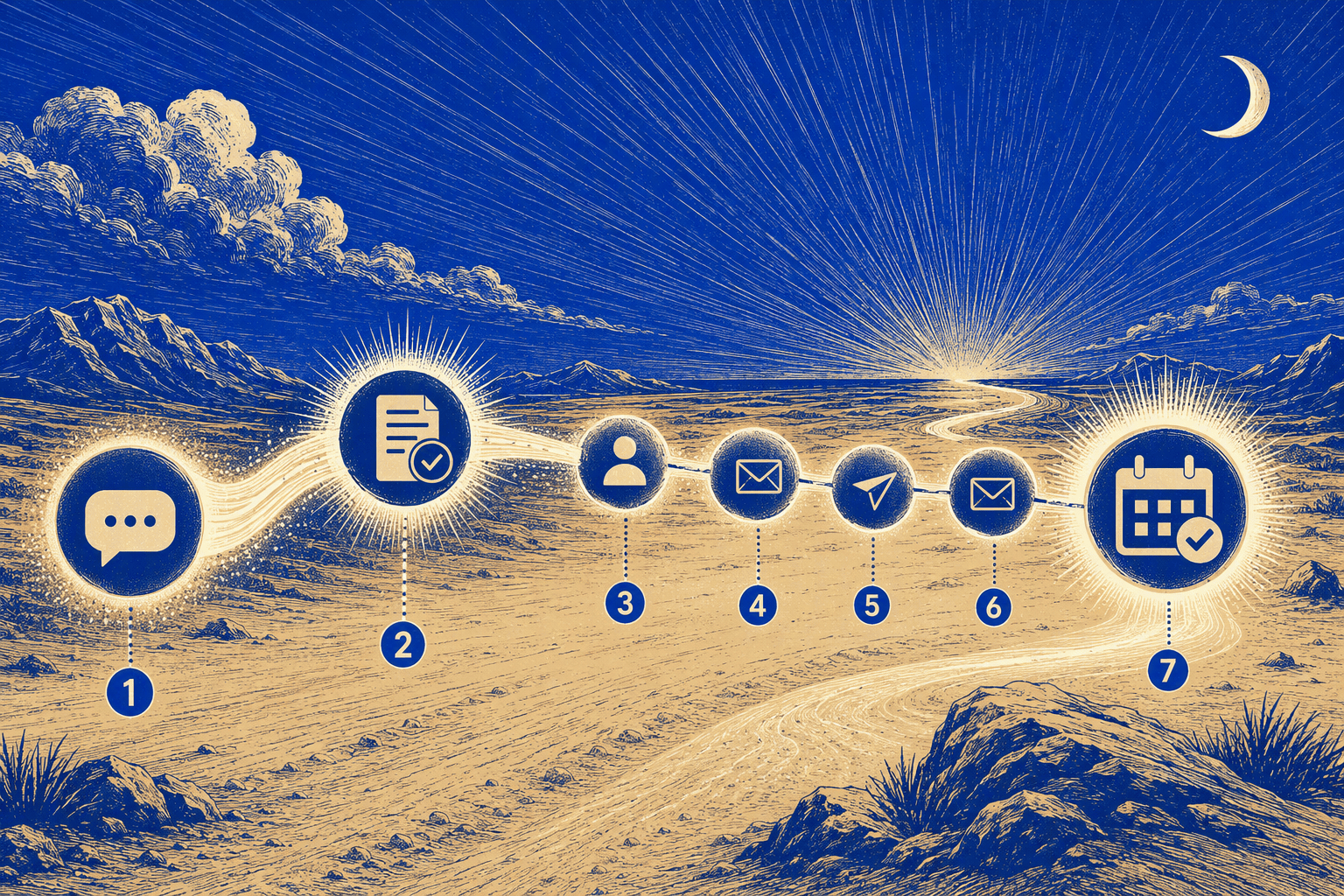
Kalendar AI tracks how AI chatbots talk about your brand across entire conversation threads, and it is the only platform that automates sales outreach directly from those insights. When a prospect asks a generative engine a buying question and your brand earns a favorable citation, Kalendar AI can initiate a pre-configured outreach sequence that tries to book a meeting with that prospect right then. It closes the loop between brand discovery in generative engines and revenue.
- Conversation-Level Monitoring: Reads the full context of threads where your brand appears, catching user intent that single-keyword alerts miss.
- Automated Sales Activation: Uses buying-intent brand citations as triggers for outreach sequences that capture demand while the signal is hot.
- Pipeline Generation Focus: Built for sales-led organizations that need to turn the opaque metric of AI visibility into a measurable pipeline metric and booked revenue.
- Clearscope Contrast: Clearscope optimizes a page for a search engine's index, while Kalendar AI monitors probabilistic generation models to find and activate demand that never visits your website.
3. HubSpot AI Search Grader: The Free Entry Point for Initial AI Brand Audit
The HubSpot AI Search Grader is a zero-cost diagnostic tool that gives any marketer a foundational read on their brand's generative AI footprint. You enter your brand and core product category, and the grader returns a snapshot of how major AI platforms describe your business, evaluating basic sentiment and share of voice relative to key competitors. It moves the conversation from abstract anxiety about AI visibility to a concrete, shareable report, and it's a practical first step for building an internal business case before you ask for budget on a continuous monitoring platform.
For Clearscope users accustomed to optimizing for a static SERP, this grader is a startling wake-up call. The AI's description of your product, which is now the answer for many zero-click queries, may differ wildly from the polished landing page you've carefully content-optimized.
The tool's simplicity is also its limit. It provides a directional snapshot, and it won't give you real-time alerting when something changes.
As a one-time analysis, it will show you where you are dangerously invisible today but won't tell you at 2 p.m. on a Tuesday that a competitor just displaced your citation in a critical AI Overview. For that, you must graduate to a platform like Siftly or Profound.
4. Profound: Enterprise-Grade Share-of-Voice Tracking Across AI-Powered Search

Profound is the enterprise benchmark for tracking share of voice across ChatGPT, Gemini, and other generative search engines, translating an opaque AI market into a quantifiable competitive intelligence dashboard. It's built for brand strategists and C-suite executives who must report on market share shifts in boardrooms, providing the granular, multi-engine data needed to defend brand value as consumer search migrates away from a traditional search engine. The platform benchmarks your brand's citation frequency and sentiment against a defined competitive set, revealing whether you are winning the race to be chosen as the single cited authority.
Where Siftly operates as a tactical, real-time command center for revenue teams, Profound is the strategic radar for enterprise-wide market defense. It suits organizations prioritizing long-term brand equity tracking over minute-by-minute citation alerts.
5. Brandwatch: Unified Social and AI Sentiment Monitoring for Brand Health

Brandwatch brings the established discipline of social listening into the generative era by merging user-generated chatter with AI-generated output into one unified brand health score. Communications teams see a crisis unfold simultaneously on social platforms and in the AI Overviews that summarize it, giving them a holistic view of reputation that neither traditional social tools nor pure GEO trackers offer alone.
This convergence matters for brand managers. A negative news cycle no longer lives only on a news site or social feed; language models ingest it and synthesize a permanent summary that answers branded queries. Brandwatch lets you correlate a spike in social negativity with its direct impact on your AI sentiment score, and it flags the specific queries where your brand narrative has shifted.
For public companies, this unified dashboard is a risk-management imperative.
Communications directors gain the single source of truth needed to brief executives on reputational exposure, so the firm is not caught off guard by a generative search result that has been quietly eroding consumer trust for weeks.
6. Omnisity: Continuous Website Optimization Engine for Generative Engines
Omnisity approaches GEO from the site architecture level, continuously crawling your website to identify specific technical and content-level fixes that make your pages citation-worthy for AI engines.
Most AI visibility tools stop at showing you where your brand appears and where it does not. Omnisity digs into the why. It crawls your site, diagnoses which pages generative models ignore, and hands you a list of concrete changes to make.
The analysis covers content structure, internal linking, and entity markup through the specific lens of what probabilistic generation models extract and cite, not what a traditional crawler indexes. For technical SEO teams transitioning to GEO, this tool bridges a critical gap: it delivers an actionable checklist of optimization tasks inside a crawl-first workflow the team already understands. The team shifts from watching citations passively to hardening content actively, so you are building toward AI citations at scale instead of just measuring them.
7. AIOSEO: The WordPress-Native Approach to AI Answer Visibility

AIOSEO embeds GEO execution directly into the WordPress publishing workflow, giving the huge base of content teams who live inside that CMS a clear on-ramp to AI-answer optimization. It eliminates the friction of manual schema implementation by providing dedicated metadata modules built for AI extraction.
The plugin automates the JSON-LD structured data, including FAQ and HowTo schema that AI overviews frequently pull into their generated answers, without requiring a developer to touch the site's code. This turns GEO into a repeatable publishing action rather than a theoretical exercise.
For a site with thousands of posts, AIOSEO provides a systematic way to audit and optimize existing content at scale. Its modules help you structure your most valuable long-form content so models like Gemini and ChatGPT can parse and cite it cleanly.
For the 40,000+ marketing professionals already managing visibility in this space, it is the path of least resistance to getting the basics of AI-readability correct inside a familiar environment.
Why Teams Look For Clearscope Alternatives In 2026
Teams are rethinking Clearscope because the definition of visibility has shifted. When the brief moves from 'make this page rank' to 'where do we stand in ChatGPT and Perplexity,' a content grader with light AI features stops answering it (Trakkr). In 2026, an SEO lead managing 500 published pages does not need a tool that scores one article at a time. They need a system that can audit hundreds of URLs, identify which ones are decaying, generate refreshed drafts at scale, and publish updates directly to their CMS (Slate). That operational gap pushes teams toward platforms like Siftly, a generative engine optimization operating system that tracks brand references in ChatGPT, Perplexity, and Google AI Overviews across thousands of queries in real time, then generates GEO-ready content briefs in an answer-first structure.
Cost is the second driver. Clearscope earns its keep for a team optimising a lot of content. When the volume drops, the $129 floor starts to look steep next to cheaper optimisers that do the core job (Trakkr).
Siftly’s paid plans start at $79 per month and add automated daily monitoring, citation tracking, and competitive intelligence, while a free audit delivers a baseline citation report without requiring a sign-up. Monitoring-only platforms do not provide prescriptive guidance on what to fix, where to fix it, or how to structure content for citations, which is why the alternative evaluation increasingly turns on whether a platform measures visibility score, citation share, and competitive ranking with trend analysis, and then ships a fix. The Siftly Agent finds the gap, ships the fix, and proves the lift, closing the loop that a standalone content grader leaves open.
What Makes a Good AI Visibility Tool
Evaluating AI visibility tools without a shared scorecard turns every comparison into a beauty contest of dashboards. A good platform must answer four specific questions: (1) Where does your brand actually appear across the engines your buyers use, (2) what, word for word, is AI saying about you compared to competitors, (3) where are you losing share right now, and (4) what do you publish next to close that gap source.
Engine coverage that matches your buyer’s journey
At minimum, a tool should monitor ChatGPT, Perplexity, and Google AI Overviews in a single view, since “all-in-one tools track AI Overviews alongside ChatGPT and Perplexity.” Siftly, for example, tracks brand references across those three engines daily, surfaces which competitors consistently appear in recommendation moments, and adds Gemini monitoring on paid tiers. A single-prompt spot check introduces too much noise to act on, so look for platforms that run enough query volume for statistical confidence.
Prompt-level detail, not just trend lines
Aggregate scores hide the story. A visibility tool becomes useful when it logs the exact prompt, the AI response, and which sources were cited, so you can see whether the engine called your brand, a competitor, or no one at all. Siftly’s dashboards translate citation frequency into share-of-voice metrics and pair them with competitive ranking analysis so teams can trace a dip back to the underlying queries.
Competitive benchmarking with a feedback loop
Monitoring-only tools tell you there is a problem but give you no way to fix it, and “monitoring-only platforms do not provide prescriptive guidance on what to fix, where to fix it, or how to structure content for citations.” A strong alternative pairs AI visibility data with generative engine optimization workflows: it finds prompt-level gaps against named competitors, generates GEO-ready content briefs, and then measures whether published changes improved citation rate and share of voice. Siftly frames this as “the Agent finds the gap, ships the fix, and proves the lift,” which closes the loop between content changes and ranking shifts.
Actionable intelligence over vanity scores
The space moves fast and “AI visibility rankings are unstable over time,” so tools that only deliver a static score age poorly. Prioritize platforms that show trend analysis across engines, surface where a competitor is gaining, and recommend which pages to update first. Free tiers, including Siftly’s free ChatGPT and Google AI Overviews audit, can validate coverage before committing to a paid plan, but they are “limited and only suitable for validation-stage tracking,” not continuous monitoring. As the ecosystem changes quickly, “recommend checking each tool’s current capabilities directly, as features may have been added since this article was last updated” source.
Conclusion
The market has splintered into three camps. Revenue-focused command centers like Siftly track whether your brand is present in AI answers and who is citing you. Conversation-pipeline engines like Kalendar AI treat AI interactions as a direct pipeline to revenue. Enterprise listening posts like Profound measure shifts in brand sentiment across large language models.
Traditional analytics miss this new discovery surface entirely. A tool designed only for keyword rankings or page-one SERP visibility has no lens on what an AI engine synthesizes when someone asks a question your content should own. If your brand is invisible in those answers, you stop existing for a growing slice of your audience.
Your 2026 task is deployment, not deliberation. The first step is getting the right GEO platform live, matched to your budget, and actively closing the visibility gap. The priority is measuring whether you show up in AI answers and expanding that footprint before the competitors who moved faster lock in the space.
Frequently Asked Questions
What are the leading Clearscope alternatives for monitoring generative AI visibility and citations?
Leading alternatives include real-time platforms like Siftly, enterprise tools like Profound, and free diagnostic starters like HubSpot's AI Search Grader. They monitor how ChatGPT, Gemini, and Perplexity cite your brand, a capability traditional content optimization suites lack.
How does AI visibility tracking compare to traditional SEO content optimization?
Traditional SEO optimizes pages for ranked links. AI visibility tracking monitors if a generative engine's language model extracts and cites your brand as an authoritative source in its synthesized, zero-click answers. It measures citation frequency instead of keyword positions.
What features should a brand look for in a GEO and AI monitoring platform?
Prioritize real-time competitive intelligence that tracks share of voice across multiple engines. Key features include sentiment analysis, a content experimentation module, and actionable recommendations to fix visibility gaps, not just static reporting.
How does Siftly track brand mentions across ChatGPT, Gemini, Perplexity, and Google AI Overviews?
Siftly monitors references across thousands of queries in real time, acting as a command center. You define specific customer prompts, and it analyzes how multiple AI platforms describe your brand against competitors, linking those citations to revenue performance.
What pricing or free trial options do AI brand monitoring tools offer in 2026?
Options range from free one-time audits with no sign-up required, like HubSpot’s grader, to paid platforms. Siftly offers a freemium entry path with a no-credit-card-required 14-day trial, allowing teams to assess real-time monitoring before purchasing a subscription.
Which metrics matter most when benchmarking AI share of voice against competitors?
Critical metrics include comparative citation frequency in purchase-intent queries, brand sentiment in AI summaries, and presence across engines. Enterprise platforms track competitive displacement events to show exactly when a rival earns the single cited answer over your brand.
Sources
Keep exploring
More from the blog.

Oct 16, 2026
How to Measure Share of Voice in AI Search: A CMO’s Benchmarking Playbook
Your brand's most critical marketing metric stopped working the moment Google launched AI Overviews.

Oct 16, 2026
How to Track Competitor Visibility in ChatGPT Shopping Recommendations (2026 Guide)
Your competitor just became the first brand ChatGPT recommends when a shopper asks for the best running shoe under $120. You have no dashboard showing

Oct 15, 2026
Best Ahrefs Alternatives for Tracking AI Visibility in 2026
Your SEO dashboard says organic traffic is holding steady, but your brand mentions in ChatGPT are plummeting and you would never know it. Ahrefs Brand Radar