Oct 10, 2026
The Best Scrunch AI Alternatives for Tracking AI Visibility in 2026
Your brand is being cited right now by ChatGPT, Perplexity, or Google's AI Overviews, and you have no visibility into what those engines are saying.

Introduction
Your brand is being cited right now by ChatGPT, Perplexity, or Google's AI Overviews, and you have no visibility into what those engines are saying. AI search engines don't index content, they extract it, which means your hard-won page-one rankings are generating a new kind of traffic you cannot measure with Google Analytics alone. This gap became urgent for thousands of brands in June 2026 when Sitecore acquired Scrunch AI, immediately repositioning the platform with a new $250/month Core tier. For many marketing teams, that pricing and the uncertainty of a post-acquisition roadmap make this the right moment to evaluate the full landscape of Scrunch AI alternatives.
The discipline of tracking AI visibility has matured into a distinct practice from traditional SEO. With 44% of US adults using ChatGPT and Ahrefs data showing AI Overviews correlate with a 58% lower click-through rate for the top organic result, brands cannot afford to treat generative engines as a side project. This guide maps the top platforms purpose-built to monitor AI citations, brand sentiment, and share of voice across ChatGPT, Perplexity, Google AI Overviews, Gemini, and beyond.
Key Takeaways
The AI visibility tracking market has fractured into clear lanes defined by use case, budget, and engine coverage. Here is where each alternative fits:
- E-commerce operators: Siftly is purpose-built for product-citation monitoring across AI shopping recommendations.
- Enterprise brands: Profound delivers unsampled index-based tracking with granular citation reporting across every major engine. The lighter tools sample queries against a fixed set; Profound uses an unsampled index-based approach that catches citations those samplers miss.
- Competitive intelligence teams: Peec AI specializes in share-of-voice benchmarking and Perplexity-specific insights.
- Budget-conscious SMBs: Otterly.ai offers transparent per-prompt pricing and broad engine coverage without enterprise overhead.
- Low-cost multi-engine entry: Rankscale AI covers ChatGPT, Perplexity, Gemini, Grok, and Copilot at a fraction of competitor pricing.
- Free self-serve start: AthenaHQ provides a genuine free tier with multi-engine coverage, ideal for solo operators.
- Decision criteria that matter: Evaluate engine coverage breadth first, pricing transparency second, and methodology transparency third (how the tool calculates visibility scores). Scrunch AI's new $250/month floor resets the baseline expectation.
Verdict: The Best Scrunch AI Alternatives for Tracking AI Visibility in 2026
The right Scrunch AI alternative depends entirely on your operational context.
- E-commerce brands running Shopify stores should evaluate Siftly first. It monitors product-level citations, tracks sentiment, and connects directly to catalog health.
- Enterprise organizations with large brand portfolios and custom reporting requirements will find Profound the most rigorous replacement. The difference between Profound and lighter tools comes down to approach: Profound uses an unsampled index-based method that catches mentions lighter crawlers miss.
- For most teams, the decision is a trade-off between competitive intelligence depth and budget. Peec AI wins on Perplexity share-of-voice analytics. Otterly.ai delivers the most accessible entry point for SMBs who need prompt-level monitoring without a demo call. Rankscale AI and AthenaHQ carve out the budget end: Rankscale for broad multi-engine coverage at low cost, AthenaHQ for a genuine free tier that evolves into self-serve GEO analysis.
AI Visibility Tracking Tools Compared: Features, Pricing, and Coverage
Scrunch AI's acquisition reshuffled the competitive landscape overnight. The table below maps the core alternatives across the dimensions that matter most when replacing or supplementing an AI visibility stack.
| Feature | Siftly | Profound | Peec AI | Otterly.ai | Rankscale AI | AthenaHQ | Scrunch AI |
|---|---|---|---|---|---|---|---|
| Starting Price | Free trial; paid plans | Custom (demo-driven) | Paid tiers | Credit-based, transparent | Low monthly | Free tier available | $250/month Core |
| ChatGPT | Yes | Yes | Yes | Yes | Yes | Yes | Yes |
| Perplexity | Yes | Yes | Yes | Yes | Yes | Yes | Yes |
| Google AI Overviews | Yes | Yes | Yes | Yes | Yes | Yes | Yes |
| Gemini | Yes | Yes | Yes | Yes | Yes | Yes | Yes |
| Claude | Yes | Yes | No | No | Yes | Yes | No |
| Copilot | No | Yes | No | No | Yes | Yes | No |
| Grok | No | Yes | No | No | Yes | No | No |
| Sentiment Analysis | Yes | Yes | Yes | Yes | Limited | Yes | Yes |
| Methodology Transparency | Published | Published | Moderate | High | Moderate | Moderate | Moderate |
Engine coverage is the quickest filter. If you need Claude, Copilot, or Grok tracking, your list narrows to Profound, Rankscale AI, and AthenaHQ immediately. Peec AI and Otterly.ai concentrate on the core four engines, trading breadth for depth in competitive benchmarking and pricing transparency. Siftly differentiates on the use case, not the engine count, layering product-citation monitoring and catalog health on top of its ChatGPT, Perplexity, Google AI Overviews, and Gemini coverage.
Pricing transparency varies dramatically. Otterly.ai and Rankscale AI publish clear per-prompt or monthly rates. Profound and AthenaHQ's paid tiers require conversations, which is standard for enterprise tools but frustrating for teams who want to self-qualify. Siftly and Peec AI fall in the middle with public entry points and custom scaling.
Methodology is the tiebreaker that separates serious platforms from black boxes. Look for tools that disclose how they calculate visibility scores. A leading approach, used by LLM Pulse, runs prompts directly through ChatGPT, Perplexity, Gemini, Google AI Mode, and Google AI Overviews, then analyzes every response to detect mentions, extract citations, and calculate a visibility score. The score itself is mentions divided by total executions. Tools that won't explain their scoring should drop to the bottom of your shortlist.
Siftly: AI Visibility Tracking Built for E-Commerce Brands

Siftly is a GEO platform built specifically for e-commerce operators who need to understand how AI engines describe their products, who they recommend as alternatives, and whether those citations drive purchases. It connects directly to a Shopify store and monitors how AI engines talk about a brand.
The platform measures mention rates, citation quality, sentiment, and positioning across ChatGPT, Perplexity, Google AI Overviews, and Gemini. For marketing teams running product catalogs, the connection between AI visibility and catalog health sets Siftly apart. Siftly tracks how AI describes a brand, helps fix it, and measures traffic across those engines. The starter plan tracks 3 products, the Pro plan tracks 30, and Enterprise unlocks unlimited products, SKUs, prompts, and geographies with a dedicated success manager and custom onboarding. A 14-day free trial with no credit card required lowers the barrier to testing.
Siftly does not cover Claude, Copilot, or Grok, so brands needing those engines should look at Profound or Rankscale AI. It is not built for fixed-interval snapshot reporting, which matters if your compliance team demands periodic PDF exports rather than continuous monitoring. The trade-off is depth in the e-commerce use case: product citation monitoring, competitive benchmarking across AI shopping recommendations, and conversion tracking tied to AI-referred clicks. For a Shopify merchant, that specificity is more useful than coverage of three extra engines.
Profound: Enterprise-Grade Brand Citation Monitoring
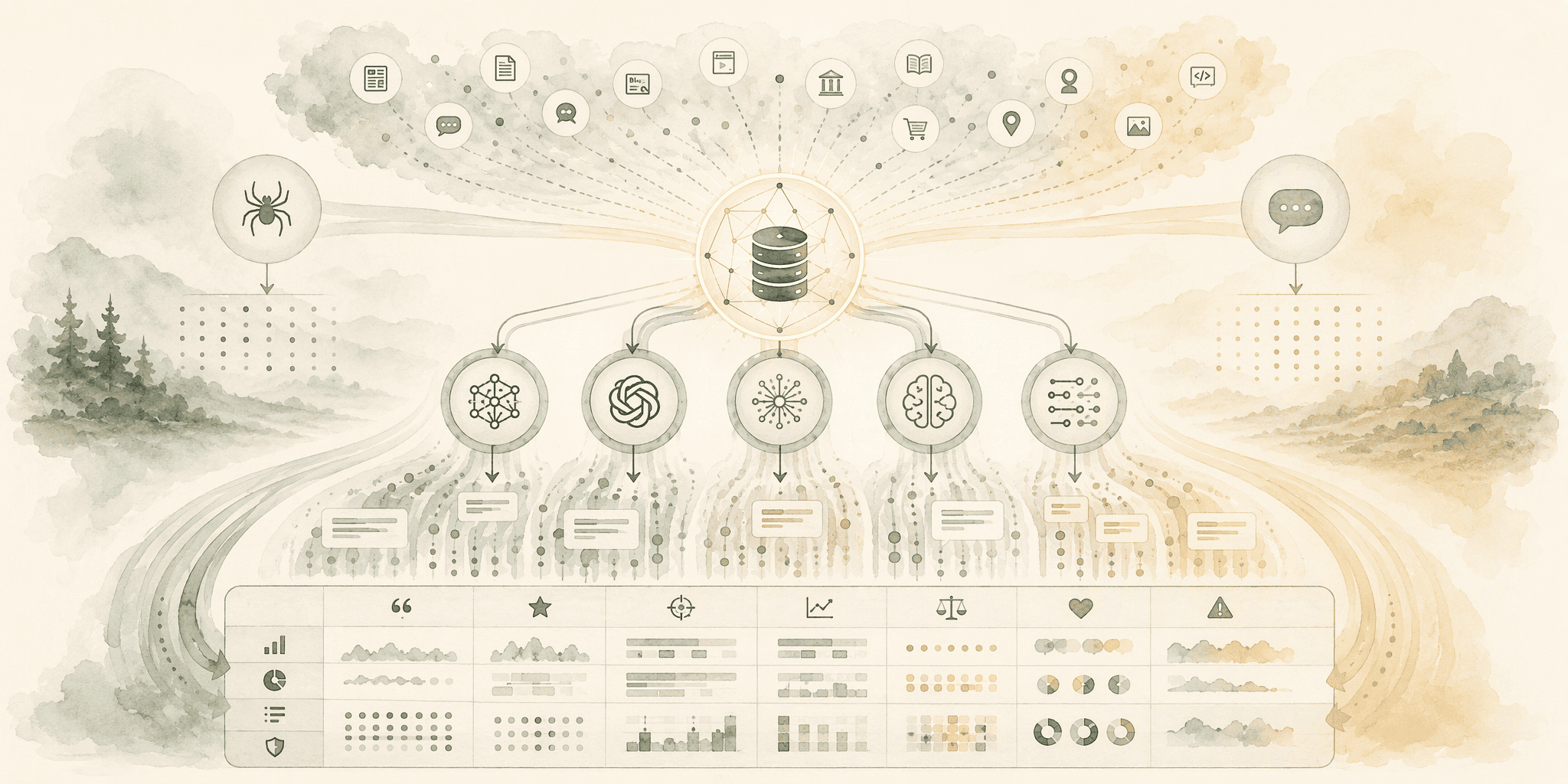
Profound sits at the top of the market for organizations that treat AI visibility as a board-level metric. Its methodology separates it from lighter tools: an unsampled, index-based approach that crawls and analyzes AI engine responses at scale instead of querying a fixed set of prompts.
| Dimension | Profound | Scrunch AI |
|---|---|---|
| Methodology | Unsampled index; full-response capture | Prompt-based sampling |
| Engine Coverage | ChatGPT, Perplexity, AI Overviews, Gemini, Claude, Copilot, Grok | 4 engines on Core tier |
| Sentiment Analysis | Granular sentiment scoring | Yes |
| Reachability Checks | AI crawler accessibility audits | Limited |
| Pricing Model | Custom, demo-driven | $250/month Core, custom Enterprise |
| Reporting Depth | Custom brand citation reports | Standard dashboards |
| Best For | Large brand portfolios, compliance teams | Mid-market agencies |
Custom pricing means Profound is not self-serve, and that is intentional. The platform is built for procurement processes, security reviews, and multi-brand dashboards that agencies and enterprises require. Reachability checks add a layer most competitors skip: verifying that AI crawlers can actually access and parse your pages, which directly impacts citation frequency. If your organization has a dedicated GEO team or an agency partner managing AI visibility across dozens of brands, Profound is the most rigorous replacement for Scrunch AI's enterprise tier.
Peec AI: Competitive Benchmarking and Perplexity Insights
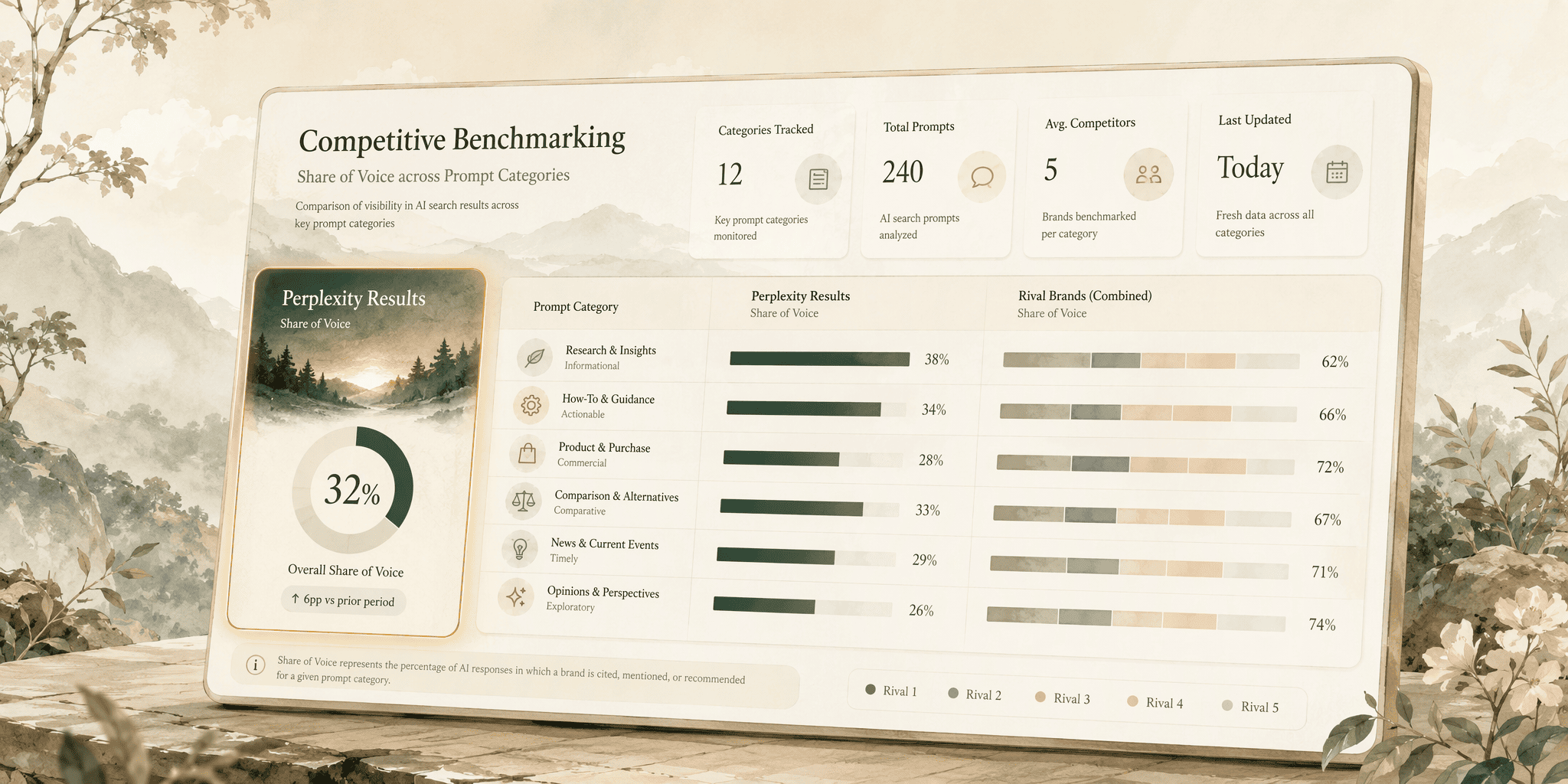
Peec AI carves out its position by answering the second question most brands ask: are you more visible than your competitors.
The platform's core strength is competitive benchmarking. It compares your brand's AI visibility against named rivals, building share-of-voice dashboards that show who owns each prompt category. Peec AI tracks Perplexity engine results closely, which appeals to brands that treat Perplexity as a strategic acquisition channel separate from Google's AI Overviews. Visibility scores break down by competitor, engine, and prompt category, the level of granularity competitive intelligence teams need.
Engine coverage is narrower than Profound or Rankscale AI. Peec AI focuses on ChatGPT, Perplexity, Google AI Overviews, and Gemini. That covers the majority of US AI search volume but leaves Claude and Copilot unmonitored. Pricing is not fully transparent on the public site, which is a friction point for SMBs.
If your primary pain point is knowing what your competitors' AI visibility looks like rather than just tracking your own, Peec AI is the most specialized tool for that job. Teams running weekly competitive intelligence cadences will get more actionable output from Peec AI than from a generalist platform.
Otterly.ai: Budget-Friendly Prompt Tracking for SMBs
Otterly.ai carries the most transparent pricing model in the market, and that alone makes it a serious alternative for small and mid-sized businesses. Credit-based or per-prompt pricing means you pay for what you track rather than for a seat license or a bundled engine package you won't fully use. Otterly.ai covers ChatGPT, Gemini, AI Overviews, and Perplexity, and layers on sentiment analysis and share-of-voice dashboards that match features found in tools costing 3 to 5 times more.
The trade-off is depth. Otterly.ai takes an index-based approach with sampling, unlike Profound's unsampled method, and it lacks the e-commerce specificity of Siftly. Engine coverage excludes Claude, Copilot, and Grok, which is acceptable for SMBs whose audience primarily uses ChatGPT, Gemini, and Perplexity. For a marketing team of three people who need to monitor 50 key prompts across four engines and know whether brand sentiment is trending up, Otterly.ai bridges the gap between free one-off checkers and enterprise suites elegantly.
Rankscale AI: Low-Cost Multi-Engine Entry Point

Rankscale AI wins the breadth-for-budget battle, covering a wider engine set than any other low-cost option.
| Dimension | Rankscale AI | Otterly.ai |
|---|---|---|
| ChatGPT | Yes | Yes |
| Perplexity | Yes | Yes |
| Google AI Overviews | Yes | Yes |
| Gemini | Yes | Yes |
| Claude | Yes | No |
| Copilot | Yes | No |
| Grok | Yes | No |
| Pricing Model | Low monthly, transparent | Credit-based, transparent |
| Sentiment Analysis | Limited | Yes |
| Share-of-Voice | Basic | Yes |
Rankscale AI tracks seven engines, which beats nearly every competitor at its price point. The trade-off is feature depth: sentiment analysis is limited, and competitive benchmarking dashboards are basic compared to Peec AI or Siftly. For a solo operator or a lean team whose primary requirement is 'tell me where we show up across every AI engine without spending $250 a month,' Rankscale AI is the most direct answer. It makes an especially strong entry point for brands testing whether Grok or Claude citations matter to their audience before committing to an enterprise platform.
AthenaHQ: Free Tier and Self-Serve GEO Analysis
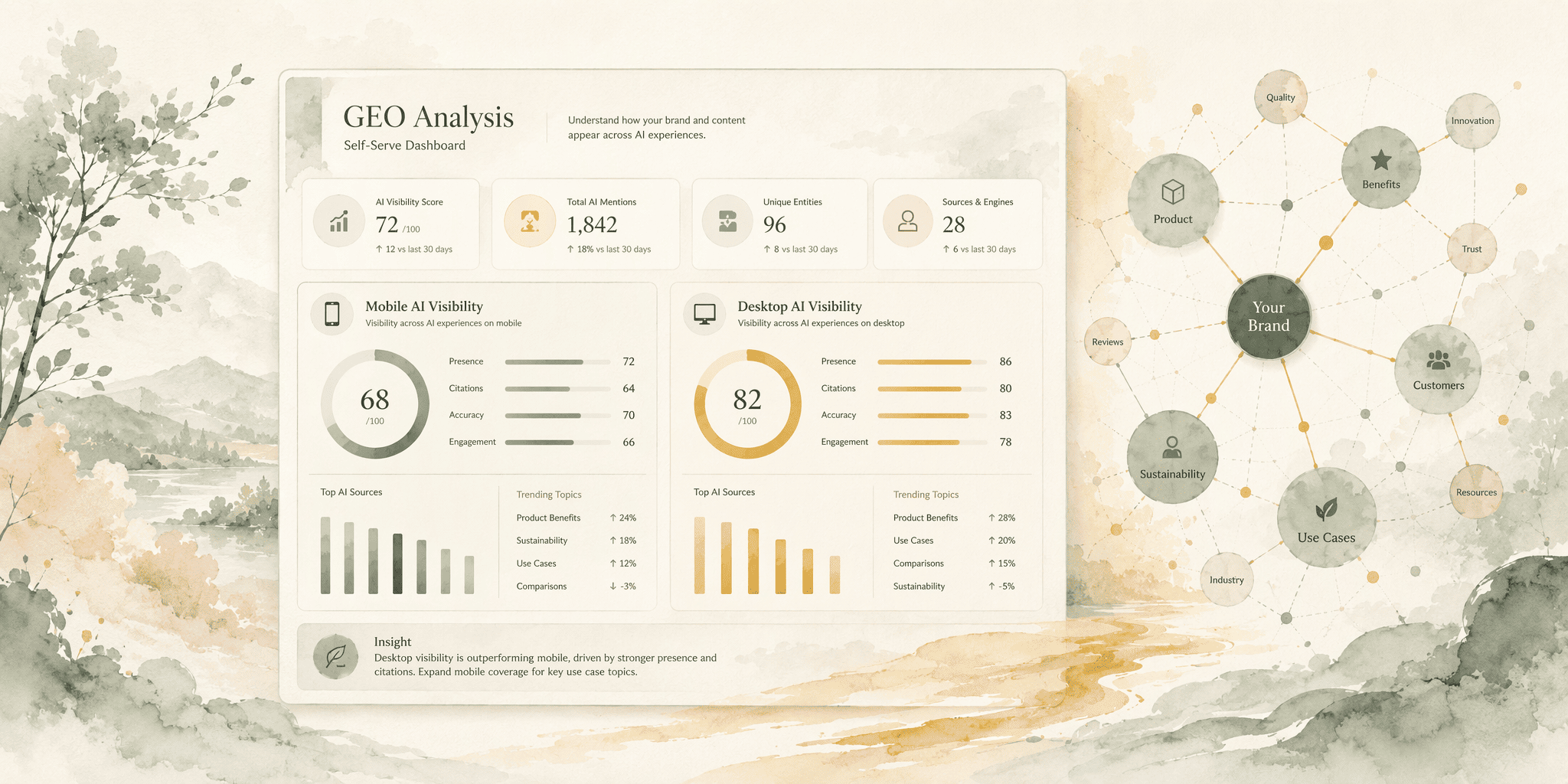
AthenaHQ is the only tool on this list that offers a genuine free tier with meaningful multi-engine coverage, covering ChatGPT, Perplexity, Gemini, AI Overviews, and Copilot without requiring a credit card. The free tier includes a self-serve GEO analysis dashboard that compares mobile and desktop AI visibility, a distinction most competitors overlook despite the growing share of AI queries happening on mobile devices. The Knowledge Graph feature tracks how AI engines understand entity relationships around your brand.
Query limits on the free tier mean AthenaHQ functions best as a discovery tool and an ongoing light monitor rather than a thorough tracking platform. Upgrading unlocks higher limits and additional features, and the paid plans remain competitively priced against Rankscale AI and Otterly.ai.
The self-serve model is its differentiation. You can sign up, connect prompts, and see visibility data within minutes. Profound requires a demo, and Peec AI uses consultative onboarding. For solo marketers or small agencies who need to prove the value of AI visibility tracking before securing budget, AthenaHQ removes every barrier to starting.
It is the lowest-risk entry point on the market. Start with the free tier, measure whether AI visibility data changes your content strategy, and upgrade only when the data proves its utility.
Which Scrunch AI Alternative Should You Choose?
The decision path narrows quickly when you anchor on use case, budget, and engine requirements. The table below maps the recommendation directly to your operational context.
| Use Case | Best Fit | Why |
|---|---|---|
| E-commerce brand monitoring product citations | Siftly | Catalog-level tracking, sentiment, and AI-referred conversion data |
| Enterprise with multi-brand portfolio and custom reporting | Profound | Unsampled indexing, full engine coverage, compliance-ready reporting |
| Competitive intelligence team tracking share of voice | Peec AI | Perplexity strengths and head-to-head competitor dashboards |
| SMB with limited budget and 50-core-prompt scope | Otterly.ai | Transparent credit pricing, solid core-engine coverage |
| Cost-first multi-engine monitoring across 7 AI engines | Rankscale AI | Broadest engine set at the lowest price point |
| Solo operator or agency proving GEO value before budget | AthenaHQ | Free tier with self-serve dashboards and mobile comparison |
Methodology transparency is the final tiebreaker. Before committing to any platform, ask how the tool calculates its visibility score. A credible answer will describe prompt execution, response capture, mention detection, and a clear scoring formula, like mentions divided by total executions. If a vendor deflects or describes only the dashboard output, proceed with caution.
Conclusion
Scrunch AI's acquisition by Sitecore created an evaluation window that every brand tracking AI visibility should use. The discipline is no longer optional. Pew's 44% ChatGPT adoption figure and the 58% CTR decline tied to AI Overviews confirm that generative engines have permanently changed how audiences discover brands.
What you do next depends on your context. E-commerce operators should test Siftly's product-citation monitoring. Enterprises need Profound's unsampled index-based methodology. SMBs will find Otterly.ai or Rankscale AI the most accessible entry points.
Anyone who hasn't started tracking at all should open AthenaHQ's free tier today. The worst decision is waiting another quarter. AI citations compound, and every month without visibility is a month your competitors are learning what the engines say about you.
Frequently Asked Questions
What is AI visibility and why should brands track it?
AI visibility measures how often and how favorably generative AI engines like ChatGPT, Perplexity, and Google AI Overviews cite your brand in their responses. Brands track it because these engines now drive discovery independent of traditional search, and traditional web analytics fail to capture AI-referred traffic.
What are the top platforms for tracking AI visibility in 2026?
The top dedicated platforms include Profound (enterprise), Peec AI (competitive benchmarking), Otterly.ai (SMB budget-friendly), Rankscale AI (low-cost multi-engine), AthenaHQ (free tier), and Siftly (e-commerce). Scrunch AI remains operational but repositioned post-acquisition at $250/month.
How does Siftly compare to other AI visibility tracking tools in features and pricing?
Siftly is purpose-built for e-commerce, monitoring product citations, sentiment, and catalog health across ChatGPT, Perplexity, Google AI Overviews, and Gemini. It offers a 14-day free trial with no credit card, a Starter plan tracking 3 products, and Enterprise with unlimited products and dedicated support.
What should I look for when choosing an AI visibility monitoring tool?
Evaluate three criteria in order.
- Engine coverage: which AIs are tracked.
- Pricing transparency: self-serve vs. demo-driven.
- Methodology transparency: how visibility scores are calculated. A credible tool will disclose that it runs prompts directly through engines and scores based on mentions divided by total executions.
Are there any free tools or methods for checking AI brand visibility?
AthenaHQ offers a genuine free tier covering ChatGPT, Perplexity, Gemini, AI Overviews, and Copilot with self-serve dashboards. Siftly provides a free AI Visibility Checker with no sign-up required that queries ChatGPT and Claude with industry-relevant buyer questions.
How do AI visibility tools measure success across multiple AI engines?
Leading tools follow a standard process.
- Run prompts directly through each AI engine.
- Capture the full response text and every cited URL.
- Detect brand mentions.
- Analyze sentiment.
- Calculate a visibility score as mentions divided by total executions. Execution frequency varies by plan, from daily to monthly.
Sources
Keep exploring
More from the blog.

Oct 10, 2026
6 Best AI Brand Visibility & GEO Platforms for 2026
Your brand is being described right now inside ChatGPT, Perplexity, and Google’s unified AI Search surface

Oct 9, 2026
Profound Alternatives for Tracking AI Visibility in 2026
In July 2026, roughly three out of four businesses discovered AI assistants could not produce their specific price

Oct 9, 2026
Best Peec AI Alternatives for Tracking AI Visibility in 2026
Your brand is being discussed by AI right now. ChatGPT, Perplexity, and Google AI Overviews are answering buyer questions, recommending competitors