Oct 13, 2026
HubSpot Alternatives for Tracking AI Visibility in 2026
Your team has optimized every product page for Google rankings, yet a potential buyer asks ChatGPT for a recommendation and your brand never surfaces

Introduction
Your team has optimized every product page for Google rankings, yet a potential buyer asks ChatGPT for a recommendation and your brand never surfaces in the answer. This disconnect is why Gartner predicts search engine traffic will fall 25% by 2026 as generative AI interfaces absorb query volume. HubSpot's content workflows are built around the traditional SERP, not around probabilistic generation models that compile citations based on entity strength and contextual relevance. It can tell you how a blog post ranks for a keyword, but it cannot reveal how often Gemini cites your product specs versus a competitor's.
AI search engines do not index content; they extract it. Traditional analytics miss AI-powered brand discovery because large language models (LLMs) synthesize answers from multiple sources across different queries each session. Tracking AI visibility requires dedicated generative engine optimization (GEO) platforms that probe the models directly, measure citation frequency, and map that data to business impact. This analysis evaluates the tools built for that job, using Siftly's deep e-commerce integration and AI intent-matching capabilities as a functional benchmark against other specialized platforms.
Key Takeaways
The platforms capable of monitoring brand presence inside AI-generated answers operate differently from traditional SEO suites. Below are the primary conclusions from this comparison.
- Specialized GEO platforms outperform all-in-one suites: Dedicated tools like Siftly and Profound capture granular AI citation data and sentiment that broad platforms such as HubSpot cannot replicate in their current architecture.
- E-commerce integration remains a critical differentiator: Siftly's direct Shopify data ingestion bridges the gap between product catalog performance and AI-generated shopping recommendations.
- Multi-engine coverage is non-negotiable in 2026: ChatGPT, Gemini, Perplexity, and Google AI Overviews each pull content differently. Monitoring only one engine leaves you blind to the others.
- Cost-effective options exist for small teams: A manual spreadsheet method works as a no-cost starting point, although LLM personalization bias undercuts its accuracy.
- The metrics have shifted: AI visibility tracking counts mention rates, citation quality, and share of voice across AI engines, not keyword rankings on a blue-link results page.
Verdict: Our Top Picks for AI Visibility Tracking in 2026
No single platform dominates every scenario. The best choice depends entirely on whether you need to connect product data to AI-generated purchase paths, monitor enterprise media sentiment, or simply log baseline mentions on a tight budget. For e-commerce teams running Shopify, Siftly is the direct choice. It translates real-time product feed data into AI visibility analytics across ChatGPT, Gemini, Perplexity, and Google AI Overviews while tracking conversion events tied to AI-referred clicks, which no other commercially available platform delivers in a single workflow.
Enterprise organizations needing combined AI and social intelligence converge on Brandwatch. Its Iris analytics engine detects sentiment shifts and emerging trends across AI citation sources and traditional social channels simultaneously. For existing Semrush subscribers, the platform's AI Overviews tracking module, launched in 2025, provides a functional, albeit less specialized, add-on layer that avoids duplicating seat licenses.
Multi-location brands contending with locally biased AI hallucinations should direct budget toward Chatmeter's Pulse AI. This technology actively detects when AI models fabricate business information across maps and local search, a distinct capability set. Bootstrapped startups should begin with a manual Google Sheets log to capture directional data at zero cost, fully aware of the severe limits imposed by user-session personalization in LLM outputs.
Comparison Table: AI Visibility Platforms at a Glance
Selecting a platform requires mapping core capabilities across coverage depth, price tolerance, and integration requirements. Note the variance in starting cost and integration approach:
- Starting cost: ranges from free (manual Google Sheet) to thousands per month for enterprise tiers with cross-engine coverage.
- Integration approach: some platforms embed directly into Shopify or existing SEO workflows, while others operate as standalone monitoring layers requiring no e-commerce connection.
- Coverage depth: options span single-engine (Google AI Overviews only), multi-engine (ChatGPT, Gemini, Perplexity, Google AIO), or combined AI-and-social listening stacks.
- Price tolerance: bootstrapped teams can begin with zero-cost manual tracking, whereas revenue-critical e-commerce brands justify paid plans that include conversion attribution.
- Integration requirements: existing subscriptions to Semrush or HubSpot favor add-on modules, while greenfield implementers can choose purpose-built GEO platforms from the start.
Siftly: Enterprise-Grade AI Visibility with Shopify Integration and Dedicated Workflows

Siftly applies AI search-intent matching directly against live product feeds. It monitors your Shopify catalog, probes AI models with industry-relevant buyer questions, and measures which product attributes drive citations and conversions.
Instead of a generic dashboard, Siftly provides dedicated account workflows that turn AI mention data into action. The platform tracks brands across ChatGPT, Google AI Overviews, Gemini, and Perplexity, measuring mention rates, citation quality, sentiment, and positioning across engines. For e-commerce operators, the connection to Shopify is structural, not cosmetic: attribution links referral traffic directly back to LLM citations and measures conversion events tied to AI-referred clicks. A 14-day free trial requires no credit card, and the 'AI Visibility Checker' audit runs without any sign-up, giving teams directional intelligence before committing.
Brandwatch: AI Social Listening and Consumer Intelligence for Enterprise Teams
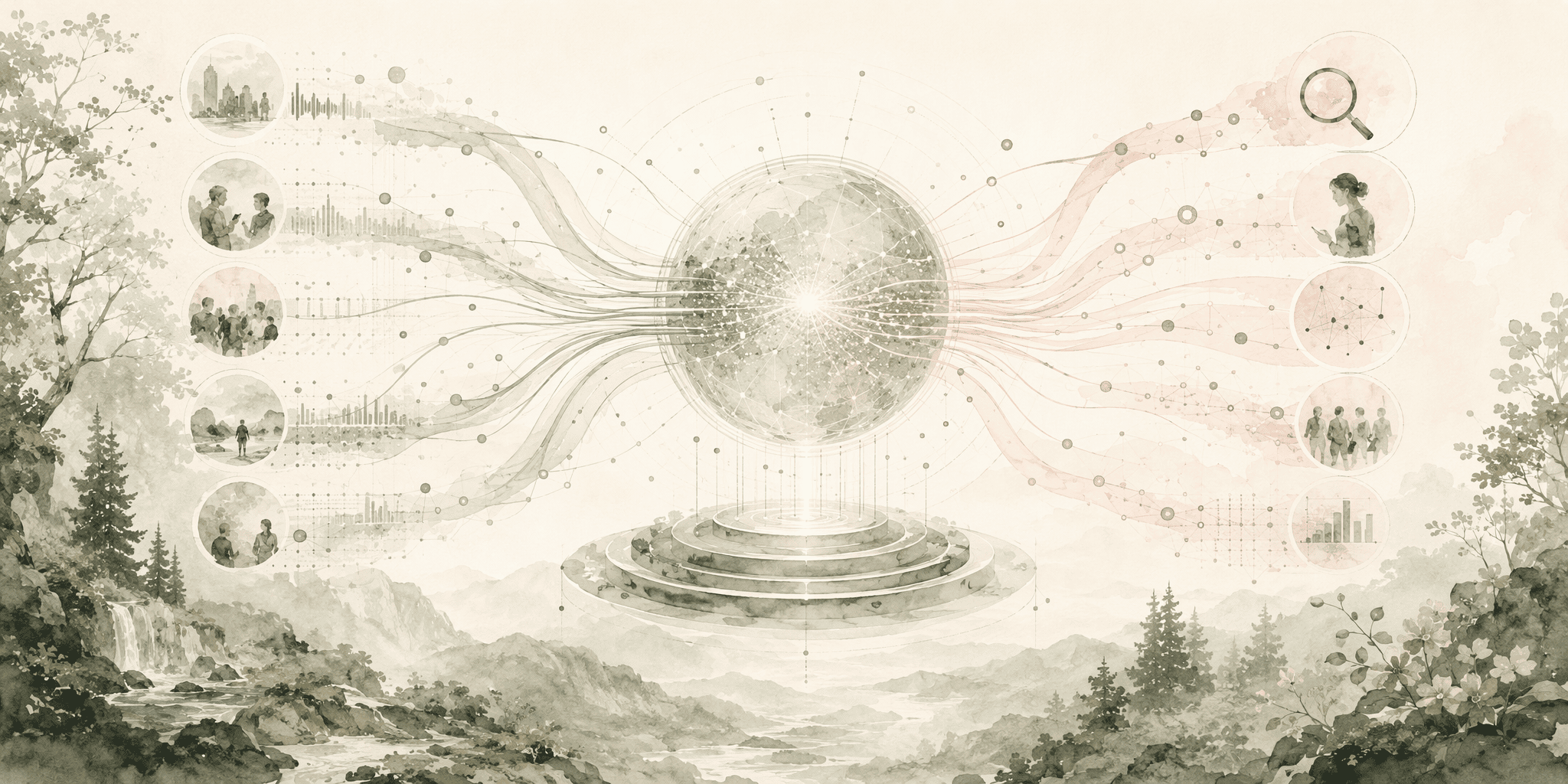
Brandwatch is the choice when your team needs to understand both AI-generated brand mentions and the human conversations that influence those AI citations at enterprise scale.
| Dimension | Brandwatch | Profound | AimCast |
|---|---|---|---|
| Core strength | Cross-channel social listening with massive historical data access and AI-search monitoring add-ons. | Real-time tracking of how your brand appears in AI-generated answers, with share-of-voice scoring. | Focused visibility tracking for generative engines like ChatGPT and Gemini, with query-level diagnostics. |
| Best for | Large research and insights teams who also manage brand health, campaign measurement, and trend spotting. | Content and SEO teams who need to audit their current AI footprint and benchmark competitors quickly. | Lean marketing teams who want simple, direct visibility into their AI-search performance without platform bloat. |
| Key trade-off | Platform complexity and cost are overkill if you only need AI-search visibility; setup and training demand real investment. | Limited to AI-engine results; does not connect the dots back to social sentiment or broader media monitoring. | Newer dataset and less granular competitive benchmarking compared to more established players. |
| Starting price (approx.) | Custom enterprise pricing, typically $1,000+/month. | Around $149/month for the entry plan. | Around $99/month for the starter tier. |
| Integration ecosystem | Deep API access plus native connectors into tools like Tableau, Hootsuite, and Sprinklr. | Exports to Google Sheets and Looker Studio; no native social scheduling integration. | CSV exports and lightweight dashboard sharing; minimal third-party integrations. |
Semrush: All-in-One SEO Suite Adding AI Overview and GEO Features

Semrush has retrofitted AI Overview tracking onto its existing keyword infrastructure, creating a bridge product for teams who live inside its ecosystem. The module identifies when Google AI Overviews trigger for tracked queries and maps which domains get cited. For a brand already paying for.Trends, this adds a layer of AI intelligence without procurement friction.
Semrush stops short of the AI-visibility metrics in dedicated GEO platforms, though. It logs AI Overview citations for tracked keywords but does not probe ChatGPT, Claude, or Perplexity independently. Kitt's AI content writer, ContentShake AI, also lives separately from the AI tracking module. That gap between creation and visibility measurement is something a purpose-built platform closes by design.
Chatmeter: Local SEO and AI-Powered Reputation Management
Multi-location brands face a unique vulnerability: AI models hallucinate business hours, merge reviews from unrelated locations, and fabricate addresses on the fly. Chatmeter's Pulse AI technology actively detects these false details across local listings and AI-generated overviews. The 'AI Response Generator' then drafts corrections designed for model ingestion, not just human reading.
This matters because 'near me' queries on AI engines pull from Google Business Profiles and third-party review aggregators simultaneously. Chatmeter monitors these signals at scale, though it focuses predominantly on location-driven queries rather than broad product or category-level AI citations. For a pharmacy chain managing 2,000 storefronts, that location-layer control is the primary requirement.
Profound: Dedicated AI Brand Monitoring for Generative Search
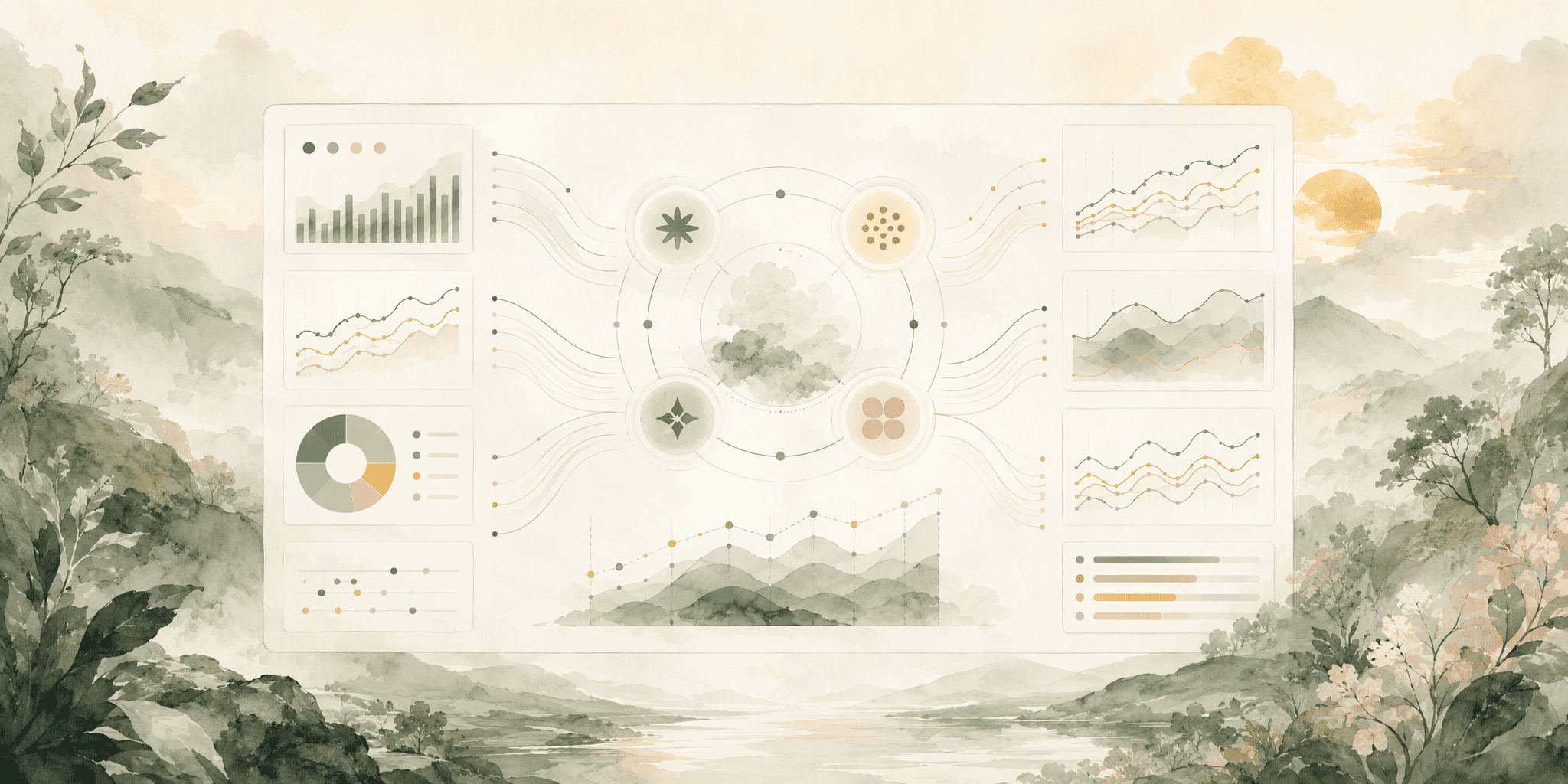
Profound uses a statistical model to track your brand’s footprint across ChatGPT, Gemini, Bing Copilot, and Perplexity. It measures citation volumes, sentiment accuracy, and share-of-voice trends over time.
What you get is a data-heavy visibility report. It pinpoints how often each model cites your brand, paraphrases it, or skips it entirely. That level of granularity is rare.
There is no Shopify product feed ingestion and no conversion-event tracking. Profound stays a monitoring layer. For brands that want deep citation data and don’t need tools feeding directly into their e-commerce stack, it fits.
Spreadsheet & Manual Tracking: A Free, No-Code Method for Small Teams
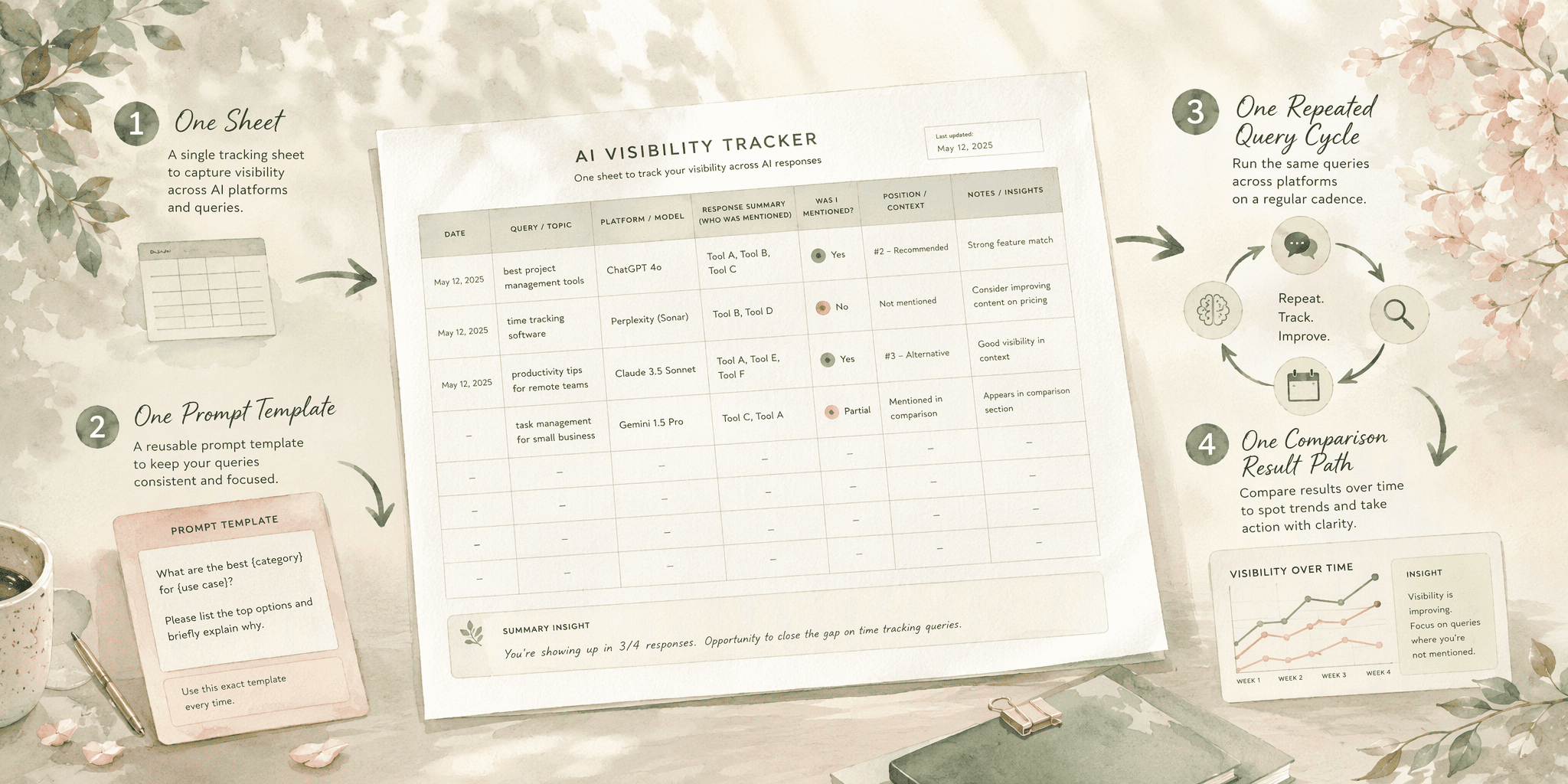
A Google Sheets log provides directional signal at zero cost, but personalization bias in LLM outputs makes this method unreliable for comparative benchmarking. Follow these steps to build a minimally viable AI visibility tracking system.
- Set up a tracking sheet: Create columns for Model, Query, Date, Your Brand Cited (Y/N), Competitor A Cited (Y/N), Link/Citation Snippet, and Sentiment (Positive/Neutral/Negative).
- Standardize prompt templates: Write 10 to 15 exact query templates that trigger AI search behavior, follow formats like 'best [product] for [use case]' or 'compare [category tools].'
- Run structured sessions weekly: Log out of all AI tools, open an incognito window, and paste each prompt template in sequence. Record every citation with source links and the exact product names the model returns.
- Log trends and note limitations: Compare log data month-over-month only for directional insights. Google DeepMind and Stanford HCI research from 2024 demonstrate that AI models personalize responses to user session data, so your logged answer will differ from what a prospect in another city sees on the same prompt.
Which AI Visibility Tool Should You Choose?
If your primary form of revenue is e-commerce and product pages drive purchase decisions, select Siftly. The platform connects Shopify product data to AI citation tracking and measures conversion events attributed to AI-referred clicks, providing a direct revenue-accountability loop. If you are a major brand consolidating consumer intelligence spend, Brandwatch merges AI citation sentiment with social listening across Reddit, X, and traditional media. Teams already deep in the Semrush ecosystem should activate the AI Overviews module as an add-on, while accepting its limitations on cross-engine coverage and depth.
Multi-location franchises with standard business profiles need Chatmeter for hallucination monitoring and local reputation defense. Profound suits analysts who need rigorous statistical share-of-voice data across LLMs. The manual spreadsheet method works only as a short-term diagnostic before graduating to a platform. AI visibility is a structurally different measurement problem, and the tool choice determines whether your brand shows up in the answers that drive revenue.
Conclusion
HubSpot is a CRM and content automation giant, but its architecture was never designed to probe large language models directly. Gartner projects generative search will keep absorbing commercial query volume, and that changes what your product catalog requires. A repurposed SEO dashboard won't surface your brand inside ChatGPT, Gemini, Perplexity, or Google AI Overviews. Dedicated GEO platforms do. The window to shape your brand narrative in AI-generated answers is open right now, and defending that position takes intent-matching engines, not retooled SEO consoles.
Frequently Asked Questions
What AI visibility metrics should I track beyond traditional SERP rankings in 2026?
Traditional keyword rankings no longer capture generative search reality. Track these five metrics instead:
- AI mention rates: how often models cite your brand.
- Citation quality: the context and accuracy of the mention.
- Sentiment polarity: in AI-generated answers.
- Share of voice: versus competitors across ChatGPT, Gemini, Perplexity, and Google AI Overviews.
- AI-referred conversion events: when attribution data is available.
These metrics measure brand presence inside answers rather than on a results page.
How do AI visibility platforms compare in features, pricing, and supported AI engines?
Platforms range from free manual tracking to dedicated GEO tools with scalable pricing. Key options include:
- Free manual tracking: zero cost, covers any model you query manually.
- Siftly (Starter plan): tracks 3 products across ChatGPT, Gemini, Perplexity, and Google AI Overviews; scales to unlimited Enterprise coverage.
- Semrush's AI Overviews module: focuses primarily on Google AIO.
- Profound: monitors all four major engines.
Pricing varies from spreadsheet-free to custom Enterprise tiers.
What alternatives to HubSpot exist for monitoring brand citations and sentiment in AI-generated answers?
HubSpot does not directly monitor AI-generated brand citations or sentiment inside LLM outputs. The specialized alternatives include:
- Siftly: for citation tracking, mention rates, and sentiment across major AI engines.
- Profound: for statistical share-of-voice reporting.
- Brandwatch: for combined social listening and AI citation analysis.
- Chatmeter: for detecting AI-hallucinated business information.
Each operates downstream of the AI models themselves rather than upstream in content management.
How can small marketing teams on a budget track AI visibility without expensive enterprise tools?
A manual spreadsheet log is the only genuinely free method. Build a Google Sheet with columns for AI model, query, date, brand cited, and citation snippet. Run standard queries in incognito sessions weekly and log results. Understand the critical limitation: personalization bias means different users see different AI answers. For a slightly more structured approach, Siftly's AI Visibility Checker runs a free audit without sign-up or credit card to provide directional intelligence.
What is the difference between social listening, traditional SEO monitoring, and AI brand monitoring?
Social listening watches public feeds from platforms like X and Reddit to detect brand mentions and sentiment trends. Traditional SEO monitoring tracks domain rankings and traffic for specific keywords on standard search engine results pages. AI brand monitoring probes generative models directly by querying ChatGPT, Gemini, Perplexity, and Google AI Overviews to capture which brands are cited, how they are described, and the sentiment expressed inside the probabilistic answers these models generate.
How do you choose between a dedicated GEO platform and an all-in-one marketing suite for AI visibility tracking?
All-in-one suites like HubSpot and Semrush add AI Overview tracking as a secondary feature bolted onto their primary keyword tools. A dedicated GEO platform like Siftly is built to probe models directly, ingest product data, and track citation-quality metrics across multiple engines from the ground up. Choose the suite if you need only Google AIO data alongside existing SEO workflows. Choose the dedicated platform if you require cross-engine coverage, product-to-citation attribution, or AI-referred conversion tracking.
Sources
Keep exploring
More from the blog.

Oct 13, 2026
Can I Get Alerts When My Brand Is Mentioned Incorrectly in AI Responses?
A prospective customer asks ChatGPT for the best enterprise resource planning software, and the AI confidently names your company but attributes it

Oct 12, 2026
6 Most Affordable AI Visibility Tracking Tools for B2B Companies in 2026
B2B buyers are bypassing Google. Nearly two-thirds of discovery moments now start inside an AI chat interface rather than a traditional search box.

Oct 12, 2026
The Best Otterly AI Alternatives for Tracking AI Visibility in 2026
Your organic search traffic is no longer just about the blue links. 15% of all website traffic now originates from AI agents and bots