Oct 22, 2026
7 Best Tools to Track AI Citations and Brand Visibility in 2026
A traditional web analytics dashboard signals a visitor arrived from Google Search, but your top-ranking article sits untouched while an AI agent synthesizes

Introduction
A traditional web analytics dashboard signals a visitor arrived from Google Search, but your top-ranking article sits untouched while an AI agent synthesizes your original research into an answer the user never clicks. 57% of brand mentions across five AI engines carry no citation link, according to AmICited tracked-prompt data from mid-2026. On Perplexity, that uncited share balloons to 86%.
AI citation tracking is the process of monitoring when and how your content appears in AI-generated answers across platforms like ChatGPT, Perplexity, Google AI Overviews, and Claude. It departs from classic SEO by measuring influence rather than link-based ranking. AI systems use a process called 'query fan-out,' conducting multiple search queries around subtopics related to a user's prompt, and combining articles to give the most informed answer.
The measurement challenge is stark: publishers are competing for influence rather than slots in search rankings, yet citation-triggered traffic is inherently difficult to attribute because the prompt-to-visit link is frequently missing from synthesized responses. The workable methodology pairs two separate data points: prompt-triggered citations on one axis and measurable AI-platform referral traffic on the other. The tools below make that correlation actionable.
Key Takeaways
Understanding the fractured citation landscape helps prioritize which monitoring approaches deliver signal rather than noise across ChatGPT, Perplexity, and Google AI Overviews.
- Brand-owned content dominates AI citations: 86% of AI citations come from brand-managed content, based on Yext research analyzing 6.8 million AI citations across ChatGPT, Gemini, and Perplexity.
- Platform source biases are extreme: Commercial.com domains dominate ChatGPT citations at 80.41%, while Perplexity relies on Reddit for 46.7% of its top sources.
- Linkless mentions are the majority rule: Across five AI engines, 57% of brand mentions carry no citation link, ranging from 38% on Google AI Mode to 86% on Perplexity, making click-based attribution alone insufficient.
- Two data points beat blind correlation: Tracking which prompts trigger citations alongside platform-specific referral traffic gives publishers a defensible visibility measure even without closed-loop attribution.
- The recommended stack layers free auditing with paid monitoring: Start with Google Search Console and manual ChatGPT source analysis, then add automated tools like Siftly or Semrush for scale, and finish with dedicated AI-bot referrer tracking.
- Google AI Overviews distributes citations more evenly across source types: Reddit accounts for 21%, YouTube for 18.8%, and Quora for 14.3%, meaning community-linked and multimedia content matter here.
1. Siftly for Actionable AI Citation Tracking and Optimization
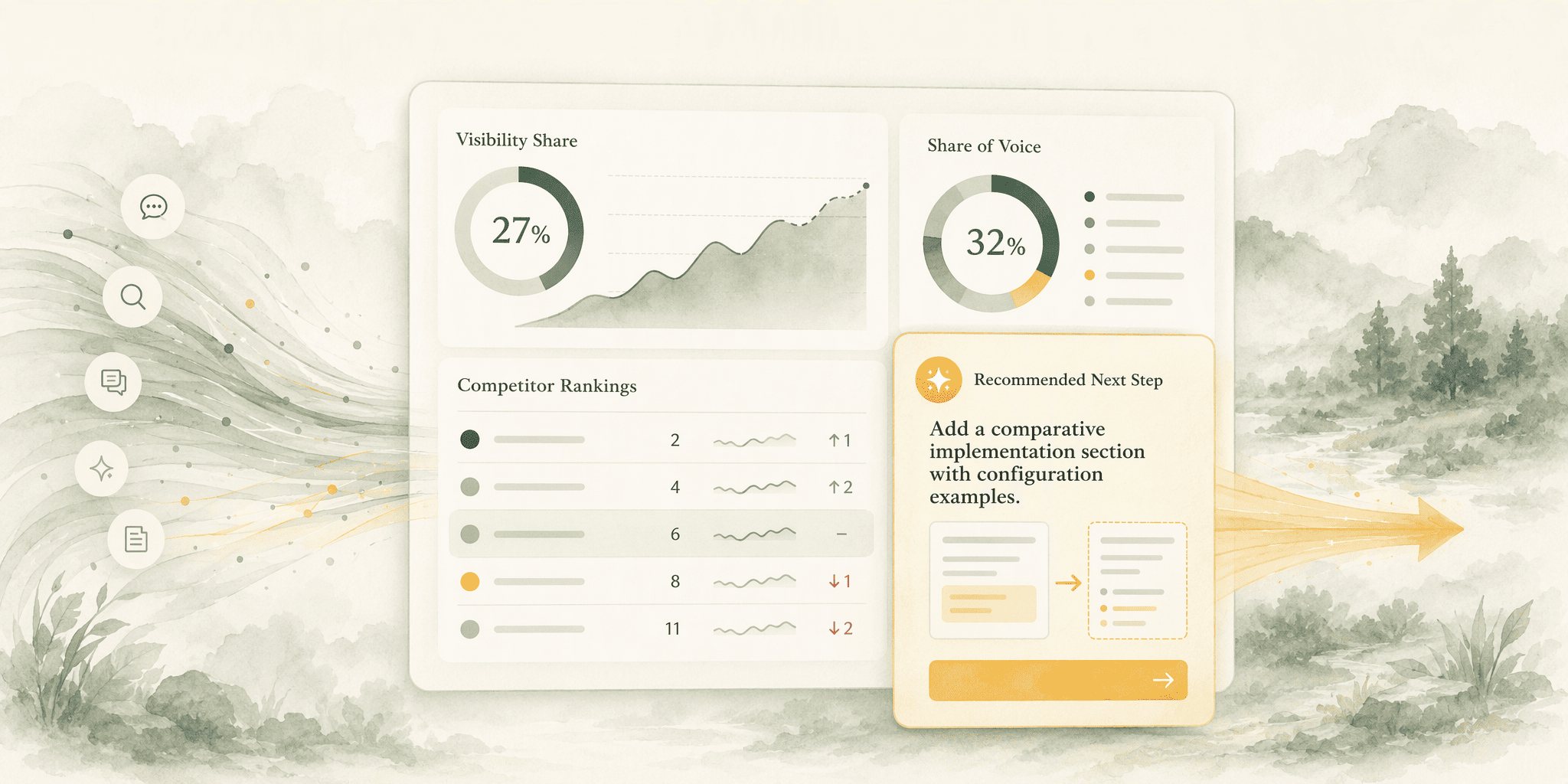
Siftly monitors your brand citations across nine AI engines, then tells you what to do next. It runs daily automated queries to track visibility, rank, and share of voice on ChatGPT, Perplexity, Google AI Overviews, Gemini, Copilot, Grok, and DeepSeek. The Growth tier flags the content changes most likely to move your numbers.
Most tools stop at counting mentions. Siftly adds the optimization layer on top. Its AI Citation Tracking surfaces your visibility share, competitor rankings, and which sources the engines pull from, then layers on product metadata, schema, and feed-level fixes for Shopify and Google Merchant Center data.
The Pro plan costs $2,999/month with custom enterprise pricing available. A 14-day free trial requires no credit card. For teams that need to connect citations to something tangible, Siftly includes citation-to-traffic modeling that correlates prompt-level citation data with platform referral patterns. It is a practical stand-in while the industry figures out closed-loop AI revenue attribution.
2. Semrush's AI Toolkit for Monitoring Brand Mentions
Semrush's AI toolkit extends its established SEO data architecture into AI brand monitoring, tracking mentions across multiple AI engines and overlaying that intelligence onto existing keyword and position data.
The integration lets teams correlate AI visibility with traditional search performance inside one platform, identifying content that performs well in blue-link rankings but goes uncited in generative answers.
The toolkit addresses a core attribution gap: 57% of brand mentions across five AI engines carry no citation link. Monitoring uncited mentions reveals brand presence that pure click-based tracking misses.
What Semrush does not provide is prescriptive optimization guidance. It identifies where a brand appears and where it does not, but the
3. Similarweb's AI Overview Traffic Estimation

Similarweb takes a swing at a problem nobody has solved yet: how much referral traffic actually arrives from AI overviews when no platform gives you a direct link between a prompt and a visit. The tool models the traffic-attribution half of the citation-tracking equation. Pairing those estimates with citation data gives publishers a directional read on ROI.
- Isolate AI overview traffic estimates: Use Similarweb's AI-specific traffic segmentation to pull estimated referral volumes from Google AI Overviews and other indexed AI platforms.
- Correlate with citation monitoring data: Layer Similarweb's traffic estimates onto your citation logs. A page cited frequently but yielding low estimated traffic may signal uncited brand mentions or poor click-through from AI summaries.
- Acknowledge the limitation: Estimates are modeled, not deterministic. Similarweb cannot link a specific prompt to a specific visit, so treat traffic numbers as directional indicators, not attribution proof.
- Prioritize pages with high-citation, high-estimated-traffic overlap: Double-down on content types that score well on both dimensions; deprioritize pages cited often but generating negligible estimated referral traffic.
A page that wins frequent citations but pulls almost no estimated traffic is worth a closer look. The gap usually means one of two things: the brand is mentioned without a clickable link, or the AI summary answers the query so completely that the user never clicks through. Either way, you know the citation alone is not paying out.
4. AmICited for Direct, Granular Citation Counting
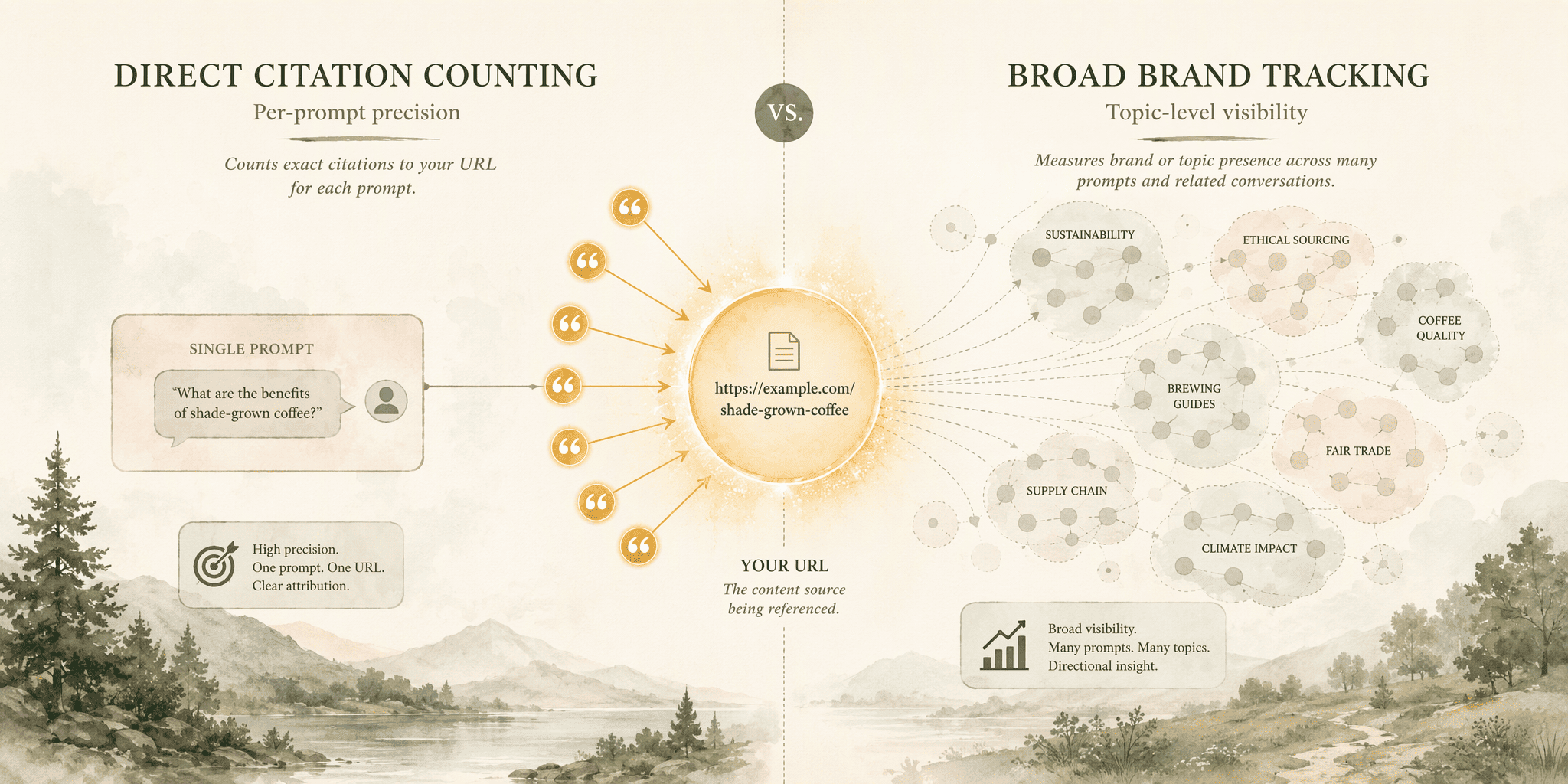
AmICited tells you exactly how many times a specific URL got cited for a specific prompt. It answers the question most platforms dance around: "Did we get the link, and how often?"
| Feature | AmICited | Brand-Monitoring Platforms |
|---|---|---|
| Unit of measurement | Citation count per URL per prompt | Aggregate brand mention rate |
| Query granularity | Individual tracked prompts | Topic clusters across thousands of queries |
| Primary output | Which pages earn citations and how often | Whether a brand appears more or less than competitors |
| Optimization direction | Identifies specific pages driving cited authority | Flags content gaps and competitive shifts |
| Data sourcing | Direct prompt-response logging from tracked queries | API and scrape-based aggregation across engines |
That granularity makes AmICited the natural partner to a traffic estimator. You get the prompt-triggered half of the equation. The tool tracked 5,119 ChatGPT responses to 1,905 prompts between June and July 2026 and logged 3,243 distinct cited domains.
5. ChatGPT's Built-In Source Analysis for Manual Auditing
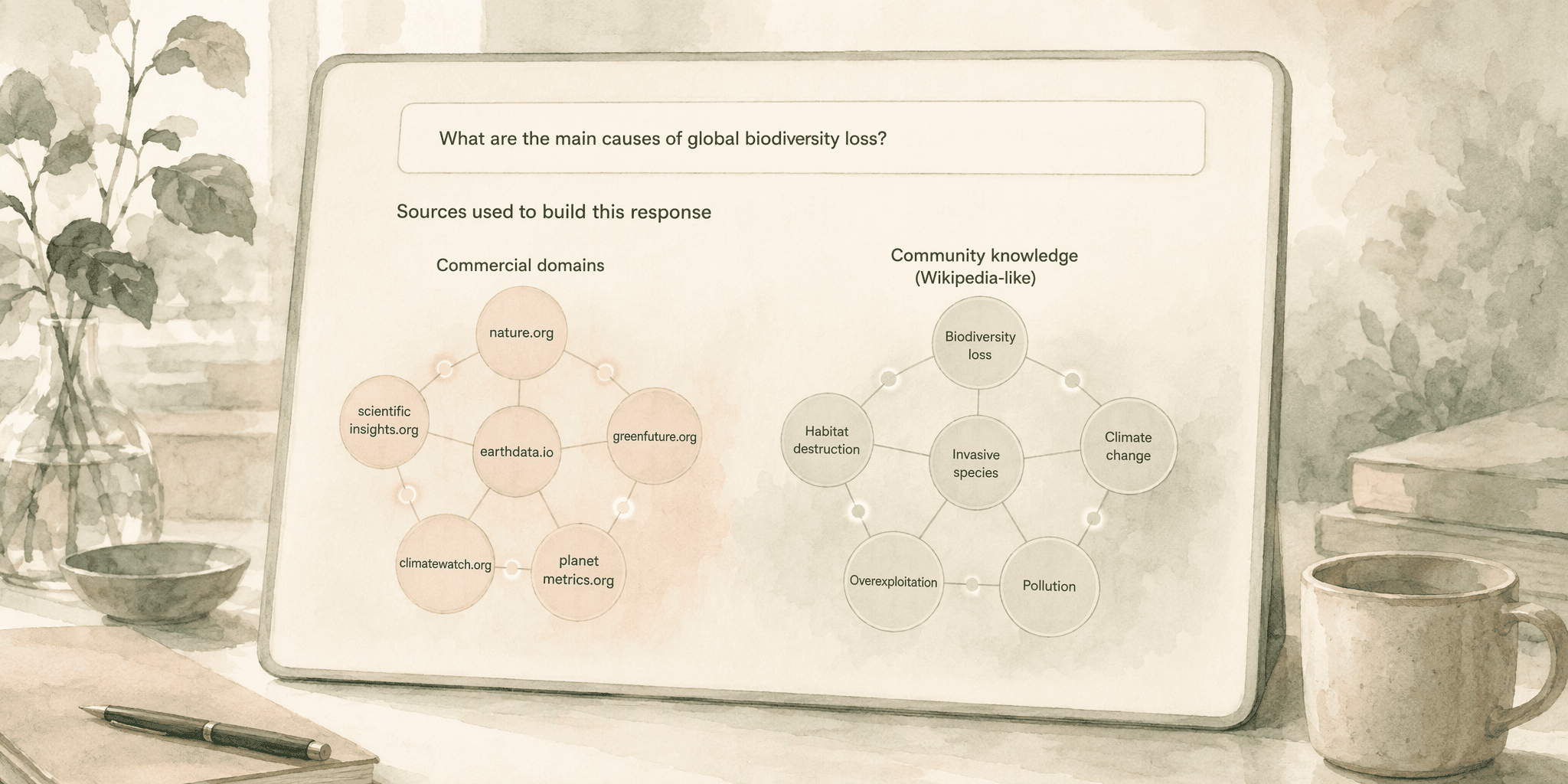
No dashboard tells you why a citation appeared. That takes opening ChatGPT and asking it directly.
Commercial.com domains dominate ChatGPT citations at 80.41%, with Wikipedia appearing in 47.9% of the model's top sources. Run a manual audit and you see whether your space tilts toward.com authority or toward community-driven platforms.
Prompt ChatGPT with your topic, then follow up: list your sources and explain them. Log every domain, note whether you were named, and check for a link. Vary the phrasing, intent, and specificity. The model draws from a wide pool. Across 5,119 responses to AmICited's tracked prompts, it cited 3,243 distinct domains, so one search alone does not predict the next.
The process does not scale past roughly 50 prompts a week. But the insight an automated dashboard cannot deliver is the mechanism behind a citation. A team that learns that mechanism builds a content instinct a visibility score cannot replace.
6. Google Search Console for AI Overview Performance Slices
Google Search Console is the only free, authoritative source for isolating AI-driven impressions and clicks from standard search data. It takes careful query segmentation to surface AI Overview performance because Google doesn't label that traffic cleanly in its reporting interface. A tell worth watching for: traffic from Google AI Overviews often carries a #text= fragment in the URL, meaning the user clicked a cited source and Google highlighted the specific passage it referenced.
In Google AI Overviews, Reddit accounts for 21% of top citations, YouTube for 18.8%, and Quora for 14.3%. If your content competes with community-driven or multimedia sources, GSC's impression data tells you whether your pages show up in AI Overviews at all, regardless of click-through. Many AI Overview citations go unclicked.
Pair GSC with a citation monitoring tool. GSC reports the click and impression signal. A tool like Siftly or AmICited reports whether the brand actually earned the citation behind that impression. Neither data point alone is enough.
7. Plausible for Dedicated AI-Bot Referrer Tracking

You can set up Plausible to bucket bot traffic from ChatGPT, Claude, Perplexity, and other AI platforms into a separate referrer category. The result is a clean signal that separates AI-driven visits from human search traffic, which gives you the attribution half of the two-data-point citation-tracking methodology.
Plausible captures the user-agent strings and referral headers that identify AI crawlers and click-through bots, then groups them without sampling. Links generated by ChatGPT frequently include?utm_source=chatgpt.com in the URL, which Plausible parses into its own traffic segment.
The referrer log only tracks clicks. It is not a visibility audit.
What makes the setup useful is Plausible's logging model. It records actual bot-driven page loads instead of estimating reach, and it keeps the data uncorrelated with your other analytics. Pair those logs with citation data from a monitoring tool and you can see whether earned AI citations turn into measurable site visits or stay as linkless brand mentions that build authority without a click.
Conclusion
No single tool today solves AI citation attribution end-to-end, because no platform offers a fully validated citations-to-revenue model. The practical path pairs citation monitoring with traffic attribution: what gets cited, and what generates a measurable visit.
Start with free Google Search Console data and manual ChatGPT source audits to establish a baseline. When query volume exceeds what manual auditing can sustain, layer in an automated citation tracker. Siftly and Semrush both pick up brand mentions across the major AI engines.
Add privacy-first referrer tracking through Plausible to capture the click-based signal. The two data streams don't overlap completely. Across AI engines, 57% of brand mentions go uncited, which means traffic data alone misses most of the visibility. Publishers who only track clicks end up optimizing for a fraction of their actual AI influence.
Frequently Asked Questions
What tools and platforms can track how often my content is cited by ChatGPT, Gemini, Perplexity, and other AI tools?
Dedicated options include Siftly for real-time monitoring across nine AI engines, AmICited for per-URL citation counting, and Semrush's AI toolkit for brand-level mention tracking. Free entry points include Google Search Console for AI Overview impressions and manual ChatGPT source auditing.
How does AI citation tracking work, and what metrics does it use to measure visibility?
Citation tracking monitors when AI engines explicitly reference your content as a source. Core metrics include citation share (percentage of AI answers citing a domain at least once), citation frequency, and brand mention rate, measured across tracked prompts via API or scraping.
Can I attribute website traffic or revenue directly to AI-generated citations?
No platform today offers a fully validated citations-to-revenue attribution model. Publishers instead correlate two data points: which prompts trigger citations (via monitoring tools) and measurable AI-platform referral traffic (via analytics), accepting the gap as directional, not deterministic.
What is Generative Engine Optimization (GEO), and how does it relate to AI citation tracking?
GEO is the practice of optimizing content to appear as a cited source in AI-generated answers. Citation tracking measures whether GEO efforts succeed by reporting how often and in what context AI engines reference optimized pages. Tracking provides the feedback loop for optimization.
How can I improve my content's chances of being cited in AI-generated answers?
Focus on authoritative, well-structured content that answers specific queries directly. ChatGPT favors.com domains at an 80.41% citation rate and Wikipedia-style sourcing, while Perplexity leans on community platforms like Reddit. Align content format with each platform's source preference.
What are the limitations of manual versus automated AI citation monitoring?
Manual auditing captures qualitative context and the 'why' behind a citation but becomes infeasible beyond roughly 50 prompts per week. Automated tools scale across thousands of queries but abstract citation patterns into scores and percentages, missing nuance in how citations appear.
Sources
- Siftly · AI Search Tools · Track Brand Mentions Across AI Engines - www.siftly.ai
- WTF is AI citation tracking? - Digiday - digiday.com
- How to Track Content AI Citations Across ChatGPT, Perplexity, and Google AI | Am I Cited - www.amicited.com
- Top Cited Domains Across ChatGPT, Perplexity, Gemini & Google AI | LLM Pulse - llmpulse.ai
- AI citation tracking: How to track (and grow) AI engine citations - blog.hubspot.com
Keep exploring
More from the blog.

Oct 22, 2026
7 Best AI Brand Monitoring Tools for Startups in 2026
Your startup spent months tightening its messaging and building an organic presence. But when a buyer asks ChatGPT who the top options are in your category

Oct 22, 2026
7 Most Affordable GEO Platforms for B2B SaaS Companies Under 50 Employees in 2026
Traditional SEO traffic from Google’s blue links is shrinking. The overlap between Google top-10 rankings and AI-cited pages fell from 76% in mid-2025 to 38%

Oct 21, 2026
Can I Get Alerts When an AI Hallucinates About My Brand?
A prospect asks ChatGPT for the best enterprise security software. The AI states your company discontinued its core product line last quarter