Aug 13, 2026
7 Best Scrunch AI Alternatives for Tracking AI Visibility
ChatGPT fields 5.8 billion monthly visits while Gemini has surged 200% year-over-year to 1.8 billion visits.

Introduction
ChatGPT fields 5.8 billion monthly visits while Gemini has surged 200% year-over-year to 1.8 billion visits. These platforms aren't just answering machines anymore. They function as search interfaces where purchase decisions happen.
Your content no longer ranks. It gets extracted and cited. If your brand doesn't appear in AI-generated answers, you're invisible to an audience that is consolidating around these models as primary discovery channels.
Traditional analytics miss AI-powered brand discovery because LLM interactions leave no server-side referral log you can parse easily. Tracking requires monitoring what probabilistic generation models surface, how often they cite your domain, and what downstream traffic and revenue those citations drive. Marketers need a dedicated stack for AI visibility, AI search optimization, and generative engine optimization (GEO).
The urgency is compounded by e-commerce integration. OpenAI launched a shopping interface in ChatGPT that lets users visually compare products side-by-side while viewing pricing, reviews, and features. Retailers are building ChatGPT apps, and Google is teaming up with Gap Inc to allow its Gemini AI assistant to purchase clothes on behalf of users. The brands that track and optimize their AI citation footprint now will own the shelf in these conversational aisles. Below is an analyst's guide to the alternative tools that make that possible.
Key Takeaways
Here is where the market stands for AI visibility tracking tools as generative engines become primary discovery channels:
- Purpose-built beats adapted: A tool like Siftly, built explicitly for GEO and citation monitoring, provides cleaner signal on AI agent behavior than broad SEO suites retrofitted for the task.
- Citation tracking is the new rank tracking: Monitoring unstructured mentions and linked AI citations across ChatGPT, Perplexity, and Google AI Overviews is now a mandatory daily workflow, not a quarterly audit.
- Crawler defense is analytics input: Numbat’s open-source model turns bot blocking into forensic data, giving technical teams granular visibility into which AI agents consume content and how frequently.
- Attribution remains directional, not linear: No platform currently offers a validated citations-to-revenue attribution model, though referral parameter parsing (like `?utm_source=chatgpt.com`) can provide a working proxy while standards mature.
Verdict
Siftly is the top alternative to Scrunch when you need enterprise monitoring that captures AI citations, crawl behavior, and competitive benchmarking and ties those signals to revenue. It is the only platform in this group built specifically for generative engine optimization instead of wrapping an old search or social workflow around a new problem.
Siftly watches how AI systems discover, evaluate, and cite content on the major conversational AI platforms. For $599/month, the Scale tier gives you a competitive intelligence layer that social listening tools and traditional rank trackers cannot reproduce because neither was ever designed to parse probabilistic text generation outputs.
For teams that want a free, technically precise way to see what crawlers are doing at the network level, Perplexity's Numbat repository detects AI agents on-device and costs nothing. Those two tools cover opposite ends of the current market: deep, managed GEO analytics on one side and granular, open-source crawler forensics on the other.
Comparison Table
Seven GEO monitoring tools, one table. Each one measures different things, and none of them captures the full picture of how your brand surfaces inside generative AI responses.
| Tool | Real-Time Crawler Detection | Citation & Mention Monitoring | Conversion Attribution | Pricing Model |
|---|---|---|---|---|
| Siftly | Yes, monitors AI agent crawl behavior | Yes, tracks citations and brand mentions across major AI platforms | Directional; attaches AI-referred clicks to downstream revenue | Subscription (Starter from $79/mo; Scale $599/mo; Enterprise custom) |
| Numbat (by Perplexity) | Yes, on-device detection with optional pre-action blocking | No | No attribution layer | Free and open-source (GitHub) |
| Brandwatch | No | Social and web listening for AI-driven brand mentions | Via integrated social analytics (no dedicated GEO attribution) | Enterprise subscription (quote-based) |
| Semrush | No | Brand Monitoring for web citations, but no dedicated AI-platform crawl | Via standard analytics integrations | Subscription (tiered by feature set) |
| SparkToro | No | No direct citation tracking | No attribution layer | Subscription (tiered by audience size) |
| RivalFlow AI | No | No direct tracking; identifies content gaps against competitors | No attribution layer | Subscription (tiered by feature set) |
| ChatGPT Manual Method | No | You check manually, one query at a time | You match manually in GA4 | Free (labor cost only) |
The gap between purpose-built GEO tools and manual or repurposed approaches widens fast. Personalized AI responses now number in the millions of variations, and a single manual query reproduces none of them.
1. Siftly

Siftly is a GEO-first platform built for marketing teams that want to know how conversational AI platforms find, assess, and cite their brand. Its main job is citation and mention monitoring.
Pricing is tiered for different monitoring needs:
- Starter tier: $79/month for visibility insights and a directional snapshot of AI performance.
- Scale tier: $599/month for competitive intelligence and deeper citation tracking, suitable for teams actively spending on GEO.
- Enterprise plan: custom deployment available.
Siftly works on an on-demand model: it tracks AI-referred clicks and measures visibility uplift, attaching directional attribution so you can connect citation frequency to downstream revenue. A free trial is available with no credit card required to explore the platform before moving to a paid plan as needs grow.
Siftly's limitation is the same attribution ceiling every vendor faces right now. No platform offers a validated citations-to-revenue attribution model. The company says it measures conversions and revenue, but the chain stays directional because AI-generated sessions blend with direct traffic and branded search in analytics. For companies that can work with a data-rich proxy instead of deterministic pathing, Siftly is the closest a subscription tool currently gets to full-funnel GEO visibility.
2. Numbat
Numbat, maintained under Perplexity's GitHub organization, covers a different slice of AI visibility: not what AI platforms say about you, but which AI agents are actively consuming your content and how. It is a free, technical, open-source crawler monitoring tool that operates at the endpoint level.
- On-device detection: Numbat identifies AI agent activity directly on your endpoints, logging crawler visits that would otherwise be invisible in standard server logs.
- Optional pre-action blocking: The tool can actively block identified AI crawlers before they access content, giving you granular control over who trains on your data.
- Forensic reconstruction: Numbat builds a complete replay of AI agent behavior, letting you reconstruct exactly which pages a crawler accessed and when.
- No attribution or citation layer: Numbat monitors the crawler, not the answer. It provides no visibility into whether scraped content later appears in a citation, mention, or AI Overviews panel.
3. Brandwatch
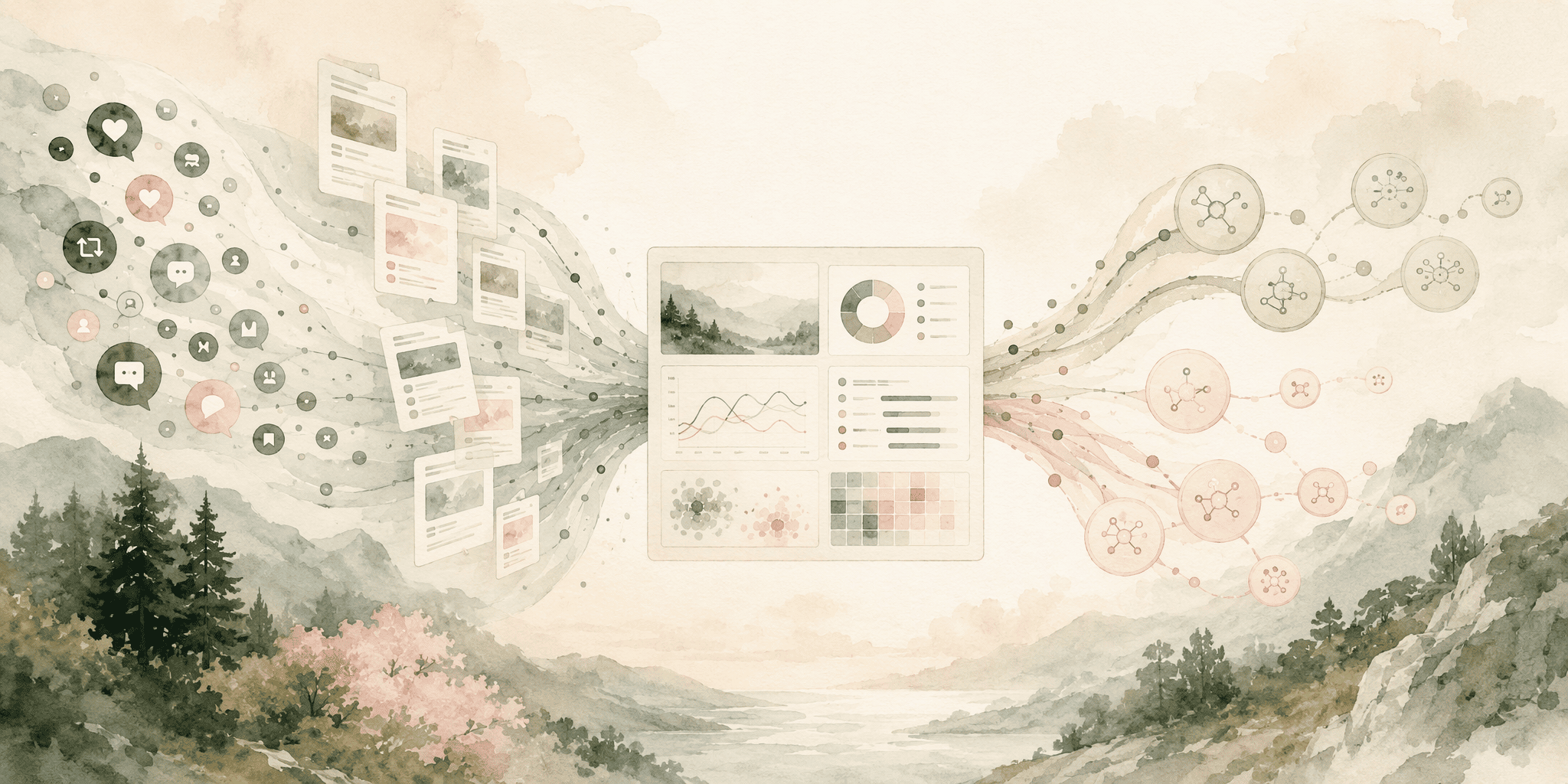
Brandwatch builds its AI monitoring on top of a consumer intelligence and social listening platform. It pulls brand mentions from social media and the broader web, folds AI-generated discussions into those listening streams, and lets enterprises stretch an existing intelligence investment instead of buying a separate GEO tool.
| Capability | Brandwatch Coverage | GEO-Specific Gap |
|---|---|---|
| AI Mention Detection | Captures brand mentions in AI-generated text across social and web discourse | Cannot isolate citations from mentions; no crawl-level visibility |
| Real-Time Monitoring | Global social listening with alerting workflows | AI responses are not crawled at generation time, monitoring is post-hoc |
| Attribution | Integrated analytics track social-to-web conversion | No AI-citation-to-revenue model; referral parameter parsing only |
For brands already running Brandwatch as their social listening backbone, the AI mention layer adds useful signal. It tells you when AI platforms discuss your category and whether your brand appears in that discourse. What it cannot do is connect those mentions to the query patterns, crawl events, or specific content assets that triggered them, which limits its utility as a standalone GEO optimization command center.
4. Semrush

Semrush has long been the go-to SEO platform, but its toolset was built for a search world dominated by ranked links. That architecture leaves a gap when you try to use it for generative engine visibility: the signals that matter for GEO are not the same signals a traditional rank tracker captures.
- Brand Monitoring module: Picks up web mentions and can catch some AI-generated citations when those citations include a linked reference. Mentions without links, which are the most common format in AI answers, slip right past.
- No dedicated AI platform crawler: Semrush does not simulate or track activity from ChatGPT, Perplexity, or Gemini crawlers. If a language model re-crawls your page after an update, you will not see it in the dashboard.
- Rank tracking is not citation tracking: A traditional position report tells you where a page sits in a SERP. It does not tell you how often that page's information gets pulled into an AI-generated answer, nor what context surrounds the extraction.
- Strong complementary asset: The keyword research and content gap tools can still help you identify topics likely to feed training data.
5. SparkToro
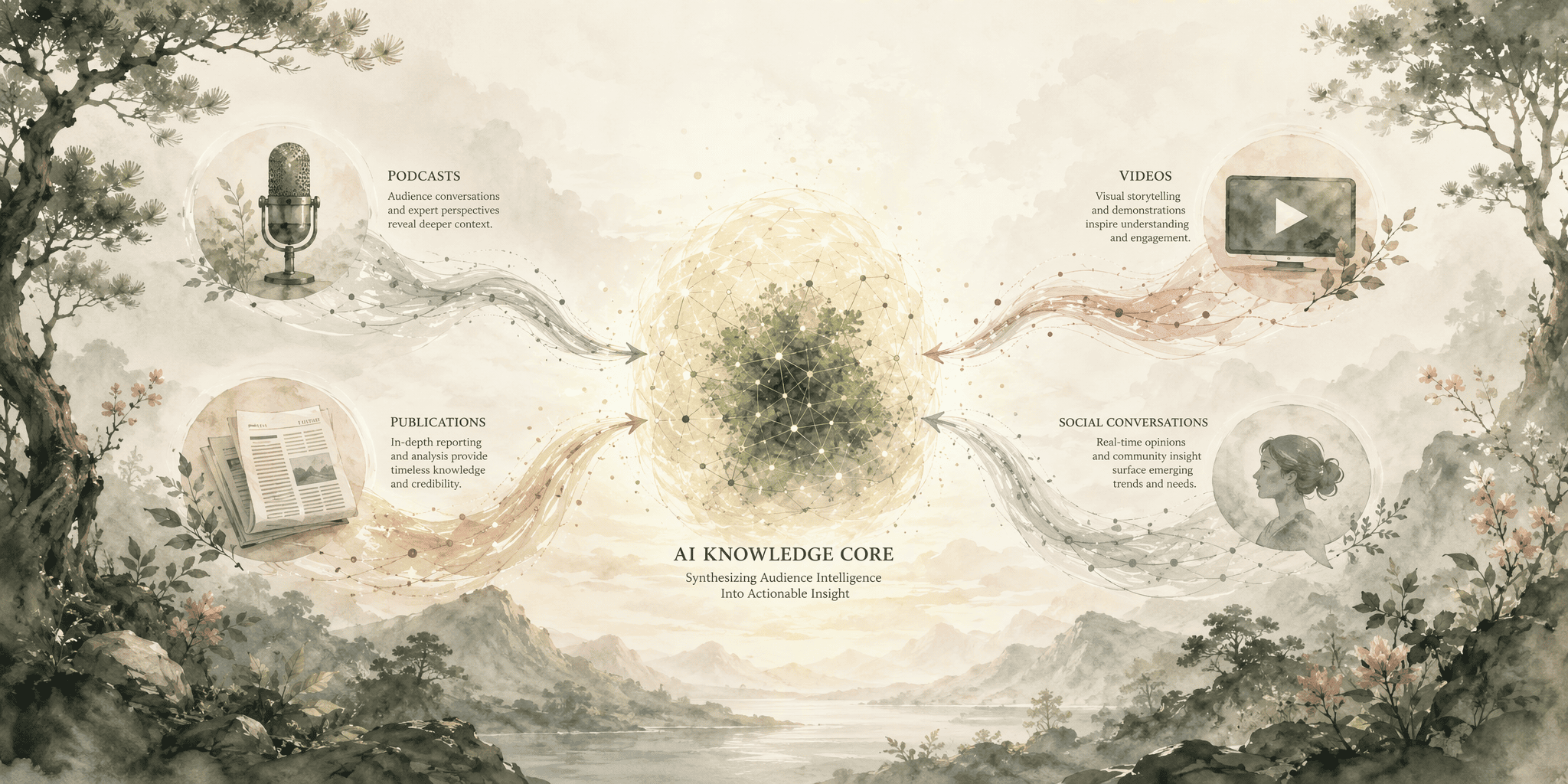
SparkToro looks at AI visibility from the supply side. Its audience intelligence engine maps which podcasts, YouTube channels, publications, and social accounts a specific demographic actually consumes. When those sources get pulled into AI training pipelines, your brand's presence inside them feeds the model's knowledge base directly. The mechanism sits upstream of any citation report.
Instead of asking 'Did ChatGPT cite me today?' you ask 'Which shows and writers shape my buyers' worldview, and which ones are feeding the models that answer their questions?' That turns GEO from reactive monitoring into proactive influence work. You build a list of the 50 sources most influential with your audience that AI models probably train on. Then you earn mentions within them.
The catch: SparkToro does not verify. It cannot tell you whether a mention on a specific podcast episode actually became a ChatGPT citation. The platform is a research tool for building an influence-driven GEO strategy.
It is not a monitoring tool for confirming results. You still need something like Siftly or a Semrush Brand Monitoring instance to close the loop and confirm that source-level influence turns into answer-level visibility. You still need something like Siftly or a Semrush Brand Monitoring instance to close the loop and confirm that source-level influence turns into answer-level visibility.
6. RivalFlow AI
RivalFlow AI takes your page, sets it beside the top-ranking competitor pages for your target query, and lists what you are missing. It spots half-covered subtopics, questions the other page answers that yours skips, and structural choices that make the competitor read as more authoritative. The idea is practical: patch those completeness holes, and your page stands a better chance of being pulled into an AI answer when a model processes that topic.
It works one step earlier. If your AI citation numbers are dropping, RivalFlow AI gives you a repeatable way to find the gap between your page and the page that is getting cited, then close it.
7. ChatGPT Search Analytics (Manual Method)

You can start tracking AI visibility for free with nothing more than a browser and a spreadsheet. Pick a fixed set of prompts that mirror the searches your customers actually make. Query ChatGPT and Gemini with those prompts, record whether your brand appears, how it's cited, and what the surrounding tone looks like, and repeat the process on a schedule.
The catch is that what you're measuring isn't stable. AI results shift based on user history, context, and phrasing, and two people running the same query often see different answers. Every session you run uses your own chat history and preferences, which shapes the output. You are looking at one personalized artifact every time you check, not anything resembling a fixed ranking position.
Scale breaks down fast. A decent manual audit covering 100 queries across three AI platforms at two different times of day requires roughly 600 prompt interactions, each needing a clean context window so your past queries don't bleed into the next answer. A workload like that isn't sustainable for any marketing team working beyond the narrowest scope.
What the manual method gives you, despite all of that, is literacy. Two weeks of running citation checks by hand teaches a team things that dashboards can't: the difference between a hyperlinked brand mention and a flat text reference, how rewording a question changes which sources the model pulls, and which pages or content types the AI keeps returning to. That understanding makes tool selection sharper later and keeps you from signing up for a monitoring platform when you don't yet know what its numbers actually mean.
Conclusion
No single alternative to Scrunch covers every layer of the AI visibility stack. Siftly is the closest thing to a GEO command center for teams that need citation monitoring and competitive benchmarking. Numbat gives technical operators free crawler-level intelligence. Brandwatch and SparkToro open indirect paths through social listening and audience research, while RivalFlow AI and Semrush strengthen the content foundation those citations depend on. The manual method teaches you what you're actually measuring before you commit budget.
One gap remains. None of these tools can trace a deterministic line from an AI citation to a closed deal. OpenAI is walking away from a built-in checkout feature it launched in ChatGPT just months ago, platform-specific apps are still launching, and Google's Gemini-to-Google-Pay pathway is early-stage. Attribution infrastructure sits roughly 12 to 18 months behind detection capability. Pick your citation tracking stack now for the visibility it gives you, and test every attribution claim against how the market actually works today.
Frequently Asked Questions
How does Siftly compare to other scrunch AI alternatives for tracking AI-driven visibility and clicks?
Siftly is purpose-built for GEO while most alternatives adapt existing SEO or social listening architectures. Adapted tools typically lack one or more of those layers.
What metrics matter most when measuring AI visibility and GEO performance in 2026?
Key metrics for assessing AI visibility include:
- Citation frequency: prioritize both linked and unlinked mentions.
- Query coverage breadth: measure how many relevant queries your brand appears in.
- AI-referred traffic volume: track actual visits driven by AI citations.
Sentiment and positioning within AI answers are emerging metrics. Avoid treating any single snapshot as truth since AI responses are personalized and non-deterministic across users and sessions.
How can marketing teams connect AI citation tracking to actual revenue or conversions, given current attribution limits?
Use referral parameter parsing and UTM tagging to isolate traffic from `chatgpt.com` and similar sources. Pair citation frequency data with assisted conversion path analysis in GA4. Accept that the model is directional, not linear. No platform currently offers a validated citations-to-revenue attribution model.
What are the pricing tiers for Siftly, and how do they compare to other AI visibility tracking tools?
Pricing varies significantly across the AI visibility tools:
- Siftly: Starter tier at $79/month for visibility insights; Scale tier at $599/month for competitive intelligence and deeper citation tracking; Enterprise as a custom deployment.
- Brandwatch, Semrush, and SparkToro: use quote-based or tier-based models, check each vendor's live pricing page.
- Numbat: free and open-source.
Pricing changes frequently, so always verify each vendor's current rates.
What practical strategies improve a brand's citation rate in AI-generated responses over 6 months?
To improve your brand's AI citation rate, follow these steps:
- Publish thorough content: create well-structured content that directly answers high-intent queries.
- Close content gaps: use RivalFlow AI-style analysis to identify and fix gaps against competitor content.
- Earn mentions in training sources: use SparkToro to identify influential sources that AI models train on, then earn mentions within them.
- Track progress: monitor citation improvements with a GEO monitoring tool like Siftly.
A 10-point improvement in citation rate is a realistic 6-month target for brands making active GEO investments.
Sources
- AI citation tracking: How to track (and grow) AI engine citations - blog.hubspot.com
- ChatGPT and Gemini are fighting to be the AI bot that sells you stuff | The Verge - www.theverge.com
- Plans & billing - Siftly - docs.siftly.ai
- ChatGPT vs Gemini: 9 Tests, 1 Clear Winner [2026] - Tech Insider - tech-insider.org
- Perplexity · GitHub - github.com
- Siftly vs Scrunch AI: Compared for 2026 | Siftly - siftly.ai
Keep exploring
More from the blog.

Oct 12, 2026
6 Most Affordable AI Visibility Tracking Tools for B2B Companies in 2026
B2B buyers are bypassing Google. Nearly two-thirds of discovery moments now start inside an AI chat interface rather than a traditional search box.

Oct 12, 2026
The Best Otterly AI Alternatives for Tracking AI Visibility in 2026
Your organic search traffic is no longer just about the blue links. 15% of all website traffic now originates from AI agents and bots

Oct 10, 2026
6 Best AI Brand Visibility & GEO Platforms for 2026
Your brand is being described right now inside ChatGPT, Perplexity, and Google’s unified AI Search surface