Nov 3, 2026
7 Best AI Visibility Tracking Tools in 2026
Your brand just disappeared from a customer's research flow, and your SEO dashboard shows positions are steady.

Introduction
Your brand just disappeared from a customer's research flow, and your SEO dashboard shows positions are steady. The problem isn't your campaign; it's the dashboard itself. By early 2026, about 68% of Google searches ended without a click, shifting discovery into walled conversational gardens where fixed keyword positions no longer exist.
Generative engines like ChatGPT and Perplexity don't rank pages; they extract and cite entities, leaving traditional rank trackers blind to how your brand actually appears to buyers. That disconnect costs you measurable ground, data shows that AI-referred visitors already convert roughly three times more often than other organic visitors.
The replacement for a rank tracker is a purpose-built AI visibility platform that monitors citation frequency, share of voice, and appearance rates across conversational engines. This article walks through the seven most credible options in 2026, settling the question of which tool fits your need, auditing a current state of visibility, or executing a plan to close the gap.
Key Takeaways
Here are the core conclusions from comparing every major AI visibility tracker on the market in 2026:
- Traditional rank trackers are obsolete for generative search: Only about 12% of the URLs cited by AI assistants also rank in Google's top 10, proving that conventional SERP data misrepresents AI-driven brand presence.
- Citation frequency is the new rank: AI visibility tools measure how often your brand appears in generated answers. The primary KPI is Visibility Score, which counts each time an AI model surfaces your content during a response.
- The market splits into two distinct tiers: Execution-inclusive platforms (like Siftly) combine monitoring with content generation and optimization; monitoring-only tools deliver the data and stop there, requiring separate action.
- Engine coverage varies wildly and dictates utility: A tool tracking only ChatGPT misses the influence of Google AI Overviews and Perplexity. Each engine surfaces a different citation set for the same query, so narrow coverage leaves blind spots.
- Start with a free audit to establish a baseline. Without it, ROI improvement and competitive share-of-voice gains cannot be measured, and you'll be guessing which engines actually cite your materials today.
Verdict: Why AI Visibility Demands a New Kind of Tracker
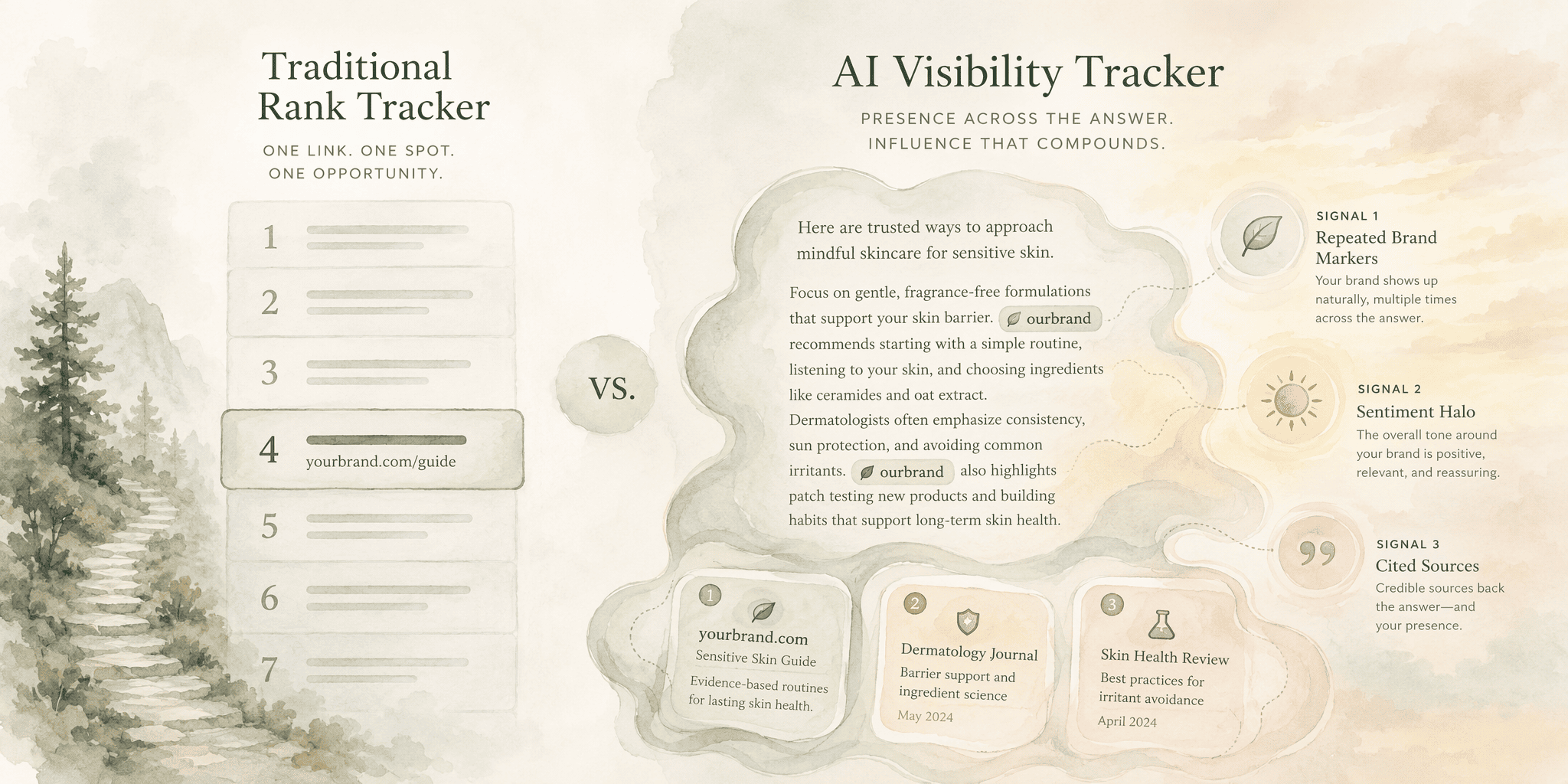
Rank trackers check one thing: where a URL sits on a search results page. AI-generated answers pull from dozens of sources, blend them into a paragraph, and vary the response every time. A static position won't tell you what any of these engines actually say about your brand.
Measuring impact inside an AI response means tracking three signals that rank checkers ignore: how often your brand appears, what the surrounding sentiment is, and which sources the model cites alongside (or instead of) yours. These engines synthesize, summarize, and reorder information, so the count of appearances inside a generated answer often matters more than a single blue-link rank.
Sentiment analysis closes another gap. Standard SERP monitoring assumes a user scans a snippet and decides to click. AI overviews pass a conclusion first, and that conclusion carries tone. An accurate mention that feels cautious or comparative can redirect a purchase. A positive, declarative recommendation from the model carries weight a search snippet never could.
Source overlap matters because citations signal to the model which domain is authoritative for a topic. When your brand gets cited but a competitor's data sheet shows up in the same response, the model has positioned them as the reference point. Spotting those co-citation patterns tells you which content assets you still need to build, not more blog posts, but the foundational data and definitions the models pull from when constructing an answer.
Comparison Table
Seven platforms lead the AI visibility category in 2026, each mapping to a different operational requirement. Here is how they stack up on the dimensions that decide a purchase:
- Execution-inclusive platforms: Siftly combines monitoring with optimization; competitors like Profound, Otterly, Semrush, and SearchScore provide dashboards, alerts, or audits only.
- Engine coverage depth: AIclicks monitors 10 engines including Grok, Meta AI, and DeepSeek; Siftly tracks 9; Dageno AI supports ChatGPT, Claude, and Perplexity.
- Citation and source intelligence: Profound and AIclicks classify cited sources into 14 page types, listicles, comparison pages, reviews, forums, giving you granular competitive intelligence on the kind of content each engine favors.
- Entry-level pricing spread: SearchScore starts with a free audit; Dageno AI offers a Starter plan at $35 per month and a Growth plan at $79 monthly; seat-based Siftly pricing begins around $129 per month for some tiers.
- Statistical rigor and sampling: Peec AI uses repeated data sampling to establish share of voice; UI scraping tools like Cognizo capture the real rendered answer, where API-only approaches can miss formatting and citation ordering.
- Social and UGC bridge: Only Scrunch connects AI citation data to social proof and content creator metrics, making it a niche fit for e-commerce brands for whom influencer presence mirrors AI visibility.
1. Siftly: The Execution-First Platform Closing the Visibility Gap
Siftly bundles real-time monitoring with prescriptive optimization recommendations, making it the category's most complete execution-first alternative to monitoring-only dashboards. Where other tools leave you staring at a gap, Siftly generates corrective content actions. The platform tracks brand visibility, rank, and share of voice across ChatGPT, Perplexity, and Google AI Overviews, plus six more engines including Copilot, Grok, and DeepSeek, with a specific focus on purchase-intent conversations where citations convert.
Its AI Citation Tracking feature surfaces visibility share, competitor rankings, and source analysis, while the Growth tier delivers prescriptive optimization recommendations grounded in citation analysis. Pricing reflects its execution promise: seat-based access starts around $129 per month, with a Scale tier at $599 monthly and a Pro plan at $2,999 per month for full execution workflows; a 14-day free trial requires no credit card.
2. Profound: Enterprise-Grade Citation Intelligence
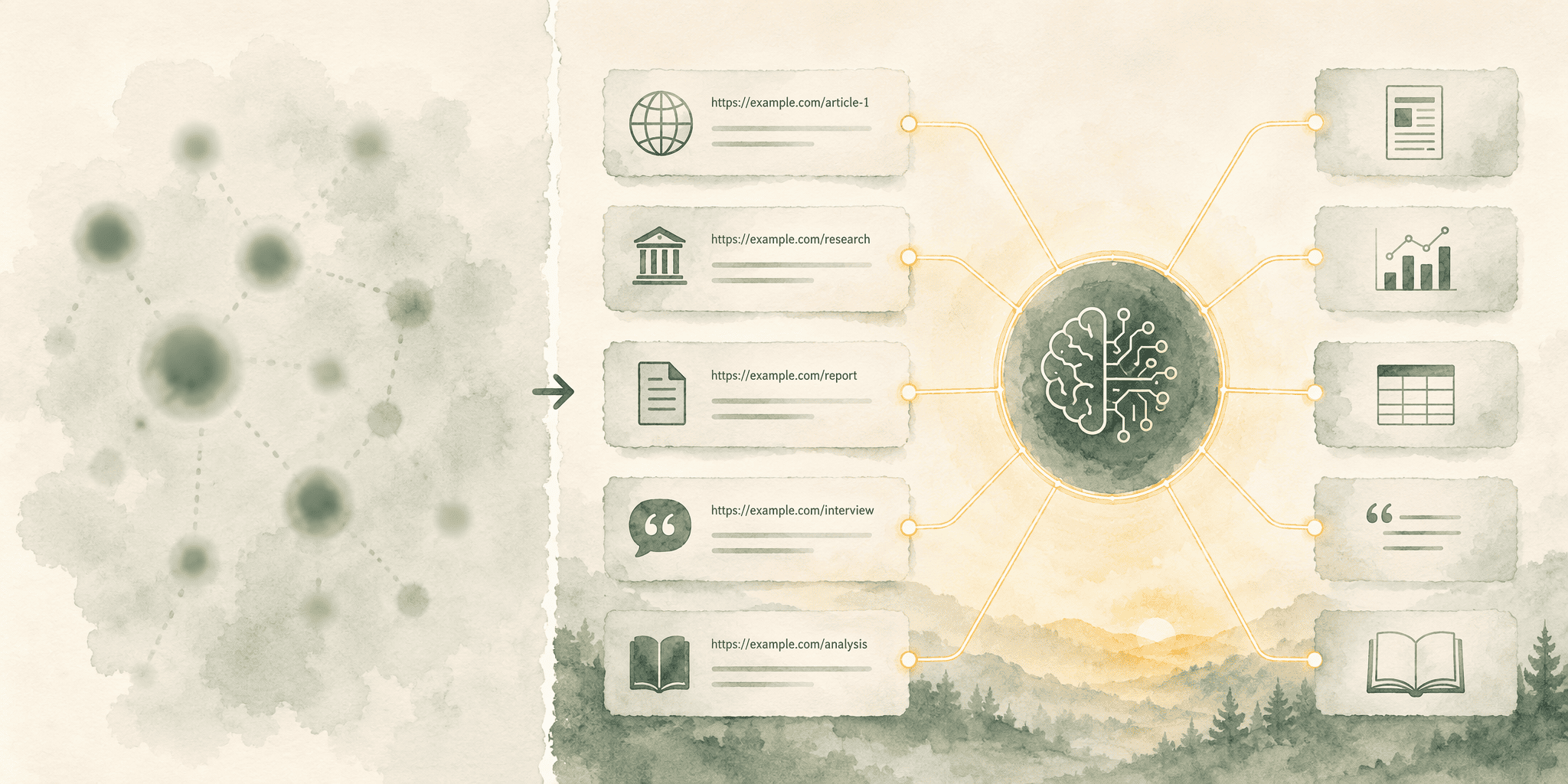
Profound functions as a citation intelligence layer purpose-built for enterprise PR and content audit teams. The platform identifies precisely which web sources and page types AI engines cite, moving brand monitoring from a binary 'mentioned or not' signal to a source-level competitive map.
| Capability | Profound | Typical Mid-Market Tool |
|---|---|---|
| Citation Source Identification | Resolves specific URLs and classifies them by page type | Reports generic mention counts without source URLs |
| Enterprise Benchmarking | Benchmarks citation authority across entire market segments | Typically limited to a configured list of named competitors |
| Depth of Content Audit | Maps internal content gaps to lost AI citations | Surfaced gaps remain broad thematic flags, not mapped to specific pages |
| Pricing Tier | Custom enterprise pricing, significantly above mid-market | Mid-market AI visibility tools start between roughly $29 and $200 per month |
3. SearchScore: The Accessible GEO Self-Audit
SearchScore opens the AI visibility category with a zero-cost entry point: a free self-audit that scores brand presence across several AI engines without requiring a credit card or commitment. That free audit makes it the most logical starting point for SMBs that have never measured their AI footprint.
The catch is depth, the free audit is based on a small prompt sample and is directional rather than statistically representative, meaning you get a credible temperature check but not a precision instrument.
Paid competitors trade on sampling rigor and configuration depth; SearchScore trades on lowering the barrier. For a marketing director who needs to justify budget in an executive meeting by Friday, the audit delivers a hard number, a visibility score, that supports a conversation about competitive exposure inside ChatGPT and Perplexity.
Think of it as the intake form for GEO: it tells you whether you have a problem worth solving, but it won't build you the answer.
4. Otterly: Specialized AI Engine Monitoring

Otterly rejects the aggregated visibility score that underpins most category tools. It monitors brand appearance across Perplexity, Gemini, and ChatGPT as independent surfaces with tailored per-engine metrics, reporting an appearance rate for each. That specificity matters when a brand can be highly visible inside Perplexity's citation-heavy format while invisible inside ChatGPT's more synthesized outputs.
A 2025 analysis of more than 118,000 AI answers found ChatGPT cites roughly 8 sources per answer and Perplexity around 22, confirming that the same brand surfaces differently depending on engine architecture. Otterly is the right pick for a competitive analyst who needs per-engine granularity more than a unified dashboard.
5. Peec AI: Data-Driven Share of Voice Analysis
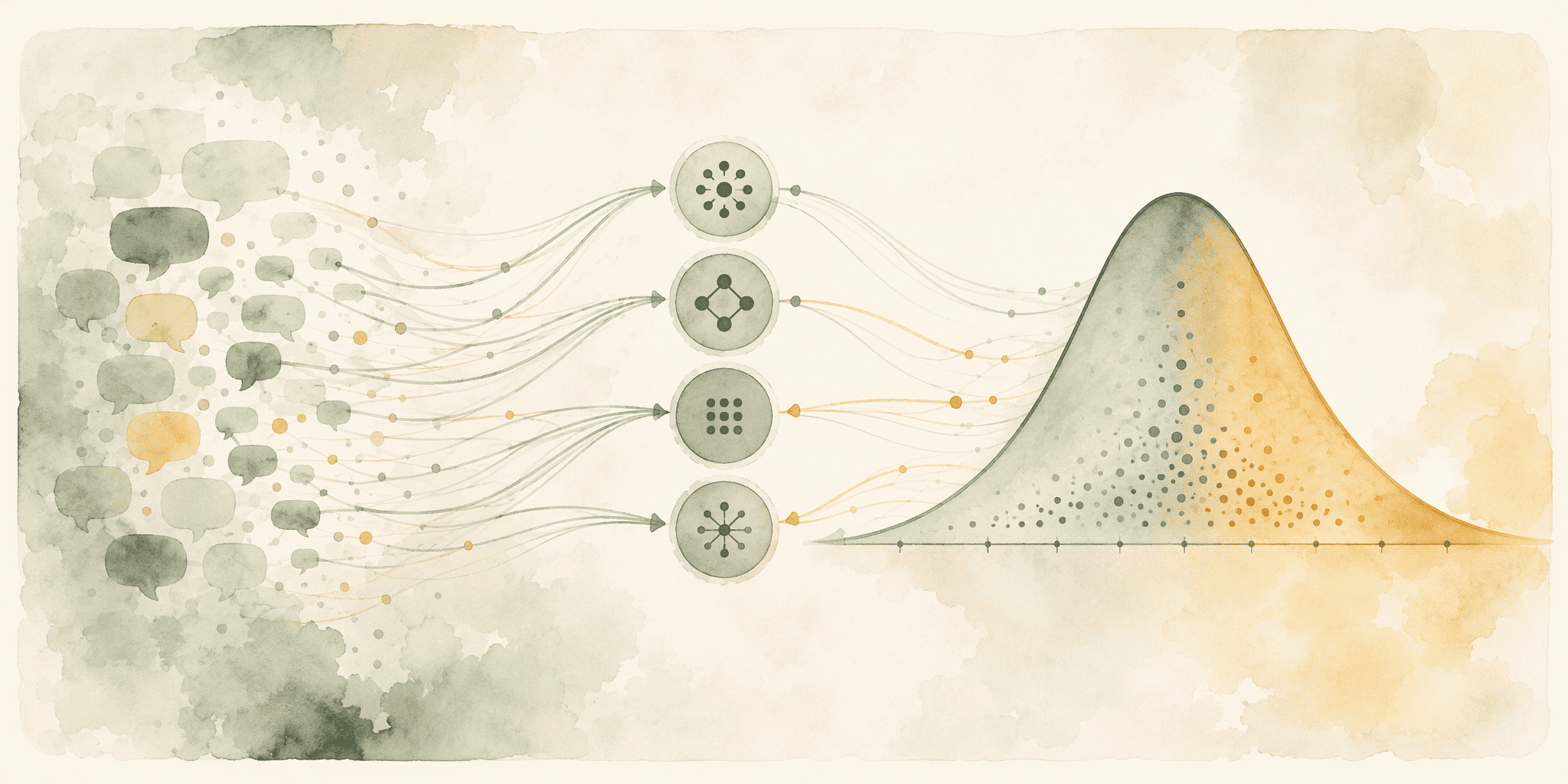
Peec AI moves the measurement frame from presence to proportion:
- Statistical sampling over snapshots: It abandons single-snapshot checks in favor of repeated statistical sampling, because a one-off query tells you almost nothing when the model generates a new answer every time.
- Probability distribution builds reliability: Instead of running a single prompt and logging the result, Peec queries a niche topic multiple times across engines, building a probability distribution that addresses the fundamental randomness making one-and-done checks unreliable.
- Share of Voice as the KPI: The platform organizes around Share of Voice, how many generated answers show your brand versus a competitor, translating citation presence into a market-share metric that product and strategy teams can actually govern.
- Niche-focused measurement: Measurement is bound to tightly defined categories, where it matters because broad brand-level monitoring frequently masks who really owns a niche; Peec surfaces the competitor dominating AI citations inside a specific topic even when the wider numbers look even.
6. Scrunch: Bridging AI Visibility and Social Proof
Scrunch connects AI brand citation monitoring with influencer and UGC metrics, so a brand sees its social footprint and its AI visibility in one place. The idea is that earned AI citations and social authority reinforce each other and produce a signal more durable than search data alone.
A DTC fashion label whose TikTok affiliate posts drive discovery on one side and whose product detail page citations drive Perplexity on the other gets a single view of whether those two pipelines are feeding each other. That covers the whole customer acquisition surface, search, social, and conversational.
The trade-off is depth. Scrunch's AI monitoring layer carries less source-level citation intelligence than a dedicated platform like Profound, and its social metrics fall short of a purpose-built influencer analytics tool.
It solves a particular architecture problem, fragmented measurement, for a particular operator: the commerce brand being discovered socially and conversationally at the same time.
7. Semrush: The Incumbent's GenAI Expansion
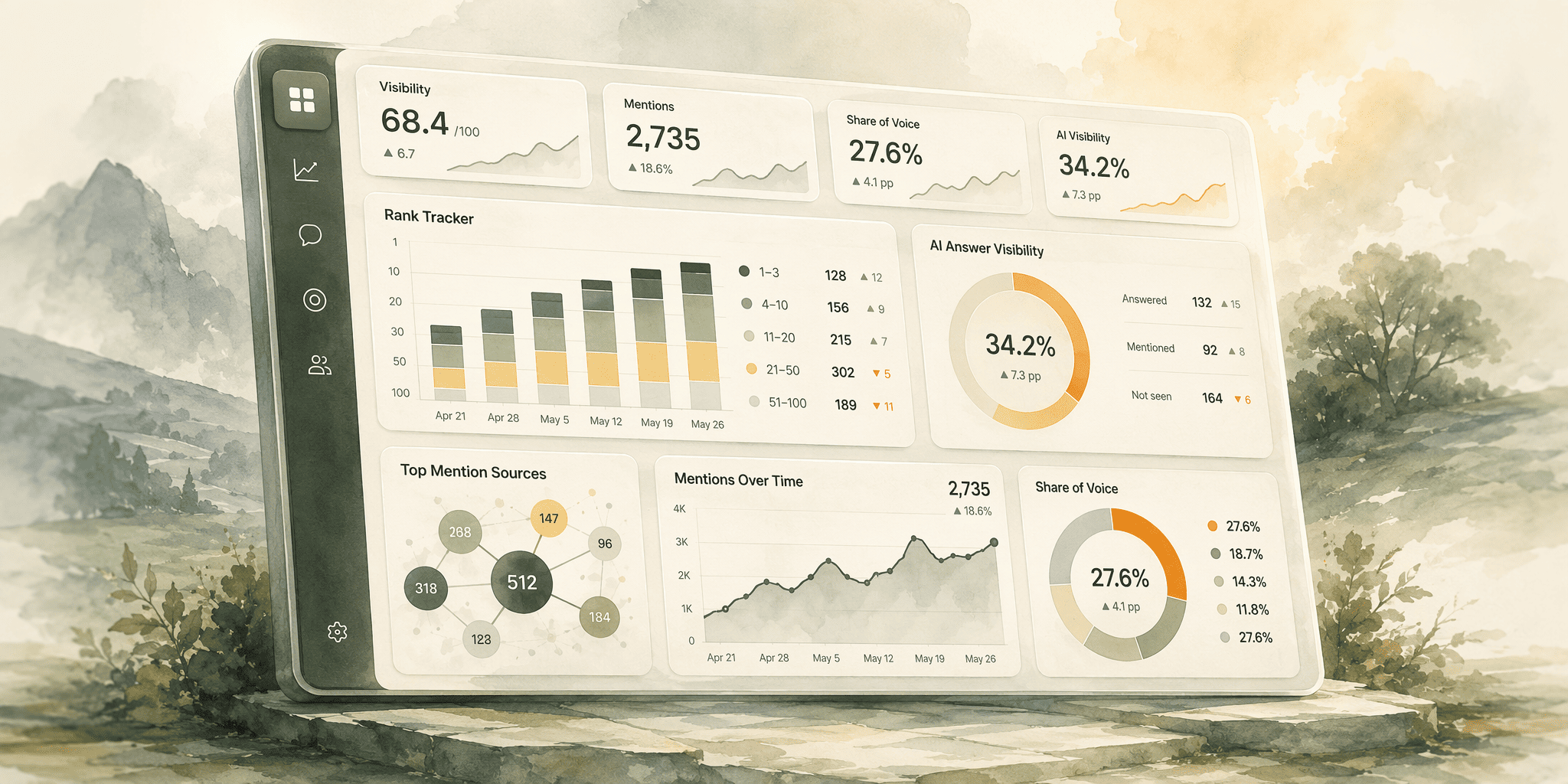
Semrush added GenAI monitoring to its classic rank tracker, and the seams show. Its AI Visibility feature tracks brand presence in AI-generated answers and provides mention counts and share-of-voice metrics relative to tracked competitors, all inside the same dashboard a seasoned Semrush user opens daily. That consolidated interface is the genuine draw: classic position data, your backlink graph, and new AI citations sit in one window.
The weakness is methodology drag. Semrush was built on deterministic page ranking, not probabilistic citation extraction. It measures AI visibility with a legacy logic that still privileges domain authority and backlink volume, the very signals that underperform for AI discovery. For a generalist SEO who needs a single pane of glass, it works. For a dedicated GEO operator, a purpose-built alternative gives you smarter data.
Conclusion
The AI visibility category splits cleanly into platforms that report a gap and platforms that close it. If your budget today is zero, start with a free SearchScore audit or Siftly's free audit to establish a quantified baseline, without it, you cannot measure improvement. Once you have that baseline score and a list of competitor citations, the decision is straightforward: select an execution-inclusive platform if you want the same interface that flags a gap to also generate prescriptive content and metadata actions to close it, or select a monitoring-only tool if you already have internal resources dedicated to acting on the intelligence. The cardinal error in 2026 is continuing to measure AI brand presence with a tool designed for a list of ten blue links.
Frequently Asked Questions
What platforms can track a brand's visibility in AI-generated search results like ChatGPT and Google AI Overviews?
Platforms including Siftly, Profound, Otterly, Semrush, AIclicks, Peec AI, SearchScore, and Dageno AI all monitor brand presence across conversational engines. Coverage varies by tool, AIclicks monitors 10 engines, Siftly tracks 9 including Google AI Overviews and Perplexity, while Dageno AI covers ChatGPT, Claude, and Perplexity.
How does tracking AI visibility differ from traditional SEO rank tracking?
Traditional rank trackers measure a fixed keyword position on a results page. AI visibility tracking measures appearance rates and citation frequency inside dynamically generated answers across multiple engines. Generative responses change per session, so the metric is not a rank number but a probability of being cited.
What are the key features to look for in a generative engine optimization (GEO) platform?
When evaluating an AI visibility tool, look for these features:
- Breadth of engine coverage: The more AI engines monitored, the more complete your view of brand presence.
- Source-level citation detail: Knowing which specific sources a model cites allows deeper analysis than a simple mention count.
- Competitor benchmarking: Tracking how often competitors appear alongside or instead of your brand provides strategic context.
- Repeated sampling for probabilistic output: Because generative responses vary per session, repeated queries capture the variation and produce reliable data.
- Execution support: The dividing feature in 2026 is whether the tool only reports a visibility gap or generates prescriptive content recommendations to close it.
What is the typical cost of AI search visibility tools in 2026?
Pricing spans widely. SearchScore offers a free audit; Dageno AI starts at $35 per month for a Starter plan and $79 monthly for Growth. Seat-based Siftly access starts around $129 per month, with higher tiers at $599 and $2,999 monthly. Enterprise platforms like Profound operate on custom pricing.
How do AI visibility tools measure mentions, citations, and share of voice?
They execute queries against AI engines at intervals, then analyze the generated responses for brand name occurrences, hyperlinked citations, and competitive mentions. Share of voice aggregates this into a percentage, how often your brand appears relative to named competitors across a tracked prompt set, rather than counting referral traffic.
What are the alternatives to standard SEO tools for monitoring brand presence in conversational AI and shopping results?
Dedicated GEO platforms are built exclusively for AI visibility:
- Dedicated GEO platforms like Siftly, Profound, AIclicks, and Otterly replace rank tracking with citation monitoring, engine-level appearance rates, and source-type classification.
- Shopping-specific platforms like Siftly Shopping track product-level citation dynamics and competitor price positioning inside AI-generated purchase recommendations.
Sources
- 8 Best Rankscale Alternatives for Tracking AI Visibility in 2026 - siftly.ai
- The 22 Best AI Search Visibility Tracking Tools: Full Rankings and ... - dageno.ai
- The 8 Best AI Visibility Tools to Win in AI Search (2026) - www.semrush.com
- The 10 best AI visibility tracking tools in 2026, compared - www.cognizo.ai
- Top AI Visibility Tracker Tools in 2026 - kime.ai
Keep exploring
More from the blog.

Nov 3, 2026
9 Answer Engine Optimization Tools and Strategies for Dominating AI Citations in 2026
Your best content might as well be invisible. Not to readers, but to the AI models that now answer their questions before they ever see a search result.

Nov 3, 2026
6 Best Similarweb Alternatives for Tracking AI Visibility in 2026
You open your dashboard. Organic traffic looks steady. Keyword rankings are holding.

Nov 2, 2026
6 Best Writesonic Alternatives for Tracking AI Visibility in 2026
Your marketing team just watched a high-intent query go to a competitor who doesn't rank in traditional search. ChatGPT cited them instead of you.