Oct 22, 2026
7 Best AI Brand Monitoring Tools for Startups in 2026
Your startup spent months tightening its messaging and building an organic presence. But when a buyer asks ChatGPT who the top options are in your category

Introduction
Your startup spent months tightening its messaging and building an organic presence. But when a buyer asks ChatGPT who the top options are in your category, your brand is nowhere in the answer. That is the blind spot traditional social listening creates.
It captures what people say on X and Reddit. It misses how AI engines summarize, cite, and recommend your brand inside the answers that now influence millions of purchase decisions.
For cash-strapped startups, this invisible competition erodes pipeline before a prospect ever visits a website. This article identifies the tools that close that gap without blowing a limited marketing budget.
Key Takeaways
The sub-$200 per month market now delivers real AI answer-engine visibility for startups, provided you focus on the tools that track prompt-level citations rather than surface-level sentiment. Here is what matters:
- Promptwatch ($95/mo): The strongest sub-$100 entry point for deep prompt-level citation tracking and AI share-of-voice analysis.
- Slate ($199/mo): The full-stack system that combines monitoring across 8 AI engines with integrated content briefing workflows.
- Apify (~$19/mo starter): A pay-as-you-go scraper that lets tech-savvy founders build custom monitoring across any AI engine.
- Key features: AI engine coverage (ChatGPT, Gemini, Perplexity, AI Overviews), prompt-level citation tracking, and a price cap under $200 per month.
- ROI metrics: Track prompt coverage, citation share, and AI share of voice. These are your new leading indicators for brand visibility.
1. Siftly

Siftly is a dedicated Generative Engine Optimization platform built to track brand visibility, rank, and share of voice across ChatGPT, Perplexity, Gemini, Google AI Overviews, Claude, Copilot, Grok, and DeepSeek. The platform focuses on purchase-intent conversations, executing daily automated queries to monitor how AI systems find, judge, and cite your content. Its AI Citation Tracking feature surfaces visibility share, competitor rankings, and source analysis in a dashboard built for operators. Seat-based pricing typically starts at $129 per month, which positions it within range for a startup that has graduated from pure monitoring into active optimization.
Where Siftly separates itself is in execution. The platform's Growth tier bundles prescriptive optimization recommendations grounded in citation analysis, paired with an AI visibility score calculated from mention rate, ranking, and citation presence across engines. You also get direct attribution of referral traffic to LLM citations. For DTC brands, Siftly Shopping extends this into product-level monitoring, tracking which merchants, displayed prices, and buy destinations surface after a shopper clicks inside an AI answer.
Its free 14-day trial requires no credit card, which lowers the barrier for a startup that needs to test whether AI visibility gaps even exist before committing budget. The limitation is practical, not technical. The Pro plan climbs to $2,999 per month, and the platform does not claim a fully validated citations-to-revenue attribution model. What it provides is directional citation-to-traffic modeling, which is the current state of the art across all tools in this category.
For a lean team that has already identified AI search as a material channel and needs a platform that moves from monitoring to recommendation in one interface, Siftly is a natural fit. You can start with a free grader to baseline your current visibility before committing to a paid tier.
2. Promptwatch
Promptwatch carves out its position as the high-value, sub-$100 entry point for startups that need deep visibility into prompt-level AI conversations. Its $95 per month plan logs ChatGPT, Gemini, and Perplexity citations, then surfaces share-of-voice analysis inside a self-service dashboard. This is not a surface-level sentiment tool. It tracks which specific prompts trigger brand mentions, how frequently the brand is cited versus competitors, and how citation patterns shift week to week.
For a startup optimizing every dollar of marketing spend, the economics are compelling. You get actionable citation data across the three engines that collectively drive 56% of AI search referral traffic from ChatGPT alone, at a price that leaves room for a second monitoring layer like Brand24 or free alert tools. The trade-off is that Promptwatch is primarily a monitoring and intelligence platform, not an execution engine. You will need a separate workflow to turn its citation insights into content or optimization actions.
3. Slate

Slate is a full-stack AI brand performance system priced at $199 per month. It tracks citations across 8 AI engines, adds real-time query input, competitive displacement alerts, visibility scores, and built-in content briefing workflows. Monitoring tells you where you are invisible. Execution workflows tell you what to publish next to close the gap. Slate handles both in a single interface, stripping out the lag between insight and action that drains visibility gains inside lean teams.
Competitive displacement alerts give you the specifics: who is cited instead of you, on which prompts, and when you lost the mention.
The $199 monthly fee lands at the top of a startup budget, but the bundled execution capability replaces a separate content workflow subscription. For a team that already has product-market fit and wants to move fast on AI search visibility, Slate consolidates monitoring and optimization into one line item.
A team that subscribes to Slate needs to act on the recommendations. The platform flags which content assets need refreshing, which topics competitors are winning, and where net-new content can capture share. If the data stays unread, the subscription is wasted.
4. Apify
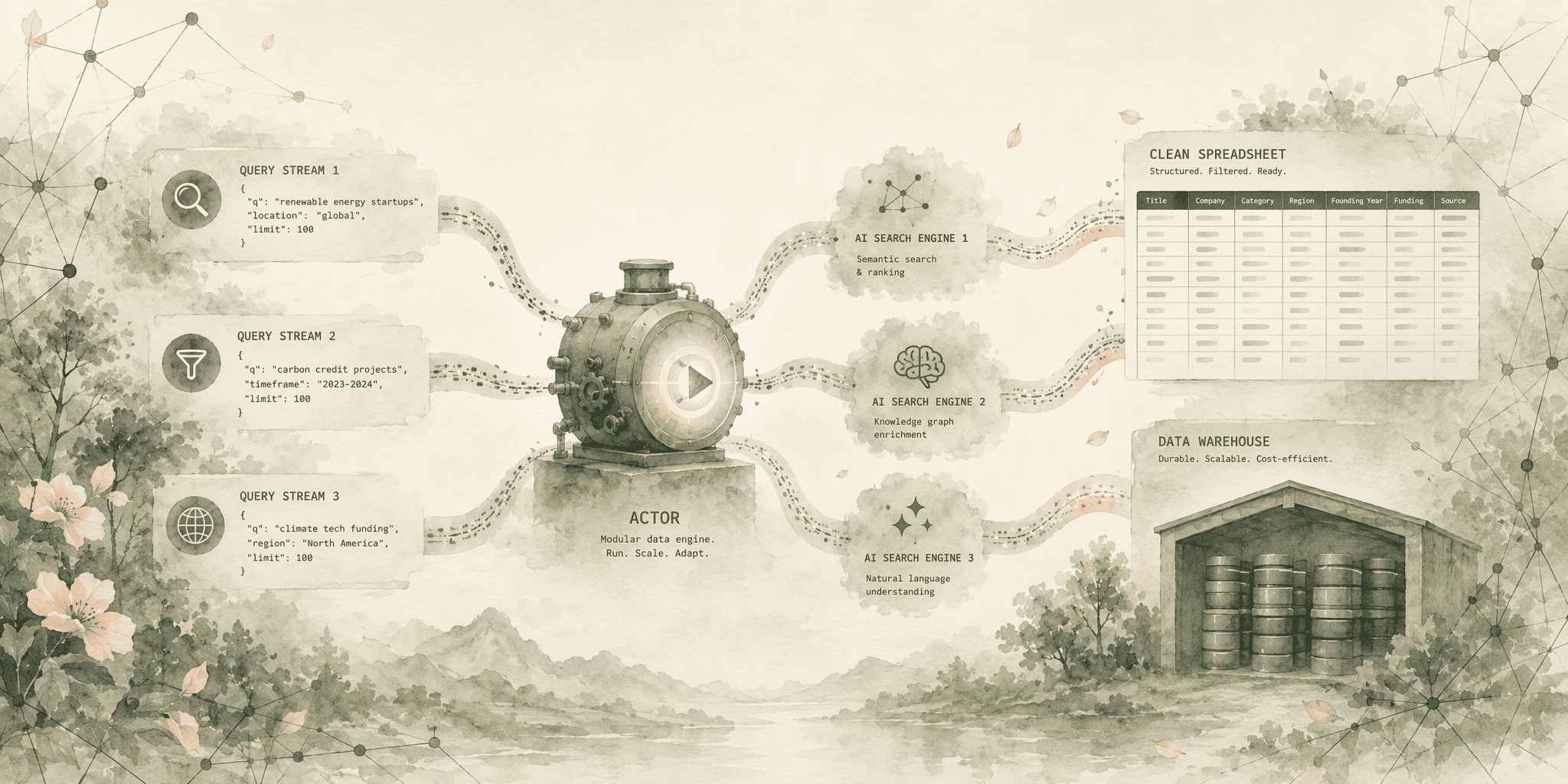
Apify works differently from the dashboard-first tools in this list. It runs a marketplace of scraping actors: a Google Search Scraper, plus dedicated actors that let you programmatically query ChatGPT, Perplexity, Gemini, and other engines, then pipe the raw results straight into Google Sheets or a data warehouse. The pay-as-you-go pricing starts around $19 per month for low-volume usage. For founders comfortable with basic scripting and API calls, it's the most cash-efficient option available.
The flexibility is the product. You define the queries, the competitors, and the cadence. You build a monitoring system that tracks the exact prompts and engines that matter for your category, without another vendor's engine coverage or metric definitions boxing you in.
The trade-off is setup time and ongoing maintenance. Apify supplies the scraping infrastructure, but you are responsible for wiring everything together, scheduling runs, and building your own reporting layer.
For a technical founding team that wants complete control over its AI visibility data without committing to recurring SaaS subscriptions, Apify is the most capital-efficient path. Connect it to a lightweight visualization layer in Google Looker Studio, and you can operate a custom monitoring stack for roughly the cost of a monthly coffee budget.
5. Brand24
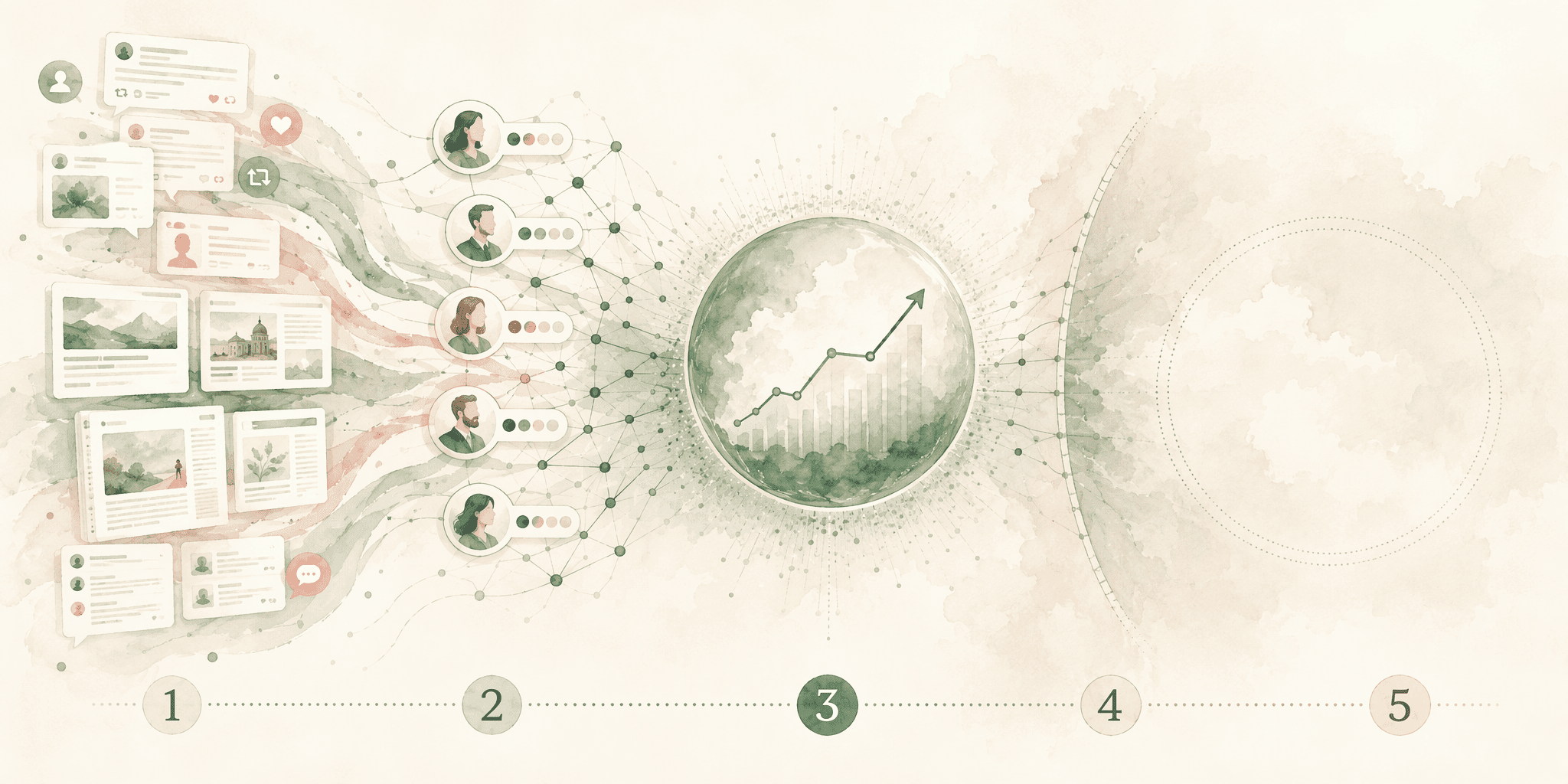
Brand24 fills a complementary role in the startup monitoring stack. Its $99 starting plan tracks social media, news, blogs, and forums with AI-powered sentiment analysis and an influencer score. It does not monitor how ChatGPT, Perplexity, or Google AI Overviews cite and recommend your brand. Understanding this distinction is what makes Brand24 useful rather than misleading:
- Broad net monitoring: Captures what people say about your brand in public online spaces, including review sites, forums, and social platforms, with automated sentiment classification.
- AI answer blind spot: Does not track prompt-level citations, AI share of voice, or competitive displacement inside answer engines. Buying intent increasingly forms in these environments.
- Best use case: Pair Brand24 with a dedicated AI monitoring tool like Promptwatch or Apify. The combined cost is roughly $195 to $218 per month, which stays within a startup budget while covering both traditional and AI-native visibility.
- Startup fit: Mature interface, quick setup, and a long track record make it a low-risk addition for a team that has never done any form of brand monitoring before.
6. Talkwalker Alerts & Free Low-Cost Entry Points
Free tools give startups a monitoring baseline at zero cash cost, but they carry critical coverage gaps that every founder should understand before relying on them. The table below maps what free and near-free tools capture versus what they miss.
| Capability | Talkwalker Alerts | Google Alerts | Limited Free Tiers (Otterly, Siftly Grader) |
|---|---|---|---|
| Web and news mentions | Yes, with better filtering than Google Alerts | Yes, broad but noisy | Varies; Siftly's free grader covers 8 AI-engine prompts directionally |
| Social media mentions | No | No | No |
| AI engine citations (ChatGPT, Gemini, Perplexity) | No | No | Limited; free tiers offer small sample sets, not ongoing monitoring |
| Prompt-level visibility context | No | No | No |
| Share of voice inside AI answers | No | No | No |
| Competitive displacement alerts | No | No | No |
| Setup complexity | Low; email-based | Low; email-based | Low; instant audit or sign-up |
Talkwalker Alerts is the stronger free alternative to Google Alerts for web and news coverage. It captures more structured media mentions with better filtering, but it remains firmly in the traditional monitoring world. None of these tools see inside the AI answers where 15% of all website traffic now originates from AI agents and bots. Use them as a supplementary net while you evaluate paid AI-native tools.
7. Key Features Checklist for Startup Selection

Most startups evaluate AI brand monitoring tools the wrong way. They fall for dashboards full of charts and alerts, then discover the tool ignores the AI engines where their buyers actually form opinions. A standardized checklist stops that mistake before it costs you months of blind spots.
- AI engine coverage is the non-negotiable entry gate, a tool must track ChatGPT, Gemini, Perplexity, and Google AI Overviews at minimum; ChatGPT alone accounts for 56 percent of AI search referral traffic, but Gemini and Perplexity together add another 26 points of coverage, so missing any one of them leaves a hole you can't measure.
- Prompt-level citation tracking separates AI-native tools from traditional media monitors, you need visibility into which specific queries trigger brand mentions, which sources the engine cites, and how your citation rate trends over time, because surface-level sentiment analysis cannot answer whether your brand is showing up in the answers that matter.
- Execution capability is the third item every startup checklist needs, a tool that surfaces gaps but provides no content briefing or optimization workflow hands you insight and stops there, which is a research report when you needed an improvement loop.
- Startup economics is the final filter, any tool that exceeds $200 per month before delivering clear value should be deferred until AI search proves itself as a material channel for your specific category; pay for signals, not promises.
Conclusion
For startups operating on a tight marketing budget, match the tool to your stage.
Need actionable intelligence under $100 per month? Start with Promptwatch.
Ready to treat AI search as a primary channel and need monitoring plus execution in one stack? Slate at $199 is the full-stack play.
Technical founders who want maximum control and minimum recurring cost should build on Apify's scraping actors.
Add Brand24 or free alert tools for the broader media picture, and you have a monitoring stack that covers both the traditional web and the AI-native surface where discovery is now accelerating.
Frequently Asked Questions
What are the key features a startup should look for in an AI brand monitoring tool?
A startup checklist for evaluating AI brand monitoring tools should include the following criteria:
- Coverage of ChatGPT, Gemini, Perplexity, and Google AI Overviews at minimum.
- Prompt-level citation tracking that shows which queries trigger your brand.
- Share-of-voice metrics versus competitors.
- Either integrated content recommendations or export workflows that let you act on the data.
- Price must stay under $200 per month to match a startup budget.
How do AI brand monitoring tools differ from traditional social listening platforms?
Social listening tracks mentions across social media, news, and forums. AI brand monitoring tracks how engines like ChatGPT cite, summarize, and recommend your brand inside generated answers. The two are complementary. One captures public conversation; the other captures what AI tells buyers when they ask a direct purchase-intent question.
Which AI brand monitoring platforms offer the best value for startups with budgets under $200 per month?
The three recommended AI brand monitoring tools for startups break down as follows:
- Promptwatch at $95 per month covers ChatGPT, Gemini, and Perplexity with prompt-level visibility and share-of-voice analysis.
- Slate at $199 adds execution workflows and 8-engine coverage.
- Apify starts around $19 per month for scriptable, pay-as-you-go scraping across any AI engine for technical teams.
How can a startup measure the ROI of using an AI brand monitoring tool?
To effectively monitor AI brand visibility, track the following metrics weekly:
- Prompt coverage: the percentage of relevant queries where your brand appears.
- Citation share: how often you are cited versus competitors.
- AI share of voice: your relative presence in AI-generated answers.
As you act on visibility gaps, watch whether your citation share trends upward against the competitors you are displacing in AI answers.
What steps can a startup take to improve its brand visibility in AI-generated search results?
First, baseline your current visibility using a free grader or trial. Second, identify which high-intent prompts competitors are cited on and you are not. Third, create or refresh content that directly answers those prompts with structured, citable information. Fourth, monitor weekly to measure whether your citation rate and share of voice improve.
Sources
- 7 Best AI Brand Monitoring Tools for Startups on a Budget - siftly.ai
- Compare the best AI brand monitoring tools in 2026. See features, pricing, and best-fit use cases for tracking visibility in ChatGPT, Gemini, etc. - slatehq.com
- Best AI Search Monitoring Tools in 2026 | OtterlyAI - otterly.ai
- Best AI Brand Monitoring Tools 2026: Buyer's Guide by Use Case - astiva.ai
Keep exploring
More from the blog.

Oct 22, 2026
7 Most Affordable GEO Platforms for B2B SaaS Companies Under 50 Employees in 2026
Traditional SEO traffic from Google’s blue links is shrinking. The overlap between Google top-10 rankings and AI-cited pages fell from 76% in mid-2025 to 38%

Oct 22, 2026
7 Best Tools to Track AI Citations and Brand Visibility in 2026
A traditional web analytics dashboard signals a visitor arrived from Google Search, but your top-ranking article sits untouched while an AI agent synthesizes

Oct 21, 2026
Can I Get Alerts When an AI Hallucinates About My Brand?
A prospect asks ChatGPT for the best enterprise security software. The AI states your company discontinued its core product line last quarter