Oct 12, 2026
6 Most Affordable AI Visibility Tracking Tools for B2B Companies in 2026
B2B buyers are bypassing Google. Nearly two-thirds of discovery moments now start inside an AI chat interface rather than a traditional search box.

Introduction
B2B buyers are bypassing Google. Nearly two-thirds of discovery moments now start inside an AI chat interface rather than a traditional search box. 50+ brands already trust Subsig to answer this shift, but the bigger signal is structural: ChatGPT recently cut Reddit citations by 88% in 10 days after a model refresh, proving that visibility inside these answers is provisional and volatile.
AI visibility tracking measures whether a brand is mentioned, recommended, cited, and described accurately inside AI-generated answers. For mid-market B2B companies, the cost of entry has been the barrier. Legacy enterprise suites price out teams that need continuous, cross-model intelligence right now.
That barrier is falling. A new category of affordable, AI-native tools delivers citation tracking, competitor benchmarking, and share-of-voice scoring without forcing you to buy an SEO platform you already own. Understanding which tool fits your stack starts with mapping your need against the decisions each product was built to answer: source attribution, continuous rank monitoring, ecommerce overlap, or executive reporting. This article ranks the six options that make that possible on a mid-market budget, beginning with the one that eliminates upfront financial risk entirely.
Key Takeaways
Here are the five decision-critical facts every B2B marketer should take from this comparison:
- Subsig and KIME lead on affordability: Both offer AI-native visibility tracking without bundled SEO-suite overhead, making them the most cost-focused dedicated entrants.
- AI-native tools complement SEO suites. None of these platforms replicate Semrush or Ahrefs. They measure AI answer presence across ChatGPT, Gemini, and Perplexity.
- Source attribution is the prize. Knowing which URLs an AI model cites is more valuable than counting brand-name appearances. Models re-retrieve continuously from cited sources, and a mention without a link drives zero traffic.
- Model updates rapidly shift citations. A single AI version change can remove a whole domain class from citation pools. Point-in-time checks mislead without continuous tracking.
- Free trials and zero-credit-card audits exist across the market. Several tools listed below, including Siftly and Subsig, let you start without financial commitment.
1. Siftly: AI Visibility Tracking with Shopify Integration and a No-Credit-Card Trial
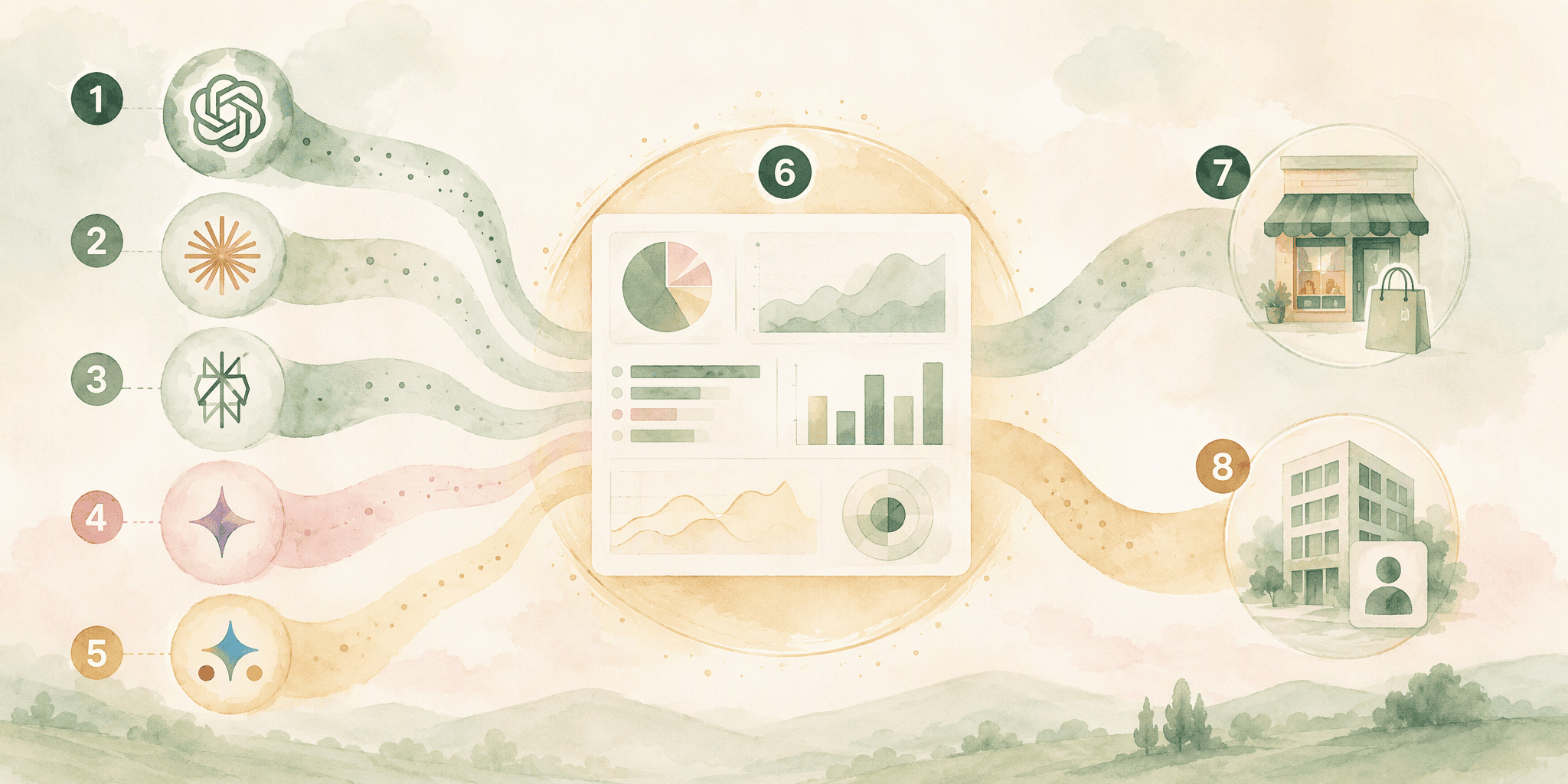
Siftly is the lowest-friction entry point on this list for a B2B team that needs immediate, multi-engine AI visibility data. No credit card, no sales call. It tracks citation frequency, sentiment, and competitive positioning across ChatGPT, Claude, Perplexity, Gemini, and Google AI Overviews. The Shopify integration makes it relevant for B2B companies that also run a DTC or product-commerce arm alongside their core business.
- No-credit-card trial: A 14-day free trial starts immediately with no upfront financial hold, letting budget-conscious teams validate AI citation data before committing.
- Multi-engine coverage: Daily visibility measurement across ChatGPT, Perplexity, Google AI Overviews, Gemini, and Claude captures the platforms where B2B buyers now ask category-defining questions.
- Shopify integration: Connecting a Shopify store pulls product-level visibility data directly into the platform. It bridges AI answer tracking and ecommerce performance in a way no other tool on this list does.
- Competitor benchmarking: A multi-engine AI competitor benchmarking dashboard shows where competitors are cited on the same buyer-intent prompts you track. This supports competitive analysis and benchmarking.
- Actionable recommendations: The platform drafts AI-optimized fixes and tracks what changed, closing the loop from monitoring to improvement.
- Pricing structure: The Starter plan tracks 3 products, the Pro plan tracks 30, and Enterprise includes unlimited products, SKUs, prompts, and geographies alongside a dedicated success manager. Enterprise pricing is custom.
2. Subsig: Prompt-Level Source Attribution and Done-For-You AEO Services

Most budget visibility tools tell you a brand appeared somewhere inside an AI answer. Subsig tells you which cited source produced that appearance. That matters because language models re-retrieve from the web continuously, own the source and you own the citation. The platform's tracking reveals that roughly 10% of sources generate the majority of AI citations, a concentration that makes source-level monitoring the highest-use activity a B2B team can pursue.
The technical backbone includes prompt-level visibility scoring and competitor benchmarking that maps the complete query-to-citation chain. Subsig's MCP connectivity for Claude pushes this data into workflows beyond a browser dashboard, so teams query their own AI visibility inside the tools they use every day. Most affordable platforms cannot match this. It signals an architecture that prioritizes integration alongside analysis.
The sharpest difference from self-serve alternatives is the done-for-you AEO service layer. Subsig packages source-attribution intelligence with answer engine optimization execution, delivered by practitioners who run both the analysis and the remediation. For a B2B marketing team without dedicated AI-search headcount, that hybrid of software and service removes the DIY burden that turns cheap tools expensive in time. A team buys the insight and the fix in one subscription.
50+ brands already trust Subsig in a market where most tools count users in the low hundreds. That number reflects a product built for a specific problem rather than a general dashboard, and it gives Subsig the strongest affordability-to-depth ratio among B2B source-attribution tools.
3. KIME: Continuous Multi-Model Ranking and Actionable Share-of-Voice
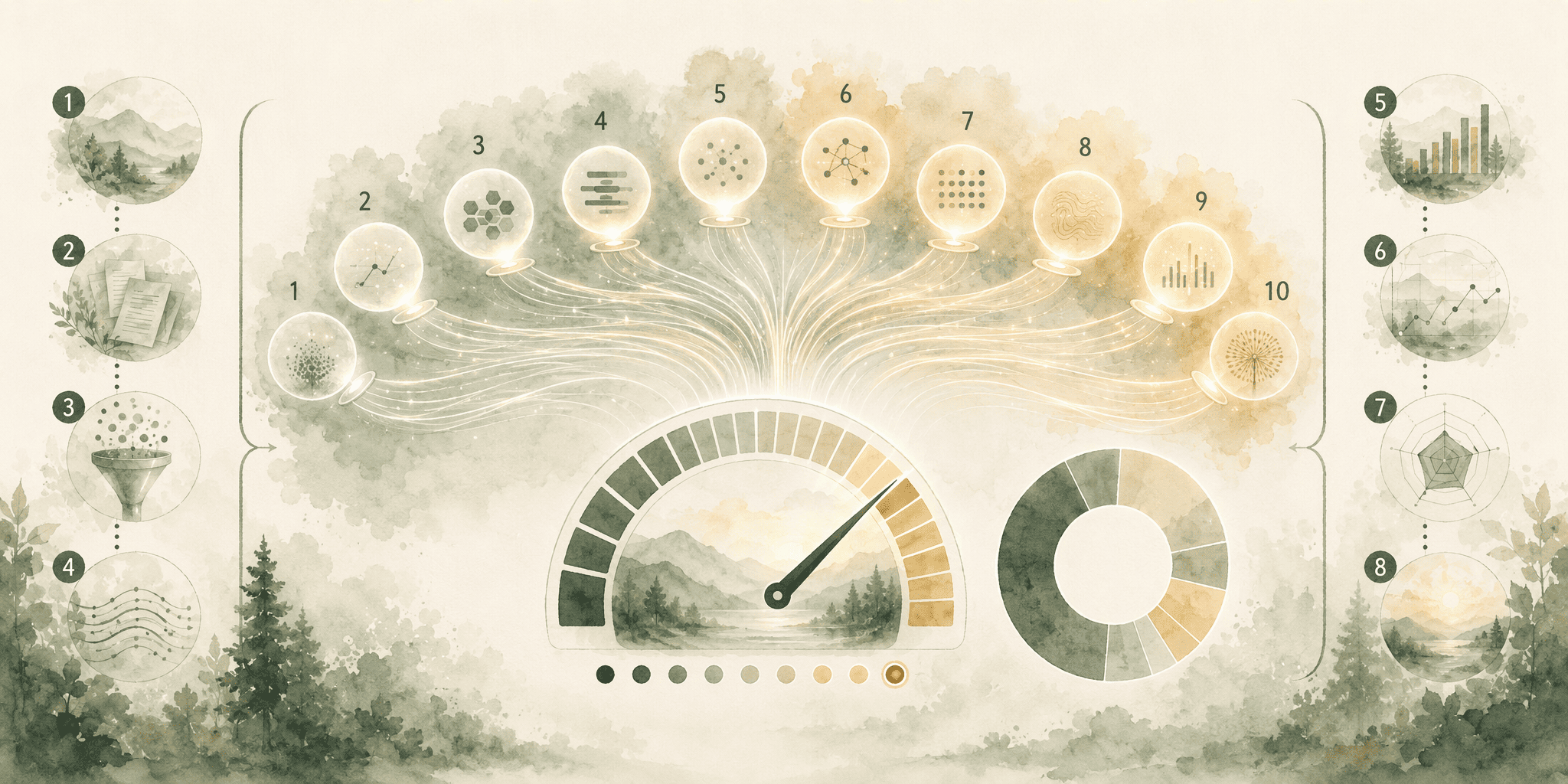
KIME approaches AI visibility as a competitive intelligence problem first and a monitoring task second. The platform's core capabilities includes:
- Multi-model tracking: Continuous coverage across ten AI models, ChatGPT, Google Gemini, Google AI Overviews, Google AI Mode, Perplexity, Microsoft Copilot, Claude, Grok, DeepSeek, and Llama, exceeding most tools on this list.
- Dynamic brand ranking: A continuously updated brand rank and share-of-voice score, rather than a weekly or monthly cadence, solving for the fact that single-run checks are unreliable because AI models are non-deterministic and answers change between runs.
- Prioritized action plans: Translations of share-of-voice movements into specific fixes, with clear timelines: technical adjustments (e.g., unblocking AI crawlers or adding structured data) often show impact within days, while content-driven improvements typically take four to twelve weeks.
KIME is deliberately AI-native, excluding traditional SEO metrics like keyword rankings or backlink counts. This makes it easier to adopt alongside an existing Semrush or Ahrefs subscription without duplicating cost. Trusted by over 400 marketing teams, KIME’s installed base confirms that B2B organizations are buying it as a distinct, additive capability rather than a replacement.
4. Merj: Enterprise-Grade Citation Mapping and Executive Reporting
Merj sits at the high end of the affordable spectrum. It is built for B2B organizations that have outgrown early-stage tools but are not yet signing six-figure enterprise deals. Mid-market teams whose AI visibility data now needs to travel into board decks and quarterly business reviews will find it the right fit.
| Capability | Merj | Subsig and KIME |
|---|---|---|
| Citation mapping depth | Full query-to-brand-mention chain with source lineage | Prompt-level (Subsig); brand-rank scoring (KIME) |
| Reporting layer | Executive-ready reports built for stakeholder presentation | Dashboard-native, less formatted for external distribution |
| Interface maturity | Structured for scale, with emphasis on audit trails and historical baselines | Lightweight, functional, and fast-moving |
| Primary user | Director of Insights or Head of Competitive Intelligence | Hands-on marketing practitioners |
| Pricing positioning | Upper-mid-market, custom-scoped | Subscription-based, lower absolute cost |
Citation mapping is Merj's core capability. The platform visualizes the chain from a B2B buyer's query through to the exact source that generated a brand mention. Teams trace each AI citation back to a review site, a partner marketplace listing, or a technical documentation page. For security-sensitive B2B categories where inaccuracies in AI answers carry real liability, that audit trail shifts from nice-to-have to necessary.
5. Crayon: Traditional Competitive Intel that Spans into AI Mentions
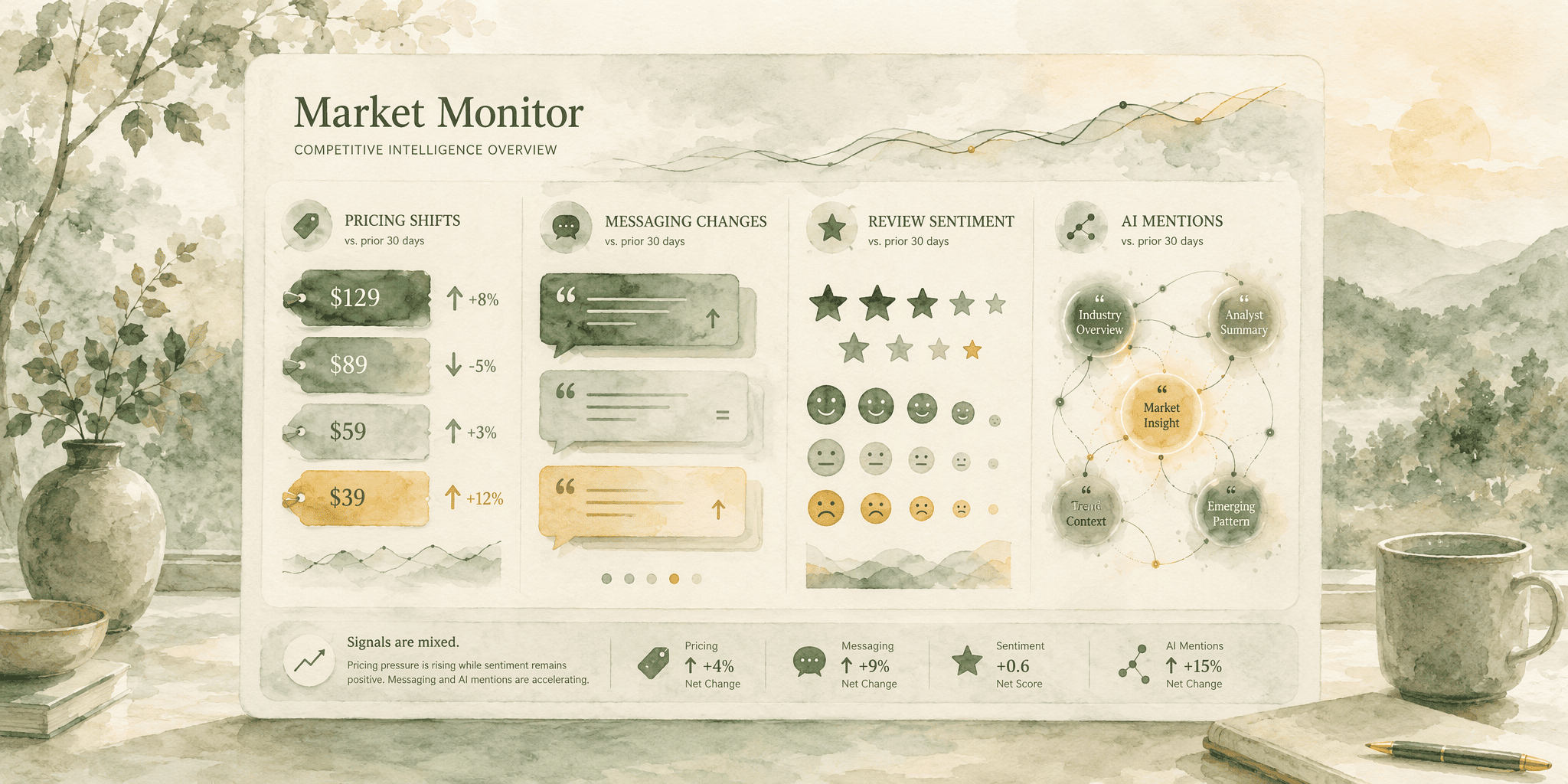
Crayon extends its established competitive intelligence platform into AI-generated mentions, giving B2B teams that already run Crayon a single hub for market monitoring. The advantage is consolidation. A team tracking pricing changes, messaging shifts, review-site sentiment, and AI citations in one interface avoids tool sprawl.
The trade-off is depth in the AI dimension. Crayon captures that a competitor was mentioned in an AI answer, but it does not expose the prompt-level source attribution that Subsig builds its methodology around, nor the continuous multi-model share-of-voice scoring that defines KIME.
For an organization where AI visibility is one signal among many, that is an acceptable compromise. For a team whose lead generation is shifting materially to AI-driven discovery, bolted-on AI monitoring leaves gaps. The citation source, the model version, and the answer variability matter more than a binary appeared-or-did-not.
Crayon earns its place on this list as the right answer for the
6. Omnisity: Automated AI-Generated Content Audits and Brand Presence Scoring
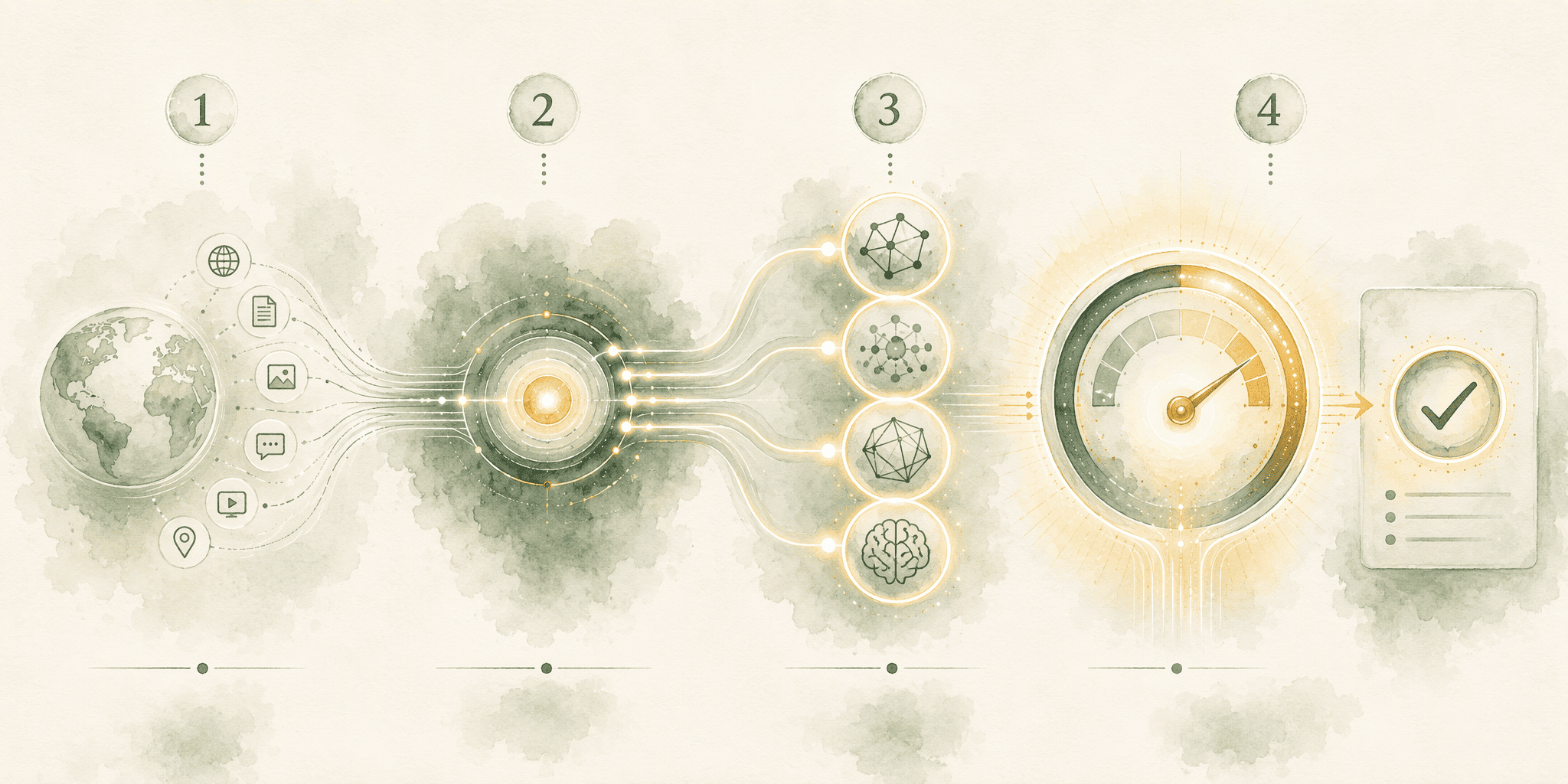
Omnisity earned this spot by automating what most teams still do manually: auditing how AI models describe your brand and scoring your presence against competitors across every major model. Platform capabilities include:
- Scheduled model crawling: Automatically audits ChatGPT, Gemini, Perplexity, and Google AI Overviews on a recurring schedule, replacing hours of manual prompt testing.
- Brand consistency scoring: Flags inconsistencies between how you define yourself and how the models actually talk about you, assigning a composite visibility score you can track week over week.
- Automated content audit: Connects your brand's core positioning, product pages, and category language, then maps gaps between your messaging and model outputs. When ChatGPT describes your offering using outdated or competitor-leaning language, the platform surfaces the exact prompt and response pair, then recommends specific page-level content changes.
A single run is not reliable, because models are non-deterministic and the answer changes between runs, so Omnisity's scheduled recurring audits are the practical fix. It is not a full generative engine optimization platform. Omnisity focuses narrowly on auditing, scoring, and surfacing discrepancies rather than building net-new content or managing citation outreach. That narrow scope keeps costs below platforms bundling GEO consulting, content production, and multi-model campaign management. For B2B teams prioritizing brand consistency in AI answers ahead of aggressive share-of-voice growth, the audit-first model delivers exactly what you need without paying for features you will not use.
Conclusion
The most affordable AI visibility tools for B2B companies share one design principle: they prioritize citation transparency and model-level insight over bundling in traditional SEO metrics you already track elsewhere. Platforms like Subsig, KIME, and Omnisity each take a different path to the same destination, showing you which sources drive AI mentions, how competitors are gaining ground, and what content you need to fix. None of them try to be the next Ahrefs or Semrush, and that is precisely why their price points stay accessible.
The real cost question for B2B teams is not the subscription fee. It is the opportunity cost of ignoring AI-driven discovery while prospects ask ChatGPT, Perplexity, and Gemini for category recommendations, vendor comparisons, and proof validation. DuckDuckGo US installs averaged +18.1% week-over-week and peaked at +30.5% after Google I/O, signaling that even traditional search users are migrating toward AI-integrated discovery experiences. That trend will only accelerate as model capabilities improve and citation patterns mature.
Start with the tool that matches your immediate maturity level. If you have no baseline today, pick a platform offering a free audit or trial, Siftly, for instance, provides an AI Visibility Checker that queries ChatGPT and Claude with industry-relevant buyer questions without requiring a sign-up. If you already track mentions but lack competitor context, move up to a tool with multi-entity benchmarking. The category is young, pricing is competitive, and the cost of waiting exceeds any monthly subscription by an order of magnitude.
Frequently Asked Questions
What is AI visibility tracking and why does it matter for B2B companies?
AI visibility tracking measures how often and prominently your brand appears in AI-generated answers from ChatGPT, Gemini, and Perplexity. This matters for B2B companies because buyers now ask AI instead of traditional search, making AI-sourced brand mentions a direct pipeline to purchase decisions.
How do affordable AI visibility tracking tools compare on pricing and features like citation tracking?
Subsig and KIME offer entry-level pricing without public tiers, with distinct feature focuses. Key differences include:
- Subsig includes prompt-level competitor benchmarking and identifies the critical sources driving AI citations.
- KIME emphasizes continuous multi-model ranking, share-of-voice scoring, and prioritized action plans.
What are the main limitations or hidden costs of budget AI visibility tracking tools?
Budget AI visibility tools typically offer no click-through data as AI models don't reveal clicks. They also lack deep historical baselines, and citation sources shift after model updates. For example, ChatGPT cut Reddit citations by 88% after a model refresh, erasing previous brand gains.
How does AI visibility tracking differ from traditional SEO monitoring?
AI visibility tracking focuses solely on brand presence in AI-generated answers, not keyword rankings or backlink profiles. Traditional SEO tools like Semrush or Ahrefs do not measure AI answer presence. AI-native tools like Subsig and KIME track prompt-level source attribution and share-of-voice across multiple language models.
What should a B2B company look for when choosing an affordable AI visibility tracking platform?
Prioritize tools that identify which sources drive AI citations, not just brand mentions, and support competitor benchmarking. Seek platforms that integrate with existing workflows via MCP connectivity or APIs, and verify they provide actionable share-of-voice data across the AI models your buyers use.
Sources
- AI Brand Monitoring & Tracking: The Complete Guide (2026) - siftly.ai
- AI Visibility Tracking for ChatGPT & Gemini | KIME - kime.ai
- Best AI visibility tools for B2B companies | Trakkr - trakkr.ai
- SEO News & Algorithm Updates 2026 — Latest Google Changes | CrawlRaven - crawlraven.com
- Subsig | Revolutionizing AI Discovery. Buyers stopped Googling - they ask AI now - www.subsi.to
Keep exploring
More from the blog.

Oct 12, 2026
The Best Otterly AI Alternatives for Tracking AI Visibility in 2026
Your organic search traffic is no longer just about the blue links. 15% of all website traffic now originates from AI agents and bots

Oct 10, 2026
6 Best AI Brand Visibility & GEO Platforms for 2026
Your brand is being described right now inside ChatGPT, Perplexity, and Google’s unified AI Search surface

Oct 10, 2026
The Best Scrunch AI Alternatives for Tracking AI Visibility in 2026
Your brand is being cited right now by ChatGPT, Perplexity, or Google's AI Overviews, and you have no visibility into what those engines are saying.