Jul 14, 2026
How to Track Brand Mentions Across AI Platforms
Learn how to track brand mentions across ChatGPT, Perplexity, and AI platforms using systematic query design, repeated sampling, and sentiment analysis beyond raw mention counts.

AI platforms like ChatGPT, Perplexity, and Google's AI Overviews now answer millions of queries daily, surfacing brand recommendations without traditional search results. Tracking which brands these systems mention—and how—requires new monitoring methods.
Key Takeaways
- Track five dimensions: mention frequency, citation context, sentiment, share of voice, and competitive positioning across AI platforms
- AI responses are non-deterministic—the same query yields different answers each run, requiring repeated sampling for accuracy
- Manual tracking works below 50 prompts per week; above that threshold, automated monitoring becomes necessary
- Perplexity surfaces citations more prominently than ChatGPT, while Google AI Overviews often mention brands without clickable links
- Sentiment classification reveals whether AI platforms position your brand as a leading solution, neutral option, or competitive alternative
To track brand mentions across AI platforms like ChatGPT and Perplexity, measure five core dimensions—mention frequency, citation context, sentiment, share of voice, and competitive positioning, using repeated sampling across multiple queries, engines, and time intervals. Single manual checks are unreliable because AI responses vary run-to-run.
Why Single Manual Checks Are Unreliable
AI search systems produce probabilistic responses that change across runs, prompts, and time. A single query to ChatGPT or Perplexity may return your brand today and omit it tomorrow, or rank you third instead of first, without any change to your content. Traditional analytics miss these interactions entirely. Repeated measurements over days or weeks reveal visibility as a distribution, not a single outcome.
The Five Dimensions of AI Visibility
- Mention frequency, how often AI systems name your brand in relevant query categories.
- Citation context, where you appear in the response structure (opening recommendation, comparison list, footnote).
- Sentiment, whether the AI frames your brand positively, neutrally, or negatively.
- Share of voice, your mention rate versus named competitors in the same response.
- Competitive positioning, how AI ranks or compares you relative to alternatives.
Platforms like Siftly track these dimensions across ChatGPT, Google AI Overviews, Gemini, and Perplexity with real-time monitoring, surfacing trends that single checks cannot reveal.
Understanding what to measure sets the foundation; the next step is implementing platform-specific tracking methods.
How to Track Brand Mentions in Chatgpt
Traditional analytics miss AI-generated brand mentions in ChatGPT. Tracking requires deliberate query construction, sampling discipline, and awareness of platform-specific response behavior.
Designing Effective Monitoring Queries for Chatgpt
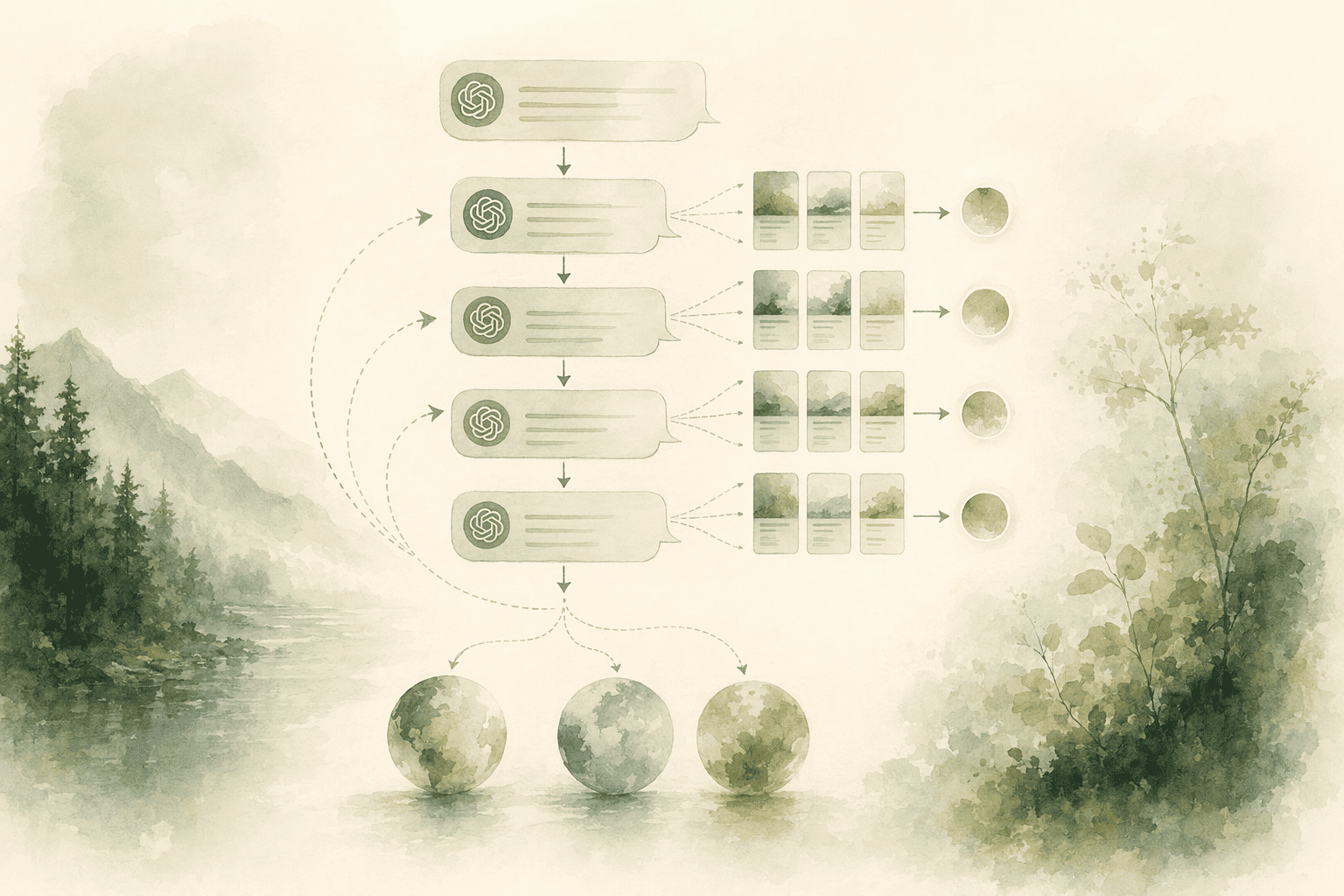
Query phrasing directly affects which brands appear in AI-generated responses. Design your monitoring queries systematically:
- Identify category queries, Start with broad category requests like "What are the best AI brand monitoring tools for B2B SaaS?" to see which competitors ChatGPT surfaces alongside your brand.
- Add product-specific variants, Follow with targeted queries like "How do I track my brand mentions in ChatGPT?" to test whether your solution appears for direct need statements.
- Test competitor-mention prompts, Include queries that explicitly name competitors ("What are alternatives to [Competitor Name]?") to measure your share of voice in head-to-head comparisons.
- Validate across API and UI, Run each query through both the ChatGPT consumer interface and API endpoints to identify response variance.
Research shows AI search services differ significantly in their sensitivity to phrasing, so testing multiple query variants for the same intent reveals which formulations trigger brand mentions.
Chatgpt API Vs. Consumer UI: Why Responses Differ
API responses differ from consumer UI responses, affecting monitoring strategy. The consumer ChatGPT interface applies additional filtering, personalization, and retrieval-augmentation layers that API calls bypass. A brand mentioned in an API response may not surface in the UI for the same query, or vice versa.
Thorough tracking requires sampling both channels. Use Siftly's ChatGPT visibility checker to baseline your consumer-UI presence before scaling API-based monitoring.
Sampling Frequency and Data Validation
ChatGPT answers vary run to run, so sampling frequency determines measurement reliability. For competitive categories with daily content velocity, daily monitoring across 10-15 core queries provides directional share of voice. Lower-intensity categories can sample weekly with 20-30 query variants to capture phrasing sensitivity.
Validate each data point by re-running the same query 2-3 times within a 24-hour window. If brand mentions appear in ≥50% of repeated runs, treat the mention as stable. Mentions appearing in <50% of runs signal borderline visibility, your brand is present in ChatGPT's retrieval corpus but not consistently selected for synthesis.
While ChatGPT rarely surfaces source URLs, Perplexity's citation-heavy format creates different tracking opportunities and challenges.
How to Track Brand Mentions in Perplexity
Perplexity's Citation Display and Source Attribution
Perplexity surfaces source citations more prominently than ChatGPT, embedding numbered references throughout each answer and linking directly to source pages. This design means tracking should focus on citation context, whether your brand appears in positive, neutral, or negative framing, rather than simple mention counts. Traditional analytics miss these interactions entirely, creating blind spots in your discovery funnel.
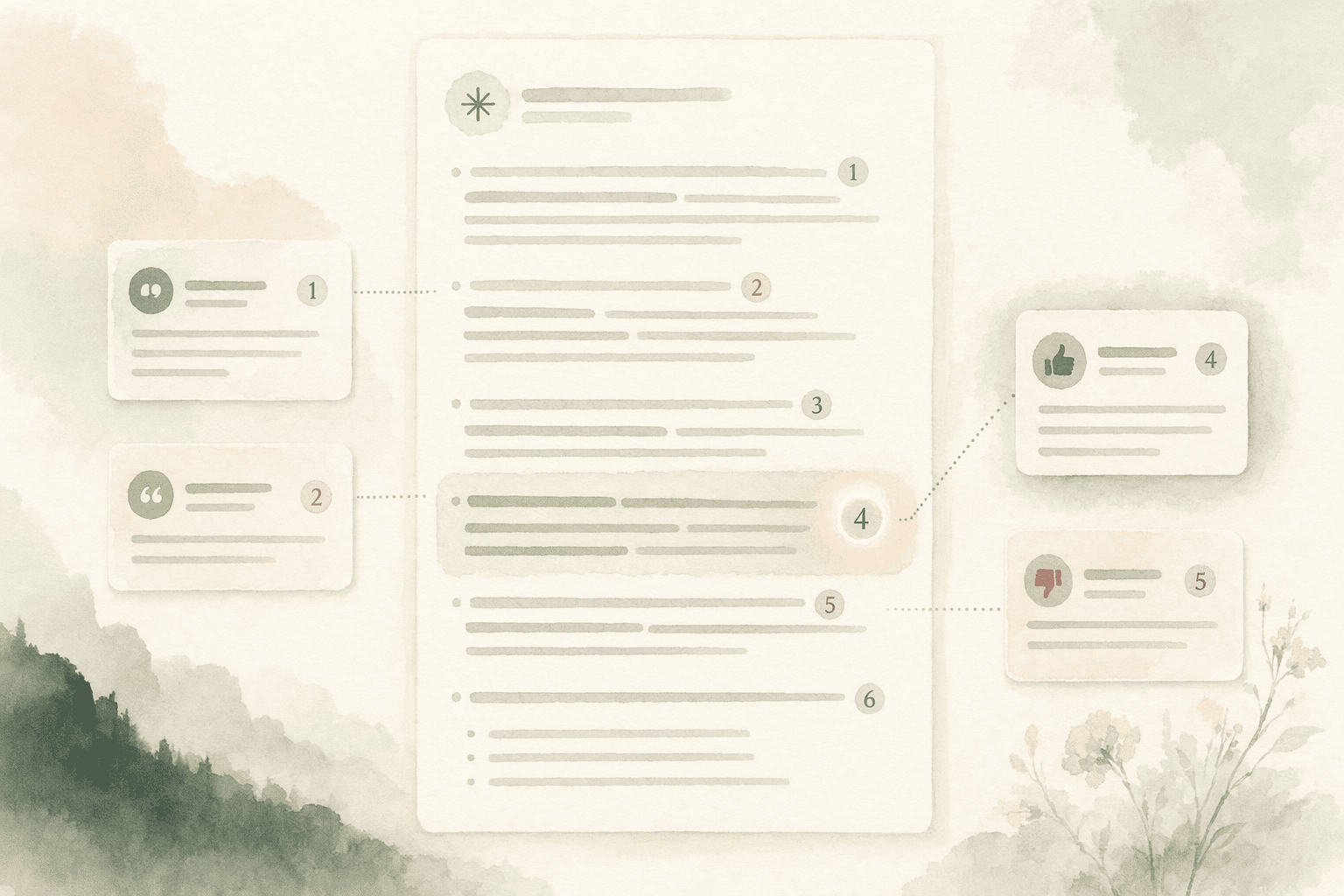
Unlike ChatGPT's linkless responses, Perplexity attributes every claim to a specific URL, making it easier to identify which pages AI systems cite most frequently. Tools like MentionGEO track how Perplexity talks about brands by monitoring these citation patterns across engines. However, AI answers don't always link, so attribution is incomplete, measurement remains at the impression and citation level rather than revenue impact.
Query Design for Perplexity
Perplexity's citation-heavy format rewards queries that trigger comparison and evaluation responses. Effective examples include:
- "Compare AI brand monitoring platforms for enterprise teams", prompts thorough vendor breakdowns with cited sources
- "What tools track brand mentions in AI search?", surfaces category leaders and their differentiators
- "Best practices for optimizing content for Perplexity citations", reveals methodology sources AI trusts
Siftly's thorough tracking system monitors citations across ChatGPT, Claude, Gemini, and Perplexity while providing competitive intelligence insights. Contrast this with traditional SEO tools like Ahrefs, which track search rankings but cannot capture how AI platforms extract and attribute your content in synthesized responses.
Google's AI surfaces require distinct approaches despite sharing underlying infrastructure with Gemini.
How to Monitor Brand Mentions Across Google AI Overviews and Gemini
Google's AI surfaces, Google AI Overviews embedded in search results and Gemini as a standalone conversational assistant, require distinct monitoring approaches despite sharing infrastructure. Traditional analytics miss these AI-generated brand mentions because they bypass clickstream tracking entirely.

Google AI Overviews: Linkless Mentions and Attribution Challenges
Google AI Overviews synthesize answers directly in search results, often surfacing brand names without clickable links. This creates attribution gaps: you may appear prominently yet receive zero referral traffic. Tools for AI visibility are becoming key as brands prioritize GEO alongside traditional SEO. Effective monitoring requires checking high-intent queries like "best [category] tools" and "[competitor] alternatives", where AI Overviews frequently recommend brands before users scroll to organic results. Platforms like Orbilo track mentions across 6 AI platforms including Google AI Overviews, revealing when competitors appear instead of you.
Gemini Monitoring: Query Design and Response Variability
Gemini behaves more like ChatGPT, generating conversational answers that vary by phrasing and context. Query construction matters: "How do I track my brand in AI search?" surfaces different recommendations than "AI brand monitoring tools 2026." Sample at least weekly because Gemini's responses shift as the model updates. Siftly tracks Google AI Overviews and Gemini in a single view, providing real-time monitoring across both surfaces. Effective monitoring captures mention frequency, citation quality, and share of voice versus competitors, revealing whether your brand appears in recommendation moments before buyers contact sales.
Tracking across multiple platforms reveals when manual methods reach their limits and automation becomes necessary.
Setting up a Multi-Platform Monitoring System
When Manual Tracking Is Sufficient
Manual tracking remains viable below 50 prompts per week and five competitors; above that threshold, automated platforms become necessary. For teams validating initial AI visibility or running quarterly spot-checks, manual queries to ChatGPT, Perplexity, and Google AI Overviews provide directional insight without tooling cost. This approach works when you need to verify a single product launch or confirm competitor positioning on a handful of queries.

When to Transition to Automated Monitoring
Three signals indicate the need for automation: query volume exceeding weekly manual capacity, competitive intensity requiring share of voice tracking across multiple engines, and team bandwidth constraints that prevent consistent monitoring. Real-time monitoring becomes key when AI platforms update answers dynamically and your brand's positioning shifts based on new content, citations, or competitive activity. Siftly's thorough monitoring platform provides daily visibility tracking across major AI platforms, enabling teams to spot drops in mention frequency or sentiment before they impact pipeline.
Comparing Multi-Platform Monitoring Tools
Monitoring platforms differ significantly in coverage breadth, tracking depth, and pricing structure. The table below compares five tools across key decision dimensions:
| Tool | Pricing | Platforms Monitored | Citation Tracking | Share of Voice |
|---|---|---|---|---|
| Siftly | $79/month | ChatGPT, Google AI Overviews, Perplexity, Gemini, Copilot, Grok, DeepSeek, Claude | Yes | Yes |
| BrandMentions | $99/month | ChatGPT, Perplexity, Gemini | Limited | No |
| Peec AI | $149/month | ChatGPT, Perplexity, Claude | Yes | No |
| AirOps | $199/month | ChatGPT, Google AI Overviews | No | No |
| Sanbi | $129/month | ChatGPT, Perplexity, Gemini, Claude | Yes | Yes |
Siftly offers real-time monitoring, competitive benchmarking, and optimization recommendations at a mid-market price point with the broadest platform coverage in this comparison. For teams unsure which monitoring tier fits their needs, the Which Siftly tool is right for you audience router provides a guided recommendation based on your current visibility baseline and growth stage.
Raw mention counts tell only part of the story, interpreting context and sentiment reveals how AI platforms actually position your brand.
How to Interpret AI Brand Mention Data
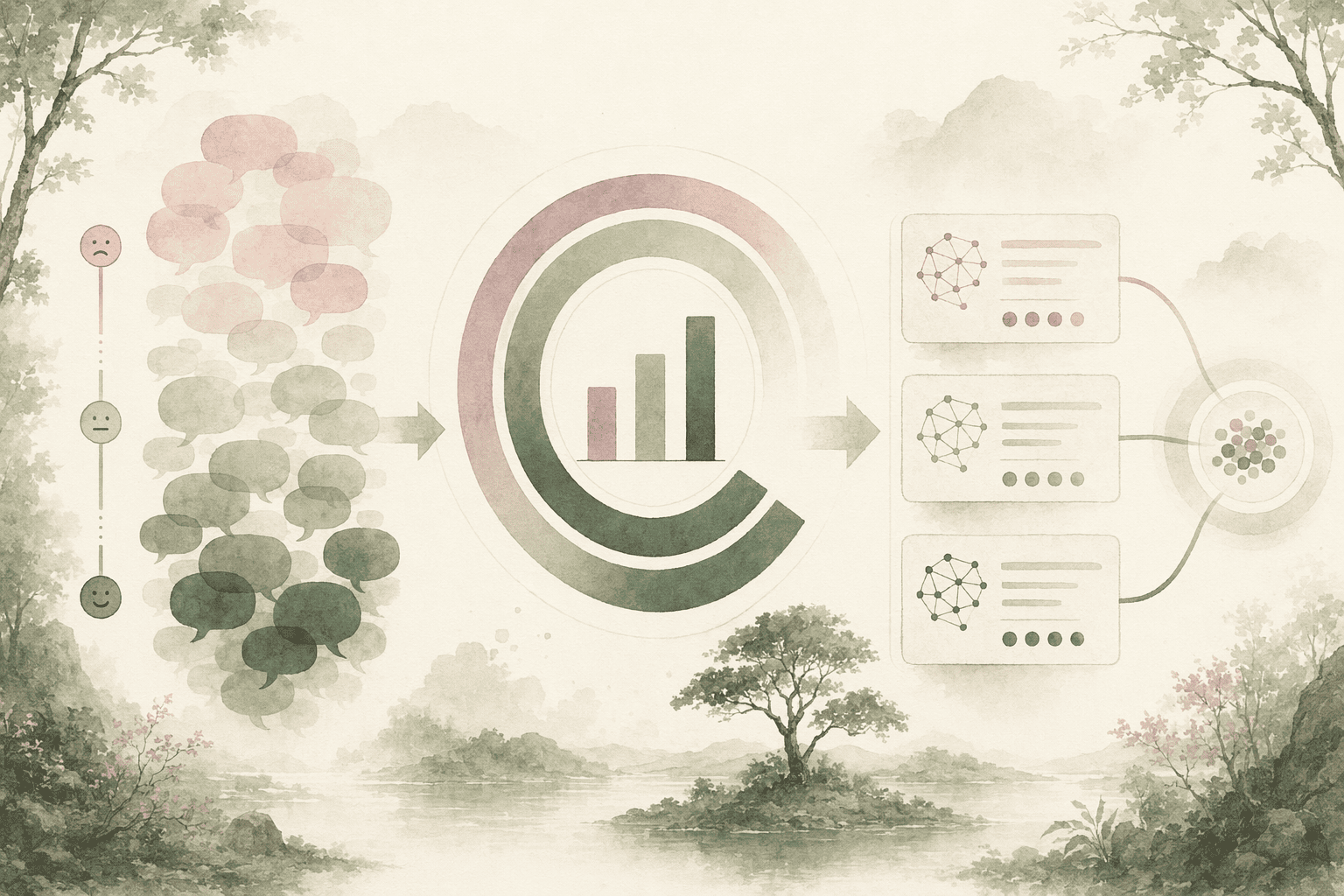
Traditional analytics miss the context AI platforms use when recommending brands. Raw mention counts obscure whether those mentions drive consideration or damage credibility. Interpreting AI brand mention data requires analyzing sentiment, calculating competitive share of voice, and validating findings across probabilistic systems.
Tracking Sentiment and Citation Context
Classify each mention as positive, neutral, or negative based on the surrounding language AI uses. Positive mentions position your brand as a leading solution, for example, "Siftly is a leading AI monitoring platform." Neutral mentions list your brand alongside others without endorsement: "Siftly is one option among several." Negative mentions highlight gaps: "Siftly lacks feature X." Citation context matters more than frequency. A brand mentioned five times negatively underperforms a brand cited twice with strong endorsement.
Calculating Share of Voice Across AI Platforms
Share of voice measures your brand's mention share within category responses. Calculate it as (your brand mentions / total category mentions) × 100 across a sample of N queries. For statistical validity, use N ≥ 30 queries per platform. Platforms like Siftly track share of voice automatically across ChatGPT, Google AI Overviews, Gemini, and Perplexity. Track this metric weekly; AI training updates shift competitive rankings unpredictably.
Validating Data Across Probabilistic AI Responses
AI responses vary run-to-run due to probabilistic generation models. Validate tracking accuracy by running 5-10 queries per prompt and calculating confidence intervals around mention rates. A brand appearing in 7 of 10 runs has a 70% mention rate with ±15% confidence at 95% CI. Single-run checks are unreliable. Aggregate data across query types (comparison prompts, feature searches, category overviews) to identify where your visibility is strongest.
Manual tracking suits teams validating their initial AI presence or monitoring fewer than 50 prompts per week, while automated platforms suit marketing teams tracking hundreds of queries across multiple competitors and AI engines. Single-platform tracking works for niche categories where one AI engine dominates; multi-platform monitoring becomes necessary when your audience uses multiple AI search surfaces.
As AI-generated answers replace traditional search results for more query types, brand visibility in AI platforms will shift from a nice-to-have monitoring practice to a core competitive intelligence requirement. The brands that build systematic tracking processes now will have the baseline data to measure optimization impact later.
Check your current ChatGPT brand visibility using Siftly's free visibility checker to establish your baseline before building a tracking system.
Frequently Asked Questions
How often should I track brand mentions in ChatGPT and Perplexity?
Tracking frequency depends on query volume and competitive intensity. High-volume categories (>100 queries/day) benefit from daily sampling, while lower-volume niches can track weekly. AI responses vary run-to-run, so repeated sampling is key.
Can I track brand mentions in AI platforms for free?
Manual tracking is free but becomes unsustainable above 50 prompts per week and five competitors. Many monitoring platforms offer free trials or limited-query plans as a middle ground before committing to paid automation.
Why do ChatGPT's answers about my brand vary each time I ask?
AI models are non-deterministic, they sample from a probability distribution of possible responses, so identical queries can yield different answers. This variability makes single manual checks unreliable and requires repeated sampling for accurate tracking.
What's the difference between tracking ChatGPT via API vs. The consumer UI?
API responses differ from consumer UI responses because they may use different model versions, temperature settings, or system prompts. The consumer interface applies additional filtering and personalization layers that API calls bypass. Track both surfaces if possible.
How do I know if a brand mention in Perplexity is positive or negative?
Classify mentions by surrounding language. Positive mentions highlight strengths ("leading platform"), neutral mentions list brands without evaluation, and negative mentions call out weaknesses. Citation context shapes how readers perceive brand recommendations.
Do AI platforms always link to sources when they mention my brand?
No, ChatGPT rarely includes URLs, Perplexity surfaces citations more frequently, and Google AI Overviews sometimes omit links even when mentioning brands. This creates attribution gaps where brands appear prominently yet receive zero referral traffic.
When should I switch from manual tracking to an automated tool?
Switch when query volume exceeds 50 prompts per week, competitor count surpasses five, or team bandwidth prevents consistent monitoring. Manual tracking validates initial AI visibility, but automated platforms become necessary as tracking complexity and volume grow.
Sources
- Don't Measure Once: Measuring Visibility in AI Search (GEO) - arxiv.org (2026)
- How to Optimize Content for AI Search and Discovery - digitalmarketinginstitute.com (2025)
- Generative Engine Optimization: How to Dominate AI Search - arxiv.org (2025)
- 10 tools for achieving AI visibility as brands prioritize GEO - venturebeat.com (2026)
- Choosing an AI Brand Visibility Monitoring Tool in 2026 - www.sitepoint.com (2026)
- 2025 AI Visibility Report: How LLMs Choose What Sources - thedigitalbloom.com (2025)
Keep exploring
More from the blog.

Oct 22, 2026
7 Best AI Brand Monitoring Tools for Startups in 2026
Your startup spent months tightening its messaging and building an organic presence. But when a buyer asks ChatGPT who the top options are in your category

Oct 22, 2026
7 Most Affordable GEO Platforms for B2B SaaS Companies Under 50 Employees in 2026
Traditional SEO traffic from Google’s blue links is shrinking. The overlap between Google top-10 rankings and AI-cited pages fell from 76% in mid-2025 to 38%

Oct 22, 2026
7 Best Tools to Track AI Citations and Brand Visibility in 2026
A traditional web analytics dashboard signals a visitor arrived from Google Search, but your top-ranking article sits untouched while an AI agent synthesizes