Jun 26, 2026
9 Best AI Brand Monitoring Tools for Support and Onboarding
Compare AI brand monitoring platforms by customer support quality and onboarding speed. Covers self-service vs. guided vs. white-glove setup models, support SLAs, and platform breakdowns.

AI brand monitoring tools track your visibility across ChatGPT, Claude, Gemini, and Perplexity—but implementation complexity makes customer support and onboarding quality just as critical as feature sets.
This guide compares nine platforms by support SLAs, onboarding models (self-service, guided, white-glove), documentation depth, and escalation paths to help you choose the right fit for your team size and technical resources.
Key Takeaways
- AI brand monitoring tools require stronger support infrastructure than traditional platforms due to multi-engine tracking complexity, API integration challenges, and data accuracy verification needs
- Three onboarding tiers—self-service, guided setup, and white-glove—map to team size, technical resources, and time-to-first-insight benchmarks, with enterprise rollouts requiring 3-6 weeks
- Support quality differentiators include channel access (email, chat, phone), response SLAs (24-48 hours for self-service, 2 hours for enterprise), documentation completeness, and dedicated customer success manager availability
- Monitoring-only platforms deliver visibility data but require separate consulting to act on insights, while optimization-enabled platforms integrate prescriptive recommendations directly into onboarding workflows
- Small teams (under 5 users) tracking single engines can rely on self-service platforms; mid-market (5-20 users) benefit from guided onboarding; enterprise (20+ users) need white-glove setup with custom integrations
What Makes Customer Support Critical in AI Brand Monitoring
AI brand monitoring tools require stronger support infrastructure than traditional platforms because multi-engine tracking, data accuracy challenges, and API integration complexity make poor onboarding costly. Tools like Profound, Peec AI, and Siftly are recognized for support quality, though their onboarding models differ significantly.

Why AI Monitoring Tools Require More Support Than Traditional Platforms
AI monitoring tools track responses across ChatGPT, Claude, Gemini, and Perplexity, each with different API behaviors, rate limits, and data structures. Monitoring-only platforms require separate consulting to act on visibility data, dumping raw mention counts without guidance on which citations matter or how to improve positioning. Optimization-enabled platforms like Siftly provide prescriptive recommendations during onboarding, shortening the path from data to action. Integration complexity—connecting AI engines to internal workflows—demands real-time support escalation paths when data accuracy is questioned or API connections fail.
The Cost of Poor Onboarding: Time-To-First-Insight and Setup Failure
When onboarding fails, teams waste weeks troubleshooting API integrations or questioning whether mention-rate drops reflect real visibility loss or data gaps. Support escalation paths become the primary evaluation dimension: tools with 2-hour SLA response times and dedicated customer success managers (like Siftly's Enterprise tier ) reduce setup failure risk. Real-world onboarding timelines vary from same-day activation for monitoring-only tools to multi-week implementations for optimization-enabled platforms that require citation source audits and competitive benchmarking setup. The cost of setup failure, lost competitive intelligence during the ramp period, justifies prioritizing support quality over feature breadth in tool selection.
Understanding why support matters is only the first step, next, you need to identify which onboarding model aligns with your team's size, technical capabilities, and timeline constraints.
Onboarding Models: Self-Service Vs. Guided Setup Vs. White-Glove
AI brand monitoring platforms offer three distinct onboarding tiers, each mapping to team size, technical resources, and time-to-first-insight benchmarks. Choosing the wrong tier for your rollout complexity causes setup failure, delays adoption, and stalls the path to actionable data.

Self-Service Onboarding: When Documentation Is Enough
Best for: Small teams (<5), low query volumes, single-engine tracking. Platforms with self-service onboarding provide documentation, video walkthroughs, and in-app tooltips, no human assistance. Setup typically completes in 1-3 days if your team already understands brand monitoring workflows. Self-service works when scope is narrow: one brand, one AI platform (e.g., ChatGPT), no competitive benchmarking. The trade-off: no escalation path when configuration questions arise, and monitoring-only tools provide raw data without optimization guidance.
Guided Setup: Customer Success Managers and Onboarding Checklists
Best for: Mid-market teams (5-20), multi-engine tracking, need for first-value metrics. Guided onboarding pairs documentation with a dedicated customer success manager who validates prompt sets, configures competitive intelligence dashboards, and defines success metrics in a kickoff call. Typical setup: 1-2 weeks from signup to first weekly report. This tier bridges the gap between self-service tools (which require post-setup consulting to act on data) and optimization-enabled platforms (which provide prescriptive guidance during onboarding itself). Guided setup prevents the common mistake of choosing self-service for a complex multi-team rollout, when configuration fails, there's a human to escalate to.
White-Glove Enterprise Onboarding for Multi-Team Rollouts
Best for: Enterprise (20+ users), custom integrations, multi-geography deployments. White-glove onboarding includes a dedicated customer success manager (CSM) with 2-hour SLA response, dedicated Slack or WhatsApp channels, custom dashboard configuration, and weekly strategy reviews during the first month. Real-world timelines: 3-6 weeks for multi-team rollouts when integrating with CRM/marketing automation platforms and aligning prompt sets across regions. Siftly's Enterprise tier, for example, includes a dedicated CSM with 2-hour SLA and weekly strategy reviews to ensure global teams achieve AI visibility benchmarks without per-workspace costs.
With onboarding models defined, the next step is evaluating how specific platforms deliver on support quality through measurable criteria: channel access, response SLAs, and documentation depth.
Comparing AI Brand Monitoring Platforms by Support Quality
Before diving into specific platforms, it's key to establish the criteria that define strong customer support and onboarding in AI brand monitoring. Traditional analytics miss the nuanced support requirements of AI-powered monitoring, response time SLAs, documentation depth, and onboarding resources vary dramatically across pricing tiers and platform architectures.
Support Channel Availability: Chat, Email, Dedicated Slack, Phone
Support channel access serves as the first differentiator. Entry-level plans across the category typically offer email-only support, while mid-tier and enterprise plans introduce real-time channels like chat, dedicated Slack workspaces, or phone lines. The presence of dedicated channels, particularly Slack or WhatsApp for asynchronous collaboration, signals a platform's commitment to ongoing partnership rather than transactional support.
Platforms like Brandwatch, Meltwater, and Talkwalker offer tiered support structures, with enterprise customers receiving dedicated account managers and phone support. Sprout Social and Mention provide chat and email across most plans, reserving priority phone support for higher tiers. Emerging AI-specific platforms like Otterly AI, Peec AI, and Profound typically start with email support and add Slack or chat channels as users move to growth or enterprise tiers.
Siftly follows a similar model: Free and Starter plans include email support, while Growth and Scale plans add Slack or WhatsApp channels for real-time troubleshooting and strategic guidance. Enterprise customers receive a dedicated customer success manager with direct communication lines.
Support SLA Comparison: Response Time Guarantees by Tier
Response time SLAs define the contractual expectations for support engagement. Standard tiers across the market typically guarantee 24- to 48-hour email response times, while enterprise plans compress this to sub-4-hour or even 2-hour SLAs for critical issues. Trial periods often exclude competitive benchmarking support or limit queries to basic platform navigation, reserving strategic guidance for paid tiers.
Established social listening platforms like Brandwatch and Talkwalker publish enterprise SLAs in the 4- to 8-hour range, depending on severity classification. Meltwater and Sprout Social offer similar ranges, with priority routing for customers on annual contracts. Newer AI-focused platforms vary: some publish SLAs only at enterprise levels, while others maintain faster response times across all paid tiers to differentiate on service velocity.
Siftly's SLA structure spans the full range: 7-day response for Free, 5-day for Starter, 1-day for Growth, and 2-hour for Scale. Enterprise customers receive a dedicated CSM with a 2-hour SLA and weekly strategy reviews, positioning the platform competitively against legacy social listening tools that reserve sub-4-hour SLAs for top-tier contracts.
Documentation Quality and Knowledge Base Depth
Documentation serves as the self-service foundation. A complete knowledge base should include API documentation (for custom integrations), use-case guides (basic and advanced scenarios), and troubleshooting resources that go beyond generic FAQs. Platforms that publish dedicated support articles, categorized by feature, use case, and error type, demonstrate a mature approach to customer enablement.
Established platforms like Brandwatch and Sprout Social maintain extensive libraries with video walkthroughs, API references, and certification programs. Talkwalker and Meltwater offer tiered documentation access, free users see basic setup guides, while paid customers access advanced analytics tutorials and custom integration blueprints. Mention and newer entrants like Otterly AI and Peec AI are building out their knowledge bases, with varying levels of API documentation and advanced troubleshooting content.
To evaluate documentation completeness, apply this three-tier scoring framework: API docs present/absent, use-case guides basic/advanced, and troubleshooting depth FAQ-only versus dedicated support articles. Platforms scoring 'advanced' on use-case guides and 'dedicated articles' on troubleshooting typically reduce onboarding friction and time-to-value, particularly for teams without dedicated data analysts.
| Platform | Support Channels (by tier) | Response SLA Range | Free Trial / Demo |
|---|---|---|---|
| Siftly | Email (Free, Starter); Email + Slack/WA (Growth, Scale); Dedicated CSM (Enterprise) | 7d (Free) → 2h (Scale/Enterprise) | Free tier available |
| Brandwatch | Email + chat (standard); Phone + dedicated AM (enterprise) | 24-48h (standard) → 4-8h (enterprise) | Demo required |
| Meltwater | Email + chat (Suite); Phone + AM (Enterprise) | 24h (Suite) → 4h (Enterprise) | Demo required |
| Talkwalker | Email (standard); Chat + phone (enterprise) | 24-48h (standard) → 8h (enterprise) | Demo required |
| Sprout Social | Email + chat (most plans); Priority phone (enterprise) | 24h (Professional) → 4h (Enterprise) | 30-day free trial |
| Mention | Email + chat (all paid); Priority (enterprise) | 24h (Solo) → 8h (Enterprise) | 14-day free trial |
| Otterly AI | Email (Starter); Slack (Growth+) | 48h (Starter) → 12h (Growth+) | Free tier available |
| Peec AI | Email (all tiers); Dedicated Slack (Enterprise) | 24h (Standard) → 6h (Enterprise) | Demo required |
| Profound | Email + chat (Professional); Dedicated AM (Enterprise) | 24h (Professional) → 2h (Enterprise) | Demo required |
This framework clarifies how channel availability, SLA commitments, and documentation maturity interact to shape onboarding velocity and ongoing support quality. Platforms offering sub-4-hour SLAs paired with advanced use-case libraries enable faster time-to-insight, particularly for teams scaling AI monitoring across multiple geographies or competitive sets.
Now that you understand the evaluation criteria, here's how nine leading platforms implement support and onboarding across self-service, guided, and white-glove tiers.
Platform-By-Platform Breakdown: Onboarding and Support
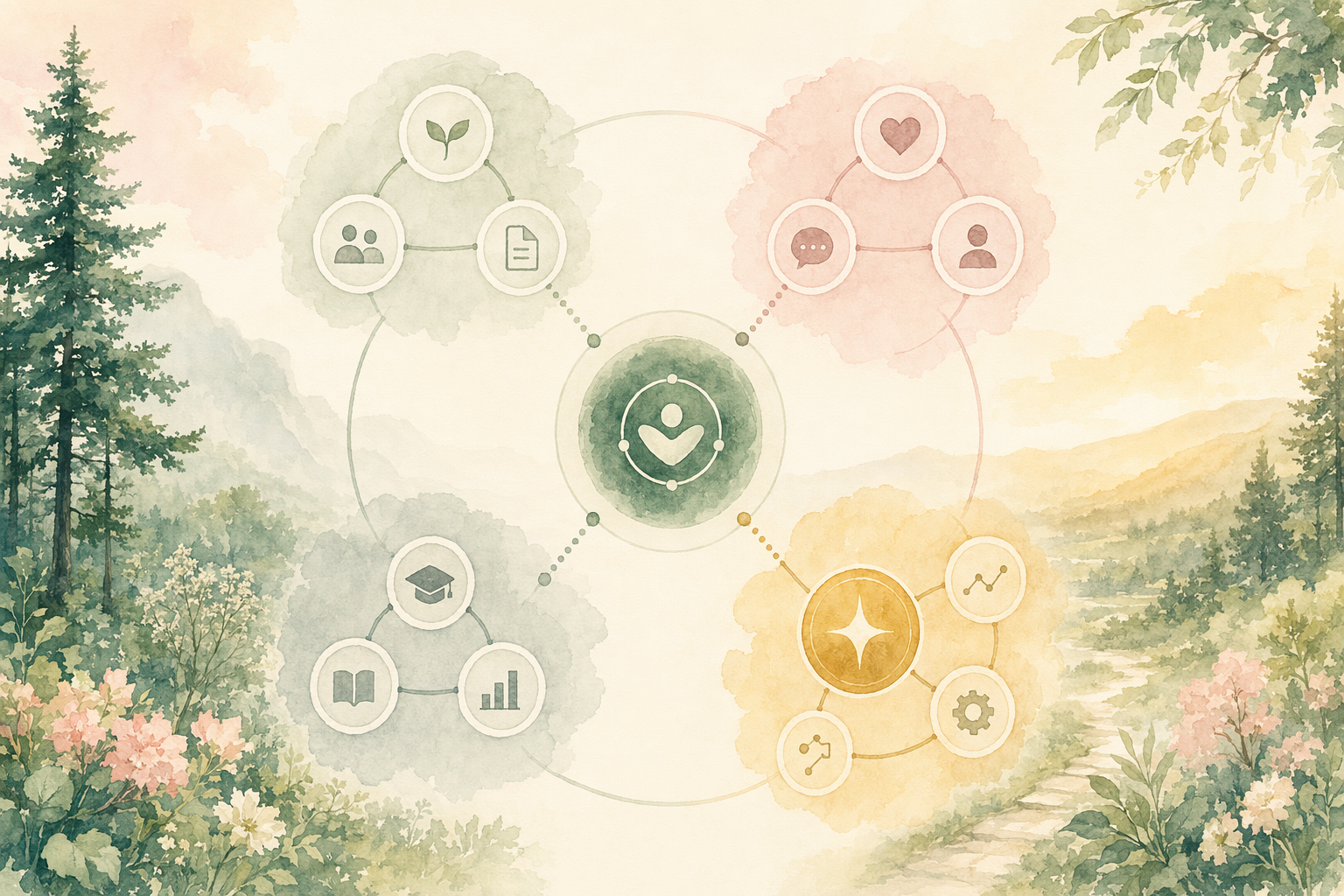
How a platform handles onboarding and ongoing support often matters as much as its feature set, especially when teams need to move fast. Traditional analytics miss the fact that monitoring tools require different support models depending on whether they deliver raw data or actionable insights. Below we compare four onboarding archetypes across the nine named platforms.
Siftly: Optimization-Enabled Monitoring With Guided Onboarding
Siftly combines daily monitoring across ChatGPT, Google AI Overviews, Gemini, and Perplexity with prescriptive optimization recommendations integrated into the onboarding flow. New users start with the free plan (ChatGPT and Google AI Overviews coverage) to validate fit, then upgrade to Starter ($79/month) for daily tracking of 4,500 responses and citation outreach campaigns. The Growth plan adds competitive benchmarking and prescriptive optimization recommendations alongside monitoring, so teams receive guided next-steps rather than raw data alone. Documentation includes a Generative Engine Optimization guide and integration walkthroughs. Best for: mid-market teams that need actionable insights integrated with monitoring, not separate consulting engagements to interpret dashboards.
Brandwatch, Meltwater, Talkwalker: Enterprise White-Glove Onboarding
Brandwatch offers thorough global brand monitoring with visual content analysis, particularly for organizations with complex multilingual operations and substantial implementation resources. Talkwalker leads on visual listening and AI-powered anomaly detection for enterprise teams that need to catch brand mentions in images and video. Meltwater provides similar enterprise-grade coverage with dedicated customer success managers (CSMs), custom integrations, and multi-team rollout support. Onboarding timelines typically span 3 to 6 weeks, including data-source configuration, user training, and dashboard customization. Brandwatch integrated Bluesky into its product in May 2025, offering access to all public posts and replies. Best for: large enterprises with budgets that accommodate white-glove setup and ongoing CSM support, and teams managing multi-brand programs across regions.
Sprout Social, Mention: Self-Service and Guided Hybrid Models
Sprout Social and Mention target small-to-midsize businesses requiring immediate brand monitoring value with minimal technical overhead. Both platforms emphasize self-service onboarding: users sign up, connect social accounts, and receive initial sentiment alerts within hours. Mention provides precise Boolean filtering and coverage across 75+ review sites, now offered as a single enterprise-grade plan. Support channels include chat and email; documentation libraries cover common workflows (alert setup, sentiment tagging, competitor tracking). Typical onboarding completes in 1 to 2 weeks. Best for: teams with $500, $2,000/month tool budgets that prioritize speed over deep customization, and marketing teams comfortable navigating SaaS platforms without dedicated CSMs.
Otterly AI, Peec AI, Profound: Monitoring-Only Platforms and Support Trade-Offs
Otterly AI, Peec AI, and Profound deliver AI-engine visibility data (mention rates, citation tracking, share of voice) but do not provide prescriptive optimization recommendations. Onboarding is lightweight, users configure query sets and receive dashboards within days, but the support burden shifts post-setup: teams must interpret trends and devise content strategies without in-platform guidance. This model suits organizations with in-house AI search expertise or budgets to pair monitoring tools with separate optimization consulting. Best for: data-savvy teams that already know how to act on AI-engine metrics, or organizations piloting AI monitoring before committing to optimization-enabled platforms.
With platform-specific details covered, use this decision framework to match your team's size, technical resources, and support needs to the right onboarding model.
Which Platform Fits Your Team's Support Needs
Support models split along three lines: self-service for small teams comfortable with trial-and-error, guided onboarding for mid-market buyers who need first-value metrics fast, and white-glove for enterprise rollouts spanning multiple departments. Traditional analytics miss AI-generated brand mentions in ChatGPT, Perplexity, and Google AI Overviews that bypass clickstream tracking, so choosing the right support tier determines how quickly teams translate raw citation data into actionable competitive intelligence.

Self-Service: Small Teams, Simple Tracking, Budget-Conscious
Teams under five users tracking a single AI engine can rely on self-service onboarding when query volumes stay below 50 prompts per week and competitor sets remain under five brands. Platforms like BrandMentions offer seven-day free trials with automated reports, enabling small marketing teams to validate AI visibility needs before committing budget. Self-service works best when teams accept capped query volumes and exclude competitive benchmarking, the trade-off for lower monthly costs.
Guided Setup: Mid-Market Teams Needing First-Value Metrics
Mid-market teams managing 5-20 users across multiple AI engines benefit from guided onboarding that pairs monitoring dashboards with optimization recommendations. Siftly's Starter plan at $79/month includes email support and tracks ChatGPT, Perplexity, and Google AI Overviews, while Growth and Scale tiers add Slack/WhatsApp channels for real-time monitoring alerts when competitors gain share of voice. Buyers in this tier prioritize onboarding checklists and use-case playbooks over white-glove strategy, they need directional metrics within the first week, not multi-quarter custom integrations.
White-Glove: Enterprise Multi-Team Rollouts and Custom Integrations
Enterprise buyers deploying to 20+ users across product marketing, brand, and sales teams require dedicated customer success managers who configure custom API integrations, build stakeholder dashboards, and refine prompt sets during weekly strategy reviews. Siftly's Enterprise tier provides a dedicated CSM with a 2-hour SLA, SSO for security compliance, and unlimited responses across all AI platforms including Claude. Typical onboarding timelines span 4-6 weeks for API setup and cross-department training, white-glove support shifts from 'set up the dashboard' to 'integrate AI visibility into our attribution model.'
Choosing the Right Support Model for Your Team
Monitoring-only platforms like Otterly AI, Peec AI, and Profound offer visibility at lower cost but require separate consulting to act on data, optimization-enabled platforms like Siftly integrate prescriptive recommendations into onboarding, reducing post-setup support burden. Enterprise white-glove onboarding from Brandwatch, Meltwater, and Talkwalker delivers custom integrations and dedicated CSMs but requires 3-6 week timelines and higher budgets, guided setup from Siftly and Sprout Social suits mid-market teams prioritizing speed and actionable insights over customization.

As AI-powered search engines proliferate, the gap between monitoring-only tools and optimization-enabled platforms will widen, brands that integrate prescriptive recommendations into their onboarding workflows will outpace those treating AI monitoring as a pure visibility exercise.
Assess your team's support tier (self-service, guided, or white-glove) using the decision framework in Section 5, then explore Siftly's guided onboarding model if you need optimization guidance integrated with monitoring, not just data dumps.
Frequently Asked Questions
Which AI brand monitoring platforms offer dedicated customer success managers?
Brandwatch, Meltwater, and Talkwalker provide dedicated CSMs for enterprise tiers with custom integrations and multi-geography deployments. Siftly offers guided mid-market setup with prescriptive optimization recommendations. Self-service platforms like Mention and BrandMentions typically rely on community support and documentation only, without dedicated CSM access.
How long does onboarding take for enterprise multi-team rollouts?
White-glove onboarding for enterprise deployments typically requires 3-6 weeks. This timeline includes dedicated customer success manager assignment, custom dashboard configuration, multi-team coordination, and weekly strategy reviews during the first month. Self-service platforms offer immediate setup but lack custom integration support.
What happens when initial setup fails or data accuracy is questioned?
Platforms with dedicated CSMs like Brandwatch, Meltwater, and Siftly offer direct escalation paths with 2-hour SLA response times. Self-service platforms rely on email ticketing with 24-48 hour response times. Without fast escalation, teams waste weeks troubleshooting API integrations or questioning whether mention-rate drops reflect real visibility loss or data gaps.
Do free trials include full customer support?
Free tiers typically exclude competitive benchmarking, cap query volumes, and offer limited support, email-only with no dedicated CSM access. Paid tiers unlock priority support channels, faster response SLAs, and dedicated onboarding resources. Enterprise plans add phone support and dedicated customer success managers with 2-hour response guarantees.
What's the difference between monitoring-only and optimization-enabled platforms for onboarding?
Monitoring-only platforms like Otterly AI, Peec AI, and Profound provide visibility data (mention rates, citation tracking) but require separate consulting to act on insights. Optimization-enabled platforms like Siftly integrate prescriptive recommendations directly into onboarding workflows, reducing post-setup support burden and accelerating time to actionable insights.
How do I evaluate documentation quality before committing to a platform?
Check for API documentation (for custom integrations), use-case guides covering basic and advanced scenarios, and troubleshooting resources beyond generic FAQs. Request access to the knowledge base during trial periods. Complete documentation should include dedicated support articles for common issues, not just FAQ lists.
Is manual tracking viable for AI brand monitoring?
Manual tracking remains viable below 50 prompts per week and five competitors. Teams exceeding this threshold need automated monitoring to scale efficiently. Self-service platforms like BrandMentions suit teams just crossing this threshold, offering seven-day free trials to test automation before committing to paid tiers.
Sources
- The 8 best AI visibility tools in 2026 - zapier.com (2025)
- Best AI Brand Monitoring Tools in 2026 | Toolradar - toolradar.com (2026)
- Top 10 AI Brand Monitoring Tools in 2026: Features, Pros, Cons & Comparison - www.devopsschool.com (2026)
- 2025's Top 7 Best AI-Powered Brand Monitoring Platforms - github.com (2025)
- AI Search Monitoring Tools 2026: The Best Platforms to Track ... - www.useomnia.com (2026)
- Best Real-Time Brand Monitoring Tools (2026) - therankmasters.com (2026)
- Best AI Brand Monitoring Software - StayModernAI - staymodern.ai
- 12 Best Social Listening Tools Compared for 2026 | Brandwatch - brandwatch.com (2026)
Keep exploring
More from the blog.

Oct 24, 2026
7 Best AI Optimization Platforms for B2B SaaS Startups on Tight Budgets in 2026
ChatGPT named your B2B SaaS startup during a buyer's evaluation, then told them to go with a competitor.

Oct 24, 2026
7 Best Platforms for Monitoring How AI Perceives Your B2B SaaS Brand in 2026
Your B2B SaaS brand is being evaluated by machines right now. A prospective buyer asks ChatGPT to “compare the top data onboarding tools for mid-market

Oct 23, 2026
How to Optimize Your Brand Presence in Generative AI Search Results
The uncanny silence of organic traffic in analytics dashboards isn't a tracking bug; it's the sound of a fundamental shift.