Sep 7, 2026
6 Best Rankscale Alternatives for Tracking AI Visibility in 2026
Your chief competitor didn't publish a better blog post. They engineered a better answer for ChatGPT, Perplexity, and Google AI Overviews.

Introduction
Your chief competitor didn't publish a better blog post. They engineered a better answer for ChatGPT, Perplexity, and Google AI Overviews. Generative AI engines don't rank pages; they assemble answers from trusted citations, and that shift has broken traditional SEO monitoring for digital-first brands.
Every week a prospect asks a question, and an AI gives them a vendor shortlist you're not on. The cost is invisible on your analytics dashboards because it happens inside a black box you don't control.
The LLM Pulse changelog from August to September 2026 captures just how fast the landscape is fragmenting: 10 core models are now in scope, including closed-garden entrants such as Walmart Sparky and Naver AI. Tracking a single engine means missing a growing share of discovery that happens elsewhere.
This shift has spawned a new software category, Generative Engine Optimization platforms, built to measure AI Share of Voice, sentiment, and citation influence. Rankscale established an early foothold in this space. The gaps it left open are now targeted by competitors offering broader model coverage, prescriptive actionability, and hard revenue attribution. These nine alternatives map the current tooling landscape so your brand can move from passive monitoring to active presence shaping.
Key Takeaways
AI visibility in 2026 splits into two distinct tool categories, closed-loop GEO with revenue attribution, and broad media perception monitoring, so the right Rankscale alternative depends entirely on which gap you need to close.
- Model coverage is the new moat: Platforms that track only ChatGPT miss citation share on Walmart Sparky, Naver AI, and Brave AI, which are already capturing query volume inside emerging search ecosystems.
- Monitoring without prescriptive action is half a product: Tools that surface a visibility drop without generating GEO-optimized content or technical fixes fail to close the citation-to-revenue loop.
- Revenue attribution remains aspirational for most. LLM Pulse’s GA and Search Console integration is the closest proxy on the market; several alternatives deliver directional ROI signals but stop short of defensible closed-loop reporting.
- Social listening converges with AI brand monitoring: Mature platforms such as Brand24 fuse traditional media with AI answer engine mentions, giving brand managers a unified Share of Voice metric that pure GEO dashboards miss.
- Pricing tiers fragment between technical and brand buyers. GEO-native tools cluster at $250 to $800 per month for core monitoring, while broad perception suites enter at enterprise contracts exceeding $2,000 monthly.
Verdict
This market has three distinct tools optimized for different practitioner needs:
- LLM Pulse: The strongest Rankscale alternative for hands-on GEO practitioners who need prescriptive recommendations and revenue attribution across the widest array of AI models. It closes the loop from citation tracking to earnings impact through native GA and Search Console integration, and its August to September 2026 model expansion, adding Walmart Sparky, Naver AI, and Baidu AI, gives it the deepest engine coverage in the market.
- Profound: A better fit for brand strategists who need broad perception data rather than technical SEO actionability. It aggregates AI mentions, sentiment, and share-of-voice data into stakeholder-ready reports that brand managers can surface in a C-suite meeting without a technical overlay, trading granular GEO recommendations for polished presentation.
- Brand24: Offers a different value entirely for real-time trend detection that crosses the AI, social divide. It fuses AI answer engine mentions with traditional news, blog, and social listening into a single pulse metric; if your priority is jumping on an emerging narrative before it crystallizes in an AI answer, Brand24 alerts faster than any GEO-native platform will.
Comparison Table
The table below maps six platforms against the dimensions that separate passive citation counters from operational GEO command centers. Entries marked *'requires further vendor review'* reflect gaps in publicly available documentation at the time of writing.
| Feature | Siftly | LLM Pulse | Rankscale | Profound | Kelvin AI (KIME) | Brand24 |
|---|---|---|---|---|---|---|
| AI Model Coverage | ChatGPT, Perplexity, Google AI Overviews, Gemini, Claude | ChatGPT, Google AI Overviews, Perplexity, Walmart Sparky, Naver AI, Baidu AI, Brave AI, plus YouTube Intelligence | *requires further vendor review* | *requires further vendor review* | ChatGPT, Gemini, AI Overviews, AI Mode, Perplexity, Copilot, Claude, Grok, DeepSeek, Llama | AI answer engine mentions fused with social, blog, and news monitoring |
| Key Differentiator | Real-time competitive intelligence across conversational queries | Revenue attribution loop + GEO Writer prescribing exact fixes | Established incumbent in AI SERP tracking | Brand governance reports built for stakeholder presentation | Tracks every model, market combination separately with continuous updates | Unified Share of Voice blending AI and traditional earned media |
| Actionable Recommendations | Yes, generates structured, cited, formatted GEO content | Yes, GEO Writer and Brand Book provide prescriptive governance and content fix playbooks | *requires further vendor review* | No, primarily delivers reporting and monitoring dashboards | Yes, free AI Site Health check identifies crawler, structured data, and technical gaps | No, focuses on alerting and trend identification |
| Revenue Attribution Support | Measures revenue driven via ChatGPT, Gemini, Perplexity, and AI Overviews | Yes, integrates Google Analytics and Search Console to validate citation-to-conversion paths | *requires further vendor review* | No, position as a brand perception tool rather than conversion attribution | No stated attribution model | No, media mention correlation, not direct revenue attribution |
| Pricing Tier Indication | 14-day free trial; no credit card required; pricing available on request | Paid tiers targeting mid-market and enterprise GEO teams | *requires further vendor review* | Enterprise-oriented brand intelligence pricing | Free AI readiness audit; paid tiers for continuous monitoring | Established media monitoring pricing; plans typically start at ~$99/month for basic tier |
1. Siftly

Siftly tracks what AI engines actually say when a customer asks about your brand versus a competitor. It monitors ChatGPT, Perplexity, Gemini, Claude, and Google AI Overviews in real time across conversational queries, then generates GEO-optimized content structured to earn citations. Unlike batch-scan tools that poll the same prompts on a schedule, Siftly surfaces the live answers real customers are seeing, which makes it useful for catching a narrative before it solidifies into a model's default response.
Backed by Y Combinator, Siftly was built by a data science team that previously operated at Snapdeal and Fareportal. Co-Founder and CEO Chalam PVS studied at IIT Guwahati, and that analytics DNA shows in the platform's experimentation module, which lets users compare control versus optimized content performance filtered by model, geography, and topic.
The platform also measures revenue driven across ChatGPT, Gemini, Perplexity, and AI Overviews. A 14-day free trial requires no credit card, and a free audit sets up a workspace where you create three to five prompts reflecting genuine buyer questions to baseline current visibility.
Siftly's privacy framework, last updated in June 2026, supports connected Google and Shopify accounts, encrypts OAuth tokens at rest, and does not use Google user data for advertising. For teams that want competitive intelligence across AI surfaces without CRM write access or pipeline integration, the platform connects passive monitoring to revenue-conscious GEO action.
2. LLM Pulse
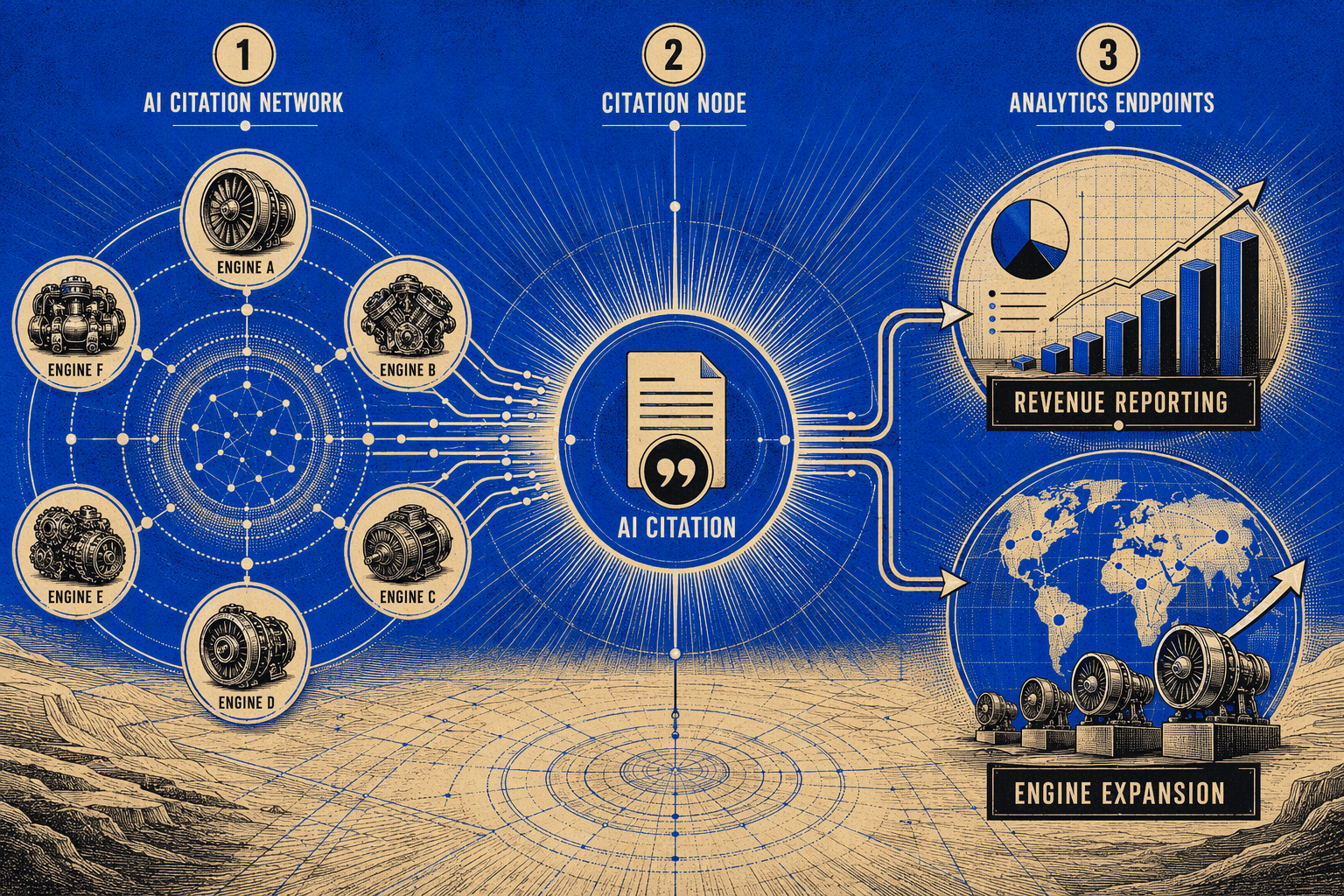
LLM Pulse delivers several capabilities that set it apart for brands that treat AI visibility as a revenue line item:
- Revenue reporting: Reports what your citations are worth and ties brand mentions in AI outputs directly to Google Analytics and Search Console sessions.
- Rapid engine expansion: Added tracking for Walmart Sparky, Naver AI, Baidu AI, and Brave AI in one summer cycle (August, September 2026), on top of existing ChatGPT, Google AI Overviews, and Perplexity coverage, no other tool shipped four new engine integrations in a single quarter.
- Prescriptive content blueprints: GEO Writer and Brand Book prescribe the exact content structure, entity coverage, and topical reinforcement a page needs to displace a competitor's citation inside a specific model, giving teams a literal blueprint rather than a dashboard they have to interpret.
- Competitor reverse-engineering: Competitor Citation Matching shows which rival pages or entities a model is pulling answers from, enabling GEO teams to reverse-engineer that sourcing and close it.
- Extended monitoring: ChatGPT Ads tracking and YouTube Intelligence extend monitoring beyond text citations into paid AI placements and video sourcing.
- Defensible attribution: The revenue attribution pipe sends citation events into Google Analytics and Search Console sessions, giving SEO directors a working attribution line to calculate return on GEO investment.
3. Rankscale

Rankscale earned its position as an early mover in AI SERP tracking, but the market has sprinted past it in three areas:
- Model coverage: Expanded far beyond the Western Big Three; publicly available documentation does not confirm Rankscale tracks closed-garden engines like Walmart Sparky, Naver AI, or Baidu AI.
- Revenue attribution: The industry transition toward connecting a citation event to a Google Analytics session is a capability gap that drove the emergence of platforms like LLM Pulse.
- Fix workflow: Rankscale built a monitoring layer; users can see the drop, but the fix workflow has to be built outside the platform.
Rankscale solved the visibility measurement problem for a 2023-era GEO stack. The shift in 2026 toward prescriptive analytics and model fragmentation changes the evaluation criteria: what counted as thorough monitoring two years ago now reads as a single feature. Brands seeking a Rankscale alternative are typically adding capabilities the incumbent doesn't prioritize, most often broader engine coverage, prescriptive content recommendations, or closed-loop attribution.
Pricing and specific engine lists require direct vendor confirmation for accurate comparison.
4. Profound
Profound competes for the budget line held by brand managers and communications directors rather than technical SEO teams. It aggregates AI answer engine mentions, sentiment data, and competitor share-of-voice metrics into polished dashboards and stakeholder reports. Among the tools in this list, Profound is the strongest fit for teams that need to visualize market perception shifts and present them in board-ready format.
Where LLM Pulse or Siftly hand a practitioner a content fix to execute, Profound delivers a market snapshot: here is how AI engines describe your category, here is which competitors surface most frequently, here is how sentiment is shifting quarter over quarter. It is a governance and diagnostic platform, and that is its deliberate trade-off. For a Chief Brand Officer monitoring AI-driven reputation risk across 12 markets, this abstraction layer is the product.
For an SEO director responsible for fixing a 5% citation share decline on Google AI Overviews, the action plan lives in a different tool. Pricing follows the enterprise brand intelligence model. The visual emphasis and stakeholder-ready reporting set Profound apart from every tool on the table that prioritizes recommendation logic over presentation polish.
5. Kelvin AI
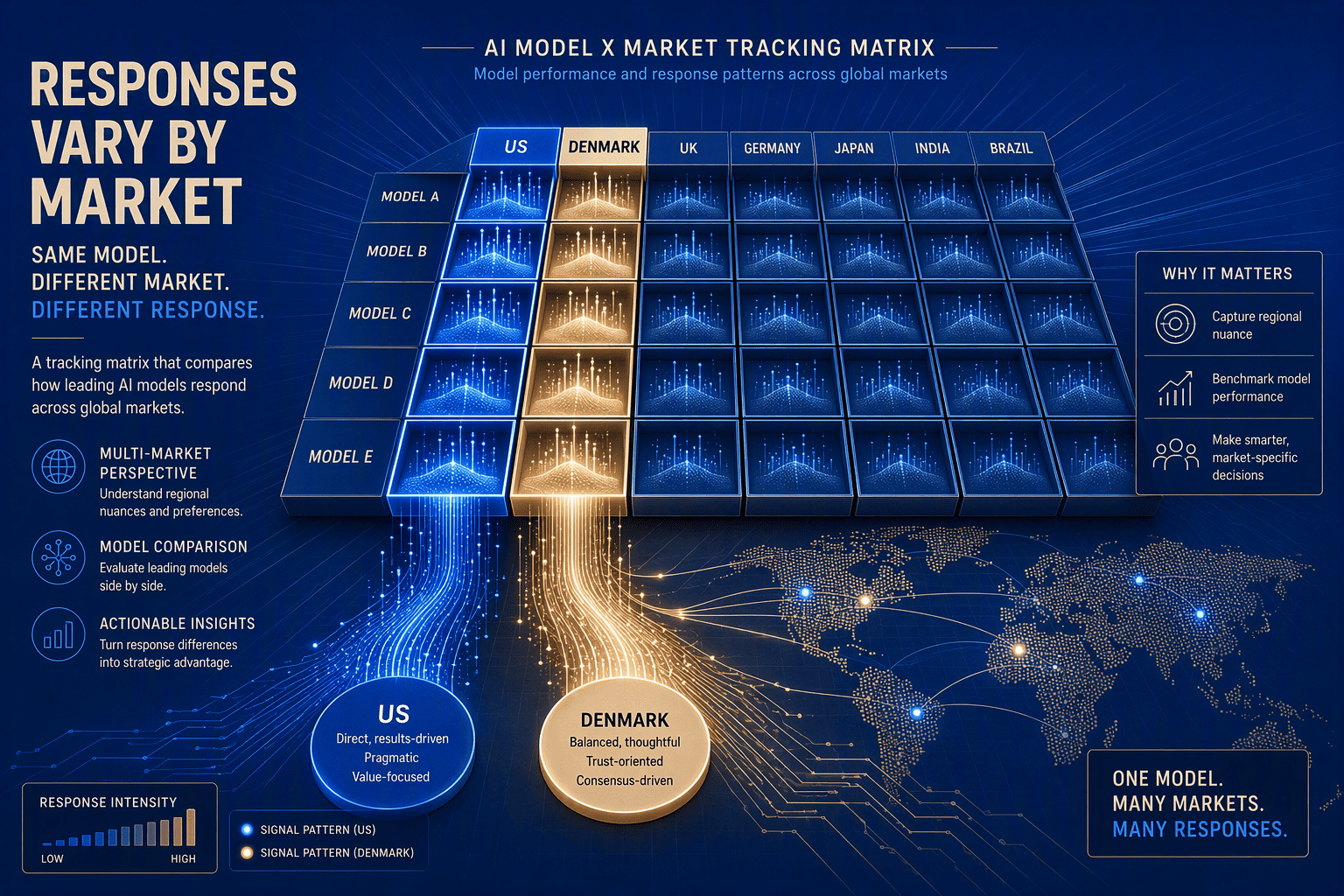
Kelvin AI’s KIME platform treats every AI model and geographic market as a separate entity. The premise is simple: an answer served in ChatGPT to a user in the US is not the same as an answer Gemini returns to someone in Denmark, so lumping them together produces numbers too abstract to act on.
KIME tracks ChatGPT, Google Gemini, Google AI Overviews, Google AI Mode, Perplexity, Microsoft Copilot, Claude, Grok, DeepSeek, and Llama as distinct model, market pairs with continuous visibility, placement, share-of-voice, and sentiment tracking. Global brands get region-specific behavior data that helps them pinpoint where a model’s answer changes across borders.
KIME also offers a free AI Site Health check that audits site readiness without requiring a commitment or writing anything to the user's server. Technical fixes such as unblocking AI crawlers or adding structured data can shift visibility within days because models re-retrieve continuously. Content and earned-media work typically takes four to twelve weeks to move share of voice, since it requires third-party sources to be published, indexed, and picked up.
The platform’s model-agnostic approach gives global brands coverage in markets where LLM Pulse or Siftly may not yet operate. What KIME lacks is a revenue attribution integration comparable to LLM Pulse's GA and Search Console loop; the value proposition centers on exhaustive measurement. For SEO directors who already handle attribution in their web analytics stack and want the most complete visibility dataset to feed it, that approach works in KIME’s favor.
6. Brand24
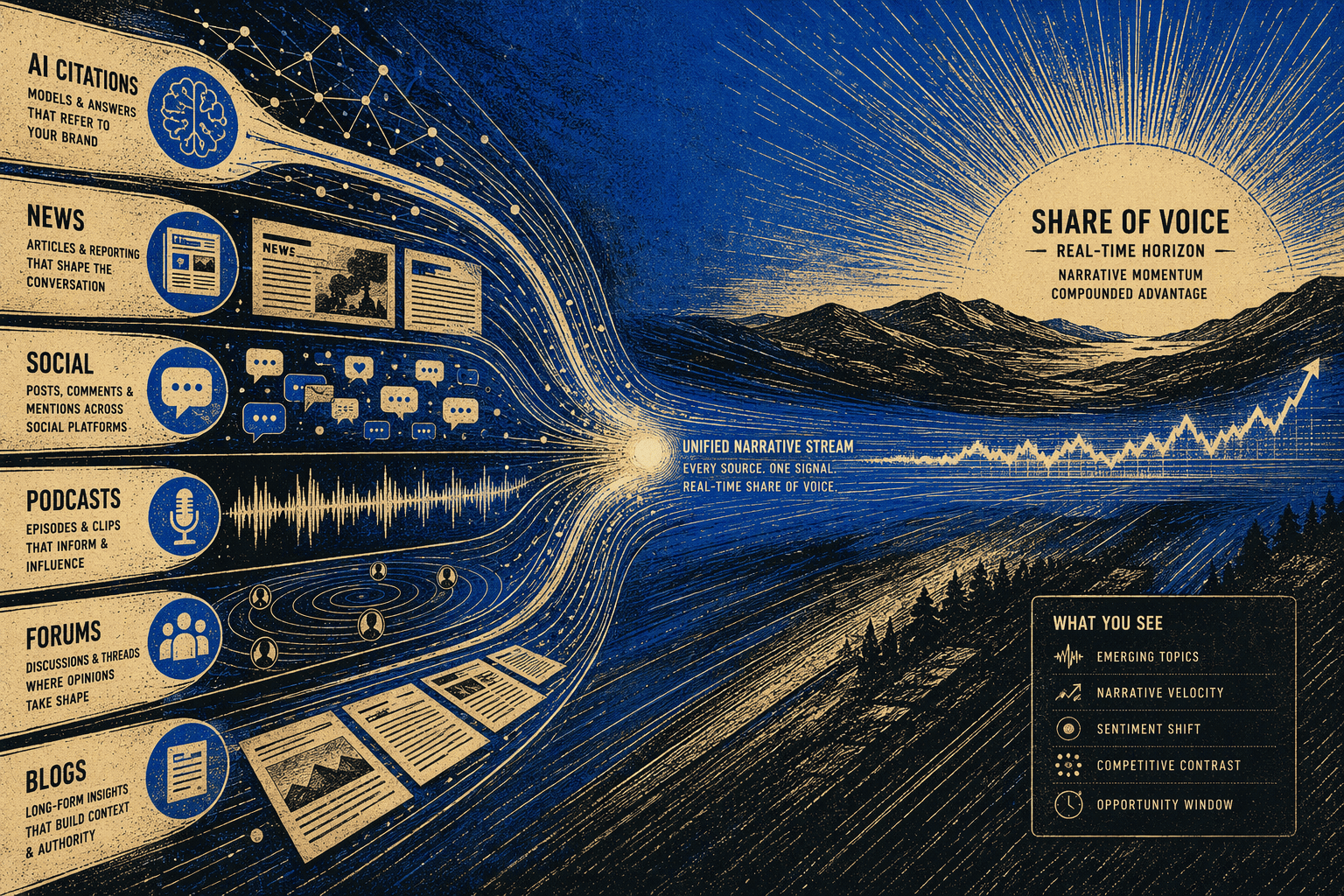
Brand24 fuses AI answer engine mentions with traditional earned media into a single Share of Voice signal that alerts in real time, before an emerging narrative crystallizes. No other GEO-native tool on this list tries to bridge those two worlds.
- Unified media feed: Tracks AI-generated citations alongside blog posts, news articles, social conversations, podcasts, and forum discussions. A brand manager sees a narrative arc across channels rather than a single data point from one model.
- Real-time alerting architecture: Detects mention velocity spikes and sentiment shifts as they happen, letting PR teams respond before an AI answer engine's training or retrieval cycle locks in a negative description.
- Market maturity advantage: As a veteran social listening platform, Brand24 enters AI monitoring with established dashboards, export workflows, and alert configurations that GEO startups are still building. That cuts onboarding friction for teams already using a listening tool.
- Complementary role: Brand24 will not generate optimized content or prescribe fixes. It is a listening layer. For teams that pair it with an action-oriented tool such as LLM Pulse or Siftly, the combination delivers broad perception intelligence plus technical citation engineering, two capabilities no single platform on the market claims to consolidate today.
Conclusion
The AI visibility tooling landscape in 2026 splits along one line: platforms that fix what AI engines say about you, and platforms that measure what they're already saying. Pick a Rankscale alternative that closes the capability gap your team actually faces.
If you need prescriptive GEO action tied to revenue, evaluate LLM Pulse first. If you need brand perception reporting a CMO can present to the board, start with Profound. If real-time narrative detection matters more than exhaustive model coverage, Brand24 or Siftly may be the better fit.
Define that internal goal before you trial anything. AI visibility stretches from technical citation to emotional sentiment, and no single platform covers both ends.
Frequently Asked Questions
What are the leading platforms besides Rankscale for tracking brand visibility and mentions in AI-powered search engines like ChatGPT, Gemini, and Perplexity?
Six platforms dominate the 2026 landscape: LLM Pulse for prescriptive GEO with revenue attribution, Profound for brand governance reporting, Siftly for real-time competitive intelligence across conversational queries, Kelvin AI (KIME) for granular model, market tracking, and Brand24 for fused AI and traditional media monitoring.
How do these alternative AI visibility tools compare in terms of features like share of voice, competitor benchmarking, and content generation for Generative Engine Optimization (GEO)?
The four platforms differ in their core offerings and content-generation capabilities:
- LLM Pulse, Siftly, and KIME: Offer share-of-voice reporting plus prescriptive content generation.
- Profound: Delivers polished share-of-voice dashboards without content fix playbooks.
- Brand24: Provides share-of-voice fused with social signals.
- Competitor benchmarking: Standard across all six platforms, but only LLM Pulse, Siftly, and KIME generate GEO-optimized content directly within the tool.
What are the key differences between AI visibility monitoring tools that only track citations versus platforms that also offer prescriptive, actionable recommendations to improve brand presence?
Citation-only tools report what changed; prescriptive platforms such as LLM Pulse (GEO Writer and Brand Book), Siftly (structured GEO content generation), and KIME (AI Site Health check) identify the specific fix, unblocked crawlers, missing structured data, entity reinforcement, and provide the content or configuration to execute it.
Which AI monitoring tools specifically track performance and revenue attribution across a full range of AI platforms including ChatGPT, Google AI Overviews, and Perplexity?
LLM Pulse is the only platform currently documented to integrate Google Analytics and Search Console for citation-to-revenue attribution. Siftly measures revenue driven via ChatGPT, Gemini, Perplexity, and AI Overviews using internal attribution methods. Other platforms in this list correlate visibility to business outcomes without native conversion tracking.
What is the current market data and adoption rate for Generative Engine Optimization tools in 2026?
Public adoption-rate data for GEO tools in 2026 is not available from the sources informing this article. The platform changelogs and expansion activity, particularly LLM Pulse's rapid model additions and KIME's model, market segmentation, indicate accelerating investment and enterprise demand, but no third-party market penetration figures exist to cite.
What privacy and data-handling considerations should businesses evaluate when selecting an AI brand monitoring platform that connects to third-party accounts?
Audit each platform’s third-party account permissions: Siftly, for example, stores OAuth tokens encrypted at rest and does not use Google user data for advertising or AI model training. Confirm whether the platform sells connected-account data, how long it retains information after account deletion, and whether humans may read user data during support or compliance workflows.
Sources
- Siftly · AI Search Analytics for Marketing Teams - siftly.ai
- AI Visibility Tracking for ChatGPT & Gemini | KIME - kime.ai
- Changelog - LLM Pulse - api.llmpulse.ai
Keep exploring
More from the blog.

Sep 25, 2026
Tools to Improve Visibility in AI Chatbot Shopping Suggestions: 2026 Comparison
- AI visibility tools measure what happens inside the answer, brand mentions, citations, product results, sentiment, and share of voice (triplewhale.com)

Sep 25, 2026
7 Most Affordable AI Visibility Tracking Tools for B2B 2026
When a buyer asks ChatGPT, Perplexity, or Google's AI Mode a question that should bring up your brand, are you in the answer?

Sep 25, 2026
Most Affordable AI Visibility Tools for B2B SaaS Startups 2026
51% of B2B software buyers now begin their purchasing process in an AI chatbot instead of a traditional search engine (gracker.ai). When a prospect asks ChatGPT